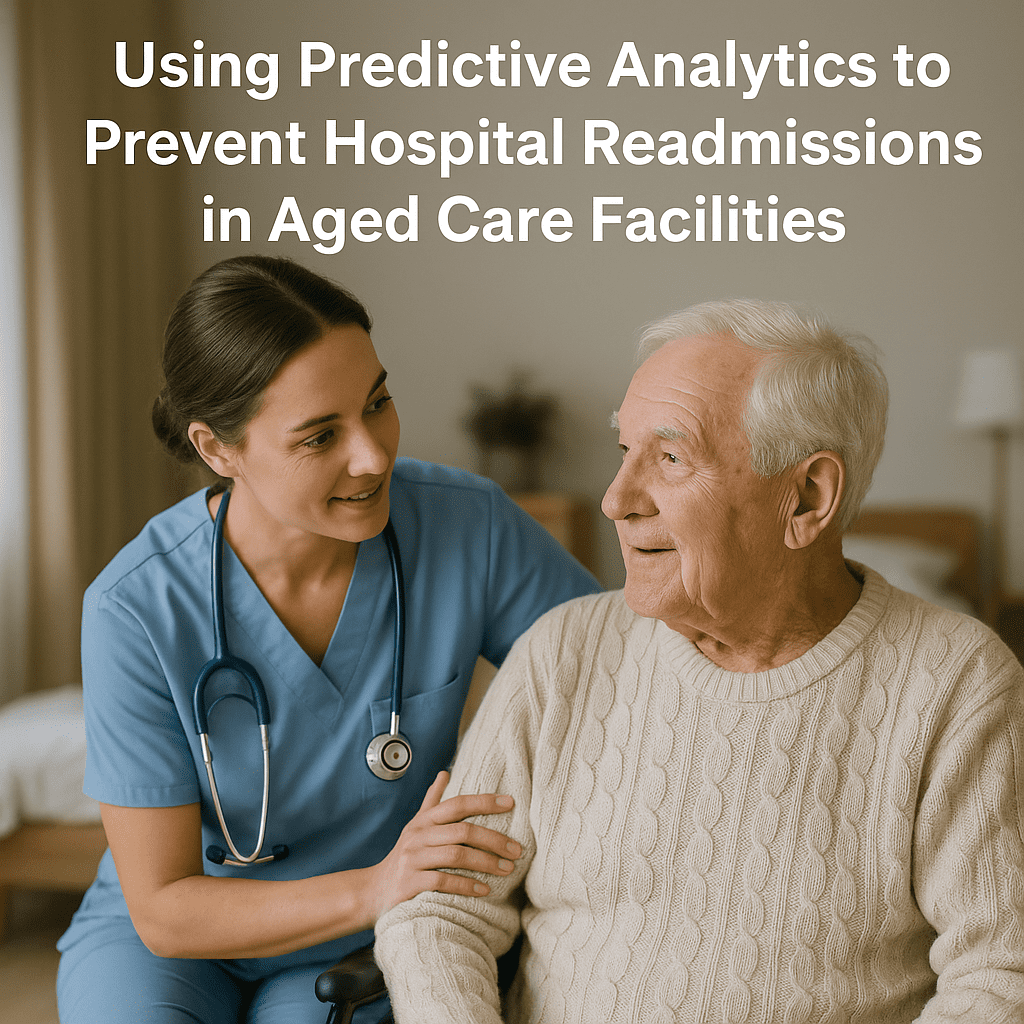
Using Predictive Analytics to Prevent Hospital Readmissions in Aged Care Facilities
By SMPLSINNOVATION — Health Technology Consulting with a Smile
Based on research published through May 7, 2024
1. Introduction
No one wants to go back to the hospital right after coming home, especially our grandparents. That’s where predictive analytics can help.
Predictive analytics uses data, computer models, and AI to guess what might happen in the future. In aged care, it helps spot who might need to go back to the hospital before it actually happens.
Hospital readmissions for older adults are a big problem. The Centers for Medicare & Medicaid Services (CMS, 2024) says about 1 in 5 older patients go back within 30 days. That means more stress, more paperwork, and more healthcare costs.
By using data and technology every day, aged care facilities can:
1. Improve patient health.
2. Save money by avoiding preventable hospital stays.
3. Help caregivers act faster and smarter.
2. The Scope of Hospital Readmissions in Aged Care (2023–2024 Data)
Hospital readmissions among older people are still a big issue around the world.
Recent Statistics (2023–2024)
– The World Health Organization reported an average 18–22% readmission rate in long-term care residents.
– In the United States, CMS data from early 2024 showed that readmissions cost more than $26 billion each year, with about $17 billion avoidable.
– In Australia, the Australian Institute of Health and Welfare reported a 16% 30-day readmission rate for aged care residents after hospital stays.
Common Causes of Readmissions
1. Long-term health conditions like heart failure or diabetes.
2. Problems with taking medicines correctly.
3. Falls or trouble moving safely.
4. Not eating or drinking enough.
5. Poor follow-up care after leaving the hospital.
6. Infections or wounds not healing.
7. Memory or thinking problems.
8. Poor communication between care teams.
9. Not enough home monitoring.
10. Loneliness or lack of social care.
Policy and Economic Implications
The World Health Organization and CMS both aim to reduce readmissions between 2024 and 2026. CMS penalizes hospitals with high rates, while Australia and Canada reward care homes that prevent them. Reducing readmissions isn’t just good for patients—it saves money too.
3. How Predictive Analytics Works in Healthcare
So how does predictive analytics really work? It’s not magic—it’s about smart use of data.
1. Data Collection
Health systems collect information from:
– Electronic Health Records (EHRs) with test results and doctor notes.
– Wearable devices that track heart rate, sleep, and activity.
– Medication records showing if people take their medicines.
– Social information such as living situations or feelings of loneliness.
2. Predictive Modeling
Experts use computer programs and AI to find patterns that show who is more likely to be readmitted.
3. Real-Time Insights
Once the system learns, it gives each person a risk score. If the score is high, the care team can act early to prevent a readmission.
This mix of data and human care makes healthcare faster and more dependable.
4. Top 10 Predictive Variables for Readmission Risk (2024 Research Edition)
Based on research from JAMA Network Open, The Lancet Digital Health, and Healthcare Analytics Review (2024), the most common factors that predict readmission are:
1. Taking five or more medicines.
2. Having multiple illnesses, like heart or lung problems.
3. Falls or less ability to move.
4. Emergency room visits in the last three months.
5. Sudden weight loss or poor nutrition.
6. Memory or thinking problems.
7. Few social connections or little family contact.
8. Missing medicine doses.
9. Trouble doing daily activities.
10. Unstable vital signs, like blood pressure or heartbeat.
Other factors include sudden medication changes, poor communication between staff, and mental health issues like depression.
5. Recent Research and Technological Advances (2023–2024)
In the past year and a half, many new ideas have improved care for seniors.
1. AI systems can now predict hospital readmissions with up to 90% accuracy.
2. Wearable devices send early warning signs from heart rate or movement changes.
3. Hospitals can train AI models together without sharing private data.
4. Cloud systems let hospitals and aged care homes share data safely.
5. Predictive dashboards help nurses see risks quickly.
6. AI can read nursing notes to find warning phrases like “short of breath.”
7. Nutrition data helps predict health problems.
8. Smart beds and floor sensors track health trends.
9. Ethical AI reduces bias and keeps systems fair.
10. Digital twin models test different care plans safely and quickly.
6. Implementation Strategies for Aged Care Facilities
To use predictive analytics well, aged care teams need to plan carefully.
1. Data Integration
Combine EHRs, sensors, and management systems using standard formats so data works together.
2. Build Your Predictive Workflow
Create dashboards and alerts that highlight high-risk residents. Make sure these fit into daily routines.
3. Collaborate Across Teams
Doctors, nurses, and tech experts should meet often to review data and take action.
4. Embrace Training and Digital Literacy
Offer simple training so staff understand the tools and feel confident using them.
5. Measure, Refine, Repeat
Track progress over time and improve the models using local data. The more it’s used, the smarter it gets.
7. Case Studies: Success in Action
Case Study 1: Australia
An Australian aged care group worked with SMPLSINNOVATION to use predictive dashboards across 12 facilities. In 10 months, 30-day readmissions dropped by 18% and satisfaction rose by 22%. Staff said it felt like having an extra helper on duty.
Case Study 2: United States
A midwestern care provider used AI-powered fall alerts. The system saw tiny changes in how residents walked and warned staff early. Hospital visits went down by 12%.
Case Study 3: Canada
A Canadian care group used telehealth with predictive analytics. When a resident’s risk score rose, a virtual nurse checked in within 24 hours. Readmissions dropped by 15%, and seniors grew more comfortable using technology.
8. Conclusion: The Future of Compassion Meets Computation
Predictive analytics is more than numbers—it’s about helping people before problems get serious. By using data wisely, we can help older adults stay safe, healthy, and happy at home, with fewer trips back to the hospital.