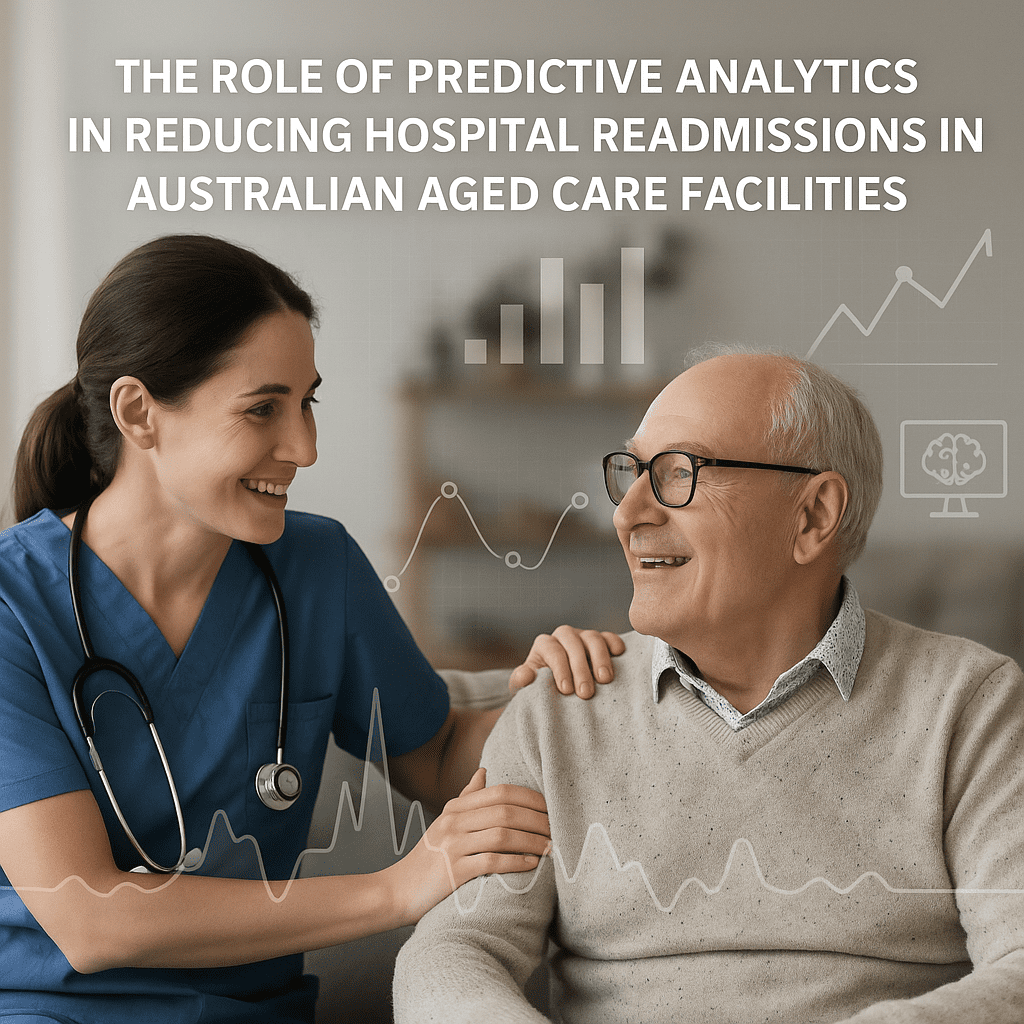
The Role of Predictive Analytics in Reducing Hospital Readmissions in Australian Aged Care Facilities
By SMPLSINNOVATION
1. Introduction
If you’ve ever seen a hospital emergency room fill up fast, you know that hospital readmissions are a serious problem. At SMPLSINNOVATION, we believe big challenges like this can be tackled with smart, positive solutions.
Hospital readmissions have been a long-time issue in Australian aged care. They use up healthcare budgets, stress doctors and nurses, interrupt residents’ lives, and make families feel like they’re stuck in a loop between getting discharged and being admitted again.
According to the Australian Institute of Health and Welfare (AIHW, 2024), about 22–25% of aged care residents are readmitted to the hospital within 30 days of going home. This is still happening even though there have been big investments in better care systems, health records, and follow-up programs.
But there is good news. Predictive analytics is helping change this. It’s the same kind of technology used by streaming services to guess what you’ll want to watch next. Now it’s being used to predict which aged care residents might end up back in the hospital soon. The year 2024 has been a big turning point in Australia’s healthcare system, with support from AIHW, the Australian Digital Health Agency (ADHA), and several universities.
So, how does predictive analytics help reduce hospital readmissions? And how can aged care homes, digital health companies, and decision-makers use it? Let’s take a closer look.
2. Understanding Predictive Analytics in Healthcare
Predictive analytics is a bit like a crystal ball for healthcare, but instead of using magic, it uses data, algorithms, and lots of research.
In simple terms, predictive analytics works by:
1. Looking at patterns in large amounts of health data.
2. Using machine learning to improve predictions over time.
3. Creating risk models that show which residents are most likely to be readmitted soon.
For these systems to work well, they use many types of data such as:
Electronic health records, pharmacy information, data from wearable devices, care plans, hospital notes, GP and specialist records, lab results, and even weather or community health data.
Under the Australian Digital Health Strategy 2024, predictive analytics has become a national focus. The ADHA’s Interconnected Care project shows how it helps hospitals, GPs, and care homes work together to prevent problems before they start.
Privacy and security are very important. All data use must follow My Health Record rules, keeping residents’ information safe and giving them the right to control who can see it.
3. The Problem: Hospital Readmissions in Aged Care
According to AIHW’s 2024 report, about one in four aged care residents return to the hospital within a month of being sent home. Most of the time, it’s not because of medical mistakes but small gaps in care after discharge.
Here are the ten most common reasons why people are readmitted:
1. Problems managing medicines.
2. Falls.
3. Infections.
4. Heart problems.
5. Breathing issues like COPD flare-ups.
6. Post-surgery problems.
7. Dehydration.
8. Pressure sores.
9. Malnutrition.
10. Communication breakdowns between hospital, GP, and care staff.
Each of these issues can often be found and prevented early—and that’s where predictive analytics helps most.
4. Research and Case Studies in Australia (2024)
Australia is leading the way in using predictive analytics. Three big studies in 2024 showed great results:
1. A joint AIHW and ADHA report found that using predictive models in 50 aged care facilities reduced readmission rates by 18% in six months. This worked best when hospitals shared data and staff could see risk alerts.
2. The University of Sydney’s Aged Care Data Lab used machine learning to find which residents might return to hospital after discharge. They identified 72% of at-risk residents early enough for extra care and telehealth support.
3. Queensland Health’s Predictive Readmission Program used remote monitoring tools, like Bluetooth blood pressure cuffs, to track residents in rural areas. This helped catch health problems before they became emergencies.
These programs helped lower emergency visits, improve patient experiences, and create a more proactive care system.
5. Key Predictive Indicators for Readmission Risk
Here are ten data signs that can show a higher risk of hospital readmission:
1. Age and frailty level.
2. Number of recent emergency visits.
3. Number of ongoing health conditions.
4. Number of regular medications.
5. Memory or thinking problems.
6. Social isolation or loneliness.
7. Nutrition and hydration levels.
8. Past falls.
9. Changes in movement or activity.
10. Length of the most recent hospital stay.
When combined, these details help care teams spot risks early and act sooner.
6. The Benefits of Predictive Analytics in Aged Care
Predictive analytics isn’t just about machines and numbers—it changes how care is given. It helps aged care teams:
– Step in before health issues become emergencies.
– Create personal care plans for each resident.
– Reduce pressure on hospitals.
– Keep residents safer by preventing falls and infections.
– Give staff clear, useful insights.
– Improve teamwork between doctors, hospitals, and care homes.
– Reassure families that their loved ones are being monitored carefully.
– Save money by preventing unnecessary hospital visits.
– Meet aged care quality standards more easily.
– Keep improving care over time using updated data.
7. Challenges and Ethical Considerations
No system is perfect. Predictive analytics brings challenges that need careful attention:
1. Data quality—information must be accurate and complete.
2. Transparency—staff need to understand how the system makes predictions.
3. Privacy and consent—data must follow My Health Record rules.
4. Integration—systems from hospitals, GPs, and aged care homes must connect smoothly.
When these issues are managed well, predictive analytics can make aged care safer, smarter, and more caring for everyone involved.