
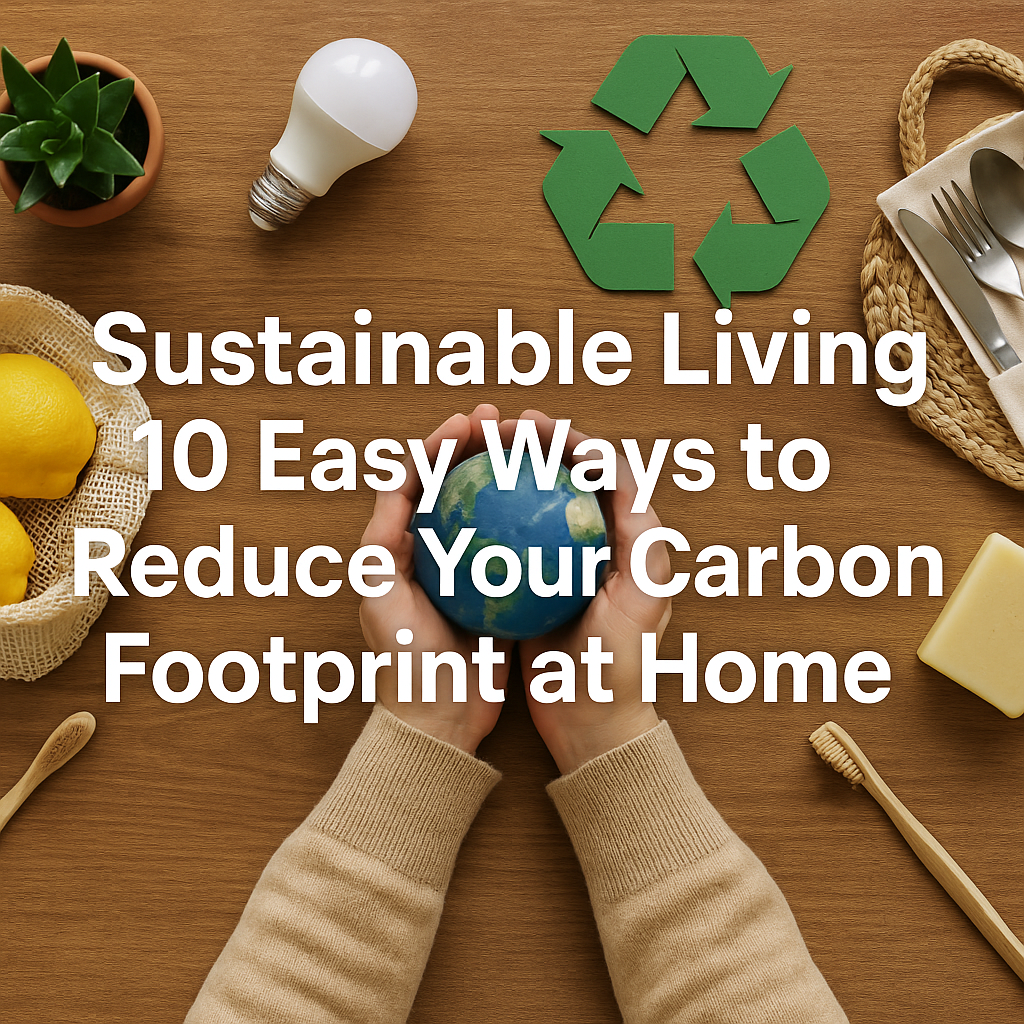
Sustainable Living: 10 Easy Ways to Reduce Your Carbon Footprint at Home
By the SMPLSINNOVATION Team
Sustainable Living: 10 Easy Ways to Reduce Your Carbon Footprint at Home (and Maybe Even Impress Your Neighbor’s Cat)
Let’s be honest—most of us don’t wake up thinking about how to make our breakfast more eco-friendly. But maybe we should.
Your carbon footprint is the total amount of greenhouse gases (like carbon dioxide and methane) that you create through your daily choices. Everything from the food you eat to the lights you leave on affects it.
Experts say that home and lifestyle choices make up about 20% of the world’s greenhouse gas emissions. That means what happens inside your home really does matter!
At SMPLSINNOVATION, we love how technology helps people live better and healthier lives—and that includes being kind to the planet. So grab your favorite mug and check out these ten simple, science-backed ways to make your home more sustainable.
Understanding Your Home’s Carbon Impact
Before making changes, let’s see where most household emissions come from. Here are the top five sources:
1. Energy use from heating, cooling, and lighting
2. Transportation, like quick car trips
3. Water heating, especially long showers
4. Food choices, such as eating lots of meat
5. Waste that ends up in landfills
You can use the EPA’s Household Carbon Footprint Calculator or CoolClimate Network’s Home Calculator to find out your biggest impact areas. It’s usually your thermostat!
Ten Easy Ways to Reduce Your Carbon Footprint at Home
1. Switch to Renewable Electricity
Think of renewable electricity as super fuel for your home that’s better for the planet. You can pick an energy provider that offers 100% renewable power, join a community solar project, or look into new rebates for solar panels and smart meters. Switching to green energy can cut your power-related emissions by up to 80%.
2. Upgrade to Energy-Efficient Appliances
Old appliances can use a surprising amount of power. Try replacing them with energy-saving ones. Some smart swaps include an ENERGY STAR refrigerator, washer and dryer, LED lights, and a smart thermostat. These upgrades can save hundreds of dollars each year and greatly reduce your carbon emissions.
3. Improve Home Insulation and Seal Air Leaks
Good insulation works like a warm sweater for your house. It keeps warm air inside during winter and hot air out during summer. Add insulation to your attic, seal gaps around doors and windows, and use thick curtains. Many phones now have thermal apps that can help you spot air leaks.
4. Use Smart Energy Management
Smart home devices can make saving energy easy. Use smart plugs that monitor power use, set up routines that turn off unused devices, or schedule appliances to run when renewable energy is most available. It’s a simple way to save energy and money.
5. Reduce Water Waste
Hot water uses a lot of energy to produce, so saving water can also cut emissions. Install low-flow showerheads, fix leaks right away, and wash clothes in cold water. You can even try a greywater system to reuse sink or shower water for the garden.
6. Eat More Plant-Based Meals
Every meal is a chance to lower your carbon footprint. Eating more fruits, vegetables, beans, and grains can cut your food-related emissions in half. Try Meatless Mondays, buy local produce, and cook in batches to save both energy and time.
7. Cut Back on Single-Use Plastics
Plastic pollution is a huge problem, but small actions at home can help. Use glass or stainless-steel containers, refill cleaning bottles at refill stations, and bring your own water bottle and utensils when you go out. Even better, buy less plastic in the first place.
8. Change Up Your Transportation Habits
How you get around affects your home’s total carbon footprint too. Try walking, biking, or using public transit for short trips. If you drive, look into electric or hybrid cars, plan your errands so you drive less, and work from home when possible. Cutting just one car trip per week can make a big difference.
9. Compost and Manage Waste
Composting turns food scraps into healthy soil instead of letting them create methane in landfills. Start a compost bin, use your city’s green waste service, and sort your recycling properly. You can also donate or recycle old electronics safely.
10. Buy Less and Choose Better
Every product you buy comes with an environmental cost. Following the “Reduce, Reuse, Recycle” approach helps lower your footprint. Choose quality items that last, shop from sustainable brands, and support secondhand or repair markets. Buying less saves resources and money.
Technology, Health, and Sustainability
At SMPLSINNOVATION, we believe technology, health, and sustainability go hand in hand. From smart home systems to clean energy tools, small changes can make big impacts for you and the planet. Living sustainably doesn’t have to be hard—it can be simple, smart, and even fun.
So start small, stay curious, and celebrate every step toward a cleaner, greener home.