The Future of Telehealth — Revolutionizing Patient Care with AI and IoT
By SMPLSINNOVATION | February 2025
I. Introduction
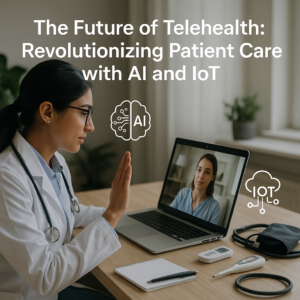
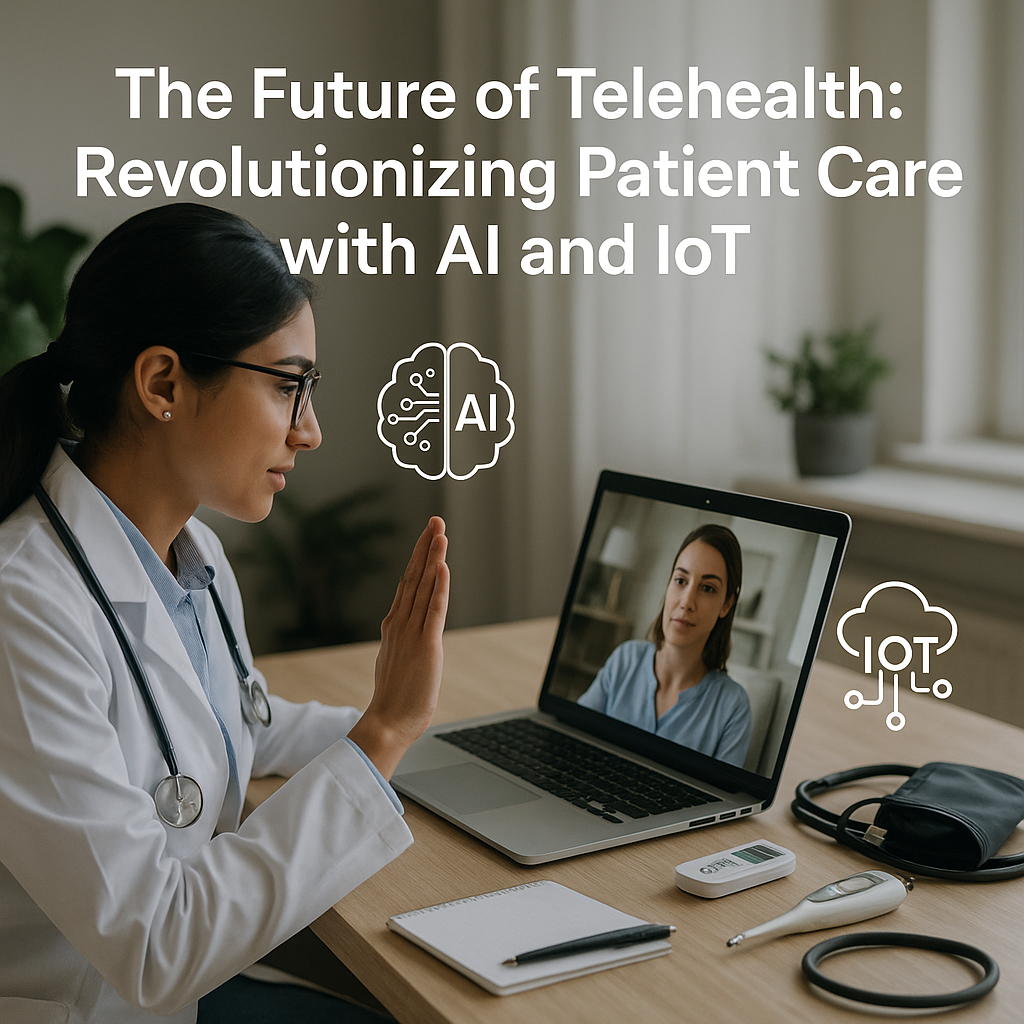
Say goodbye to pagers and paper charts — telehealth has gone high-tech. What started as a helpful tool during the pandemic is now a booming industry powered by Artificial Intelligence (AI) and the Internet of Things (IoT).
In 2024 and early 2025, telehealth didn’t just grow — it took off. Reports from Forbes Health, Statista, and McKinsey’s 2025 Digital Health Index show that global telehealth investments passed 72 billion dollars, with AI-powered remote monitoring making up almost 40% of the market.
At SMPLSINNOVATION, we call this the age of “intelligent care anywhere.” AI acts like a friendly helper for doctors, and IoT turns homes into small, smart hospitals that keep working even while you sleep.
Let’s explore how telehealth, powered by AI and IoT, is changing patient care today.
II. The State of Telehealth in 2025
Telehealth has moved out of the world of fuzzy video calls and slow connections. Now, it connects people, data, and insights in one smooth system.
1. Evolution of Platforms
Telehealth systems created in 2020 are now advanced digital health platforms that connect electronic health records, wearable data, and AI-powered tools. Companies like Teladoc, Amwell, and LunaLink Health have grown from simple online consultation apps into full digital health ecosystems.
2. Policy and Payment Updates
In 2025, the Centers for Medicare & Medicaid Services expanded payment options for remote monitoring and mental health visits. The World Health Organization also introduced new digital health standards to improve global telemedicine.
3. Patient Use and Comfort
More than 65% of adults in the United States had at least one online health visit last year. The gap between age groups is also shrinking — even grandparents are using smartwatches and booking video checkups with ease.
4. Key Players to Watch
Big leaders include Teladoc, Amwell, Philips, and Cerner. Startups like CarePredict, DexCare, and HealthSnap are bringing new ideas. Tech giants like Apple, Google, and Amazon are also getting more involved.
III. The Role of AI in Next-Generation Telehealth
If telehealth were a car, AI would be the autopilot — fast, safe, and accurate, while letting the doctor stay in control.
Here are some ways AI is improving telehealth in 2025:
1. Real-time diagnosis that spots health issues quickly.
2. Prediction tools that help doctors see when a condition might get worse.
3. Smart chat systems that explain medical information clearly.
4. AI assistants that handle scheduling and symptom checks.
5. Systems that listen to conversations and automatically update medical records.
6. Privacy-friendly learning that trains AI across hospitals without sharing private data.
7. Smart monitoring centers that track patients at home and alert doctors right away if there’s a problem.
8. Tools that study community health data to find bigger patterns and needs.
9. Clear ethical guidelines to make sure AI stays fair and transparent.
Doctors now see AI as a helpful partner, not a replacement — one that never gets tired or takes a coffee break.
IV. IoT’s Growing Role in Remote Patient Care
The Internet of Things now has a medical twist called the Internet of Medical Things (IoMT). It connects smart devices, sensors, and hospital systems so care continues everywhere.
Top IoT trends in telehealth for 2025 include:
1. Smart patches that track heart health all the time.
2. Connected inhalers that remind patients when to use them.
3. Remote tools that help cancer doctors monitor treatment results.
4. Smart pill bottles that remind people to take their medicine.
5. Patches that check wounds and healing progress.
6. Wearables that track stress or mood through changes in the body.
7. 5G technology that makes video visits smooth and clear.
8. Strong digital security using blockchain to keep health data safe.
9. Virtual “digital twin” models that test treatments before applying them.
10. AI and IoT working together to speed up diagnosis and decision-making.
These tools make healthcare part of everyday life instead of just a hospital visit. Information moves safely and smoothly, in real time.
V. Challenges and Policies Ahead
With new technology comes new challenges that need smart solutions.
1. Data sharing between systems still needs improvement even with new data standards.
2. Protecting health data is more important than ever, and stronger security is being built into new systems.
3. People in rural or low-income areas still face internet access problems. Partnerships are forming to fix that.
4. Health organizations around the world are updating safety rules to make telehealth safer and more transparent.
5. The biggest question: how to keep empathy and human touch when so much care is virtual. The best systems use technology to help caregivers show more empathy, not less.
VI. Real Stories from 2025
1. Hospital-at-Home Programs
Hospitals like Mayo Clinic and Mount Sinai now run “home command centers.” These centers use AI and IoT to track patients’ health from home. This has lowered readmissions by 30% and made patients happier because most people prefer their own beds to hospital ones.
2. Remote Heart Monitoring
In Japan and the UK, hospitals use wearable sensors and AI to find heart problems early. Emergency heart admissions dropped within six months.
3. Managing Diabetes with Smart Tools
Patients with AI-IoT glucose monitors had 20% fewer low or high blood sugar events. Smart data made daily care easier and safer.
VII. The Road Ahead — SMPLSINNOVATION’s View
Telehealth is moving into an even faster and smarter stage. AI will make care more personal and precise, while IoT will keep data flowing between homes, clinics, and communities.
We believe healthcare leaders should:
1. Connect all systems so AI, IoT, and medical tools work together smoothly.
2. Focus on people first — technology should make care easier, not harder.
3. Innovate responsibly with secure, fair, and inclusive design.
VIII. Conclusion
Telehealth in 2025 is smart, connected, and full of potential. AI listens, predicts, and supports. IoT connects, tracks, and reports. Together, they create a new world of care that is more personal, more efficient, and more human than ever before.