Remote Patient Monitoring in Australian Home Care: Benefits, Challenges and the Future of Virtual Nursing
By SMPLSINNOVATION — published September 2024
Because even Wi-Fi deserves to wear scrubs sometimes.
1. Introduction
Overview of the Shift to Virtual Care
The classic “house call” has come back, but now it involves less paper and more technology. After COVID-19, many Australians found they liked getting care at home. The Australian Digital Health Agency says more people than ever are choosing home and hybrid care.
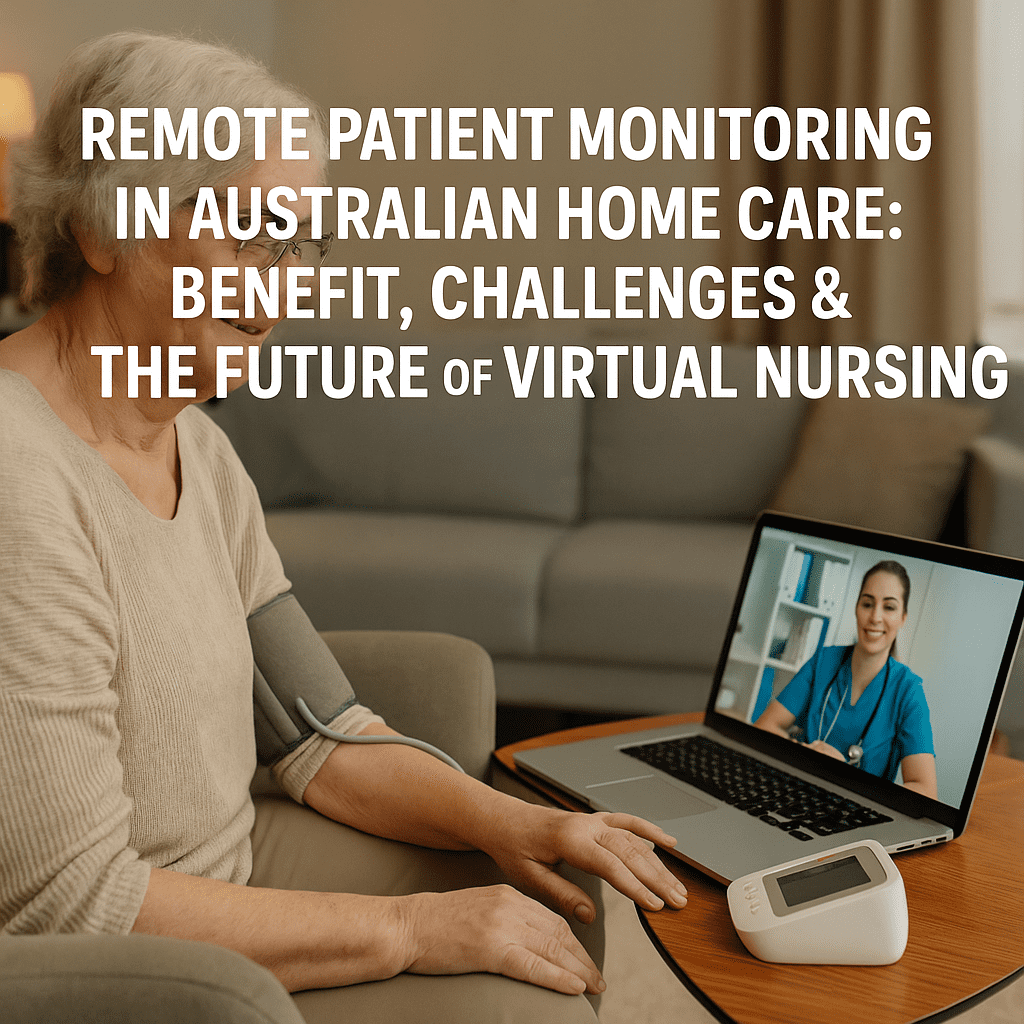
Remote Patient Monitoring, or RPM, is like a smart helper for home nurses. It quietly keeps track of health data, spots early warnings, and turns everyday health habits into useful information. It’s now a normal part of aged and chronic care instead of a nice extra.
Purpose and Scope
In this post, SMPLSINNOVATION looks at:
– The national policies around RPM and virtual nursing.
– The main benefits and challenges of using RPM in Aussie homes.
– The future of virtual nursing and how it’s changing care across Australia.
So grab your virtual stethoscope and let’s get started.
2. Understanding Remote Patient Monitoring in Australian Home Care
Defining the Terms
Remote Patient Monitoring (RPM) collects health data through connected devices and sends it to doctors or nurses so they can review and respond.
Telehealth lets doctors and patients connect by video or phone.
Virtual Nursing mixes regular nursing care with remote tools to support patients with education, triage, and ongoing care.
Regulatory Framework
Under the National Digital Health Strategy (2024 update), RPM is a key part of Australia’s healthcare system. Data standards make sure devices work with My Health Record while keeping personal information protected under the Privacy Act 1988.
Ten Common RPM Tools in Australian Homes
1. Bluetooth blood pressure monitors and oximeters
2. Wearable heart rhythm sensors
3. Continuous glucose monitors
4. Smart medication dispensers that remind users to take medicine
5. AI health dashboards that show easy-to-read data
6. Home diagnostic kits for kidney or breathing checks
7. Video triage tools
8. Cloud systems linking nurses, doctors, and specialists
9. Fall detection and movement sensors
10. Remote wound care and virtual rehab tools
These tools are changing what “home visit” really means. Your nurse could be in Sydney while your data is in Canberra and your cat is sitting on the Wi-Fi modem.
3. Current Trends Shaping RPM in 2023–2024
Government and Policy
– Medicare reforms now support digital care in homes.
– My Health Record updates make it easy to share RPM data.
– States like Queensland and Victoria are testing digital care for conditions such as COPD, heart failure, and diabetes.
Clinical Practice
– Mix of in-person and digital care.
– Data tools to help nurses catch problems early.
– RPM used for specific conditions like diabetes and recovery after surgery.
Patient Experience
– People feel safer with 24/7 monitoring.
– Patients take more control over their health.
– Remote areas get better access to care.
4. Benefits of Remote Patient Monitoring
Clinical and Safety Benefits
1. Early warning signs are caught faster.
2. Fewer hospital readmissions.
3. Better tracking of medication use.
4. Improved results for chronic diseases.
5. Fewer unnecessary hospital visits.
6. More accurate care plans.
7. Better use of nurse time.
8. Greater independence for older adults.
9. Continuous care from all team members.
10. Preventative strategies based on real-time data.
Operational and Economic Benefits
1. Lower hospital and emergency costs.
2. Less paperwork and faster reporting.
3. Easier to scale care without more staff.
4. Nurses can reach more people without travel.
5. Better resource planning using data.
6. Fewer bed blockages in hospitals.
7. Shorter hospital stays after treatment.
8. Less pollution from reduced travel.
9. Happier health workers.
10. New ways to earn income through care programs.
Patient-Centred Benefits
1. More trust and satisfaction.
2. Better treatment follow-through.
3. Less travel stress for elderly patients.
4. Help arrives faster in emergencies.
5. Higher health knowledge and confidence.
6. Personal health insights through wearables.
7. Less loneliness and more connection.
8. Better teamwork between families and professionals.
9. Tech that supports different languages and cultures.
10. A better quality of life overall.
5. Key Challenges Holding RPM Back
Even with great tools, problems can appear.
1. Systems that don’t work well together.
2. Slow or weak internet in rural areas.
3. Too much data for nurses to handle easily.
4. Some people not confident with technology.
5. Privacy and security concerns.
6. Unclear or uneven funding models.
7. Complicated rules across states.
8. Keeping devices working in many homes.
9. Some staff resistant to change.
10. Technology making care feel less personal.
6. The Future of Virtual Nursing in Australia
New Innovations on the Way
1. AI tools that warn about health risks before they happen.
2. RPM connected with e-prescriptions for quick medicine updates.
3. Voice tools for nurses to record notes hands-free.
4. Augmented reality training for home caregivers.
5. Predictive mapping to plan better community health services.
6. Shared global health standards.
7. At-home hospital programs for serious care.
8. Better data safety through blockchain.
9. Devices that track stress and emotions.
10. Friendly virtual nurse avatars that educate and support patients.
Policy and Workforce Planning
The Department of Health and Aged Care plans long-term investment in:
– Training more nurses in digital care.
– Expanding home and community care technology.
– Changing payment systems to support ongoing monitoring.
– Working with patients to design easy-to-use tools.
What It Means for Providers and Innovators
1. Focus on empathy and easy-to-use design.
2. Make sure systems can connect and share data.
3. Keep privacy and data security strong.
4. Train nurses for digital workflows.
5. Keep testing and improving your systems.
6. Join government pilot programs.
7. Build data systems ready for national use.
8. Keep care human and friendly, not robotic.