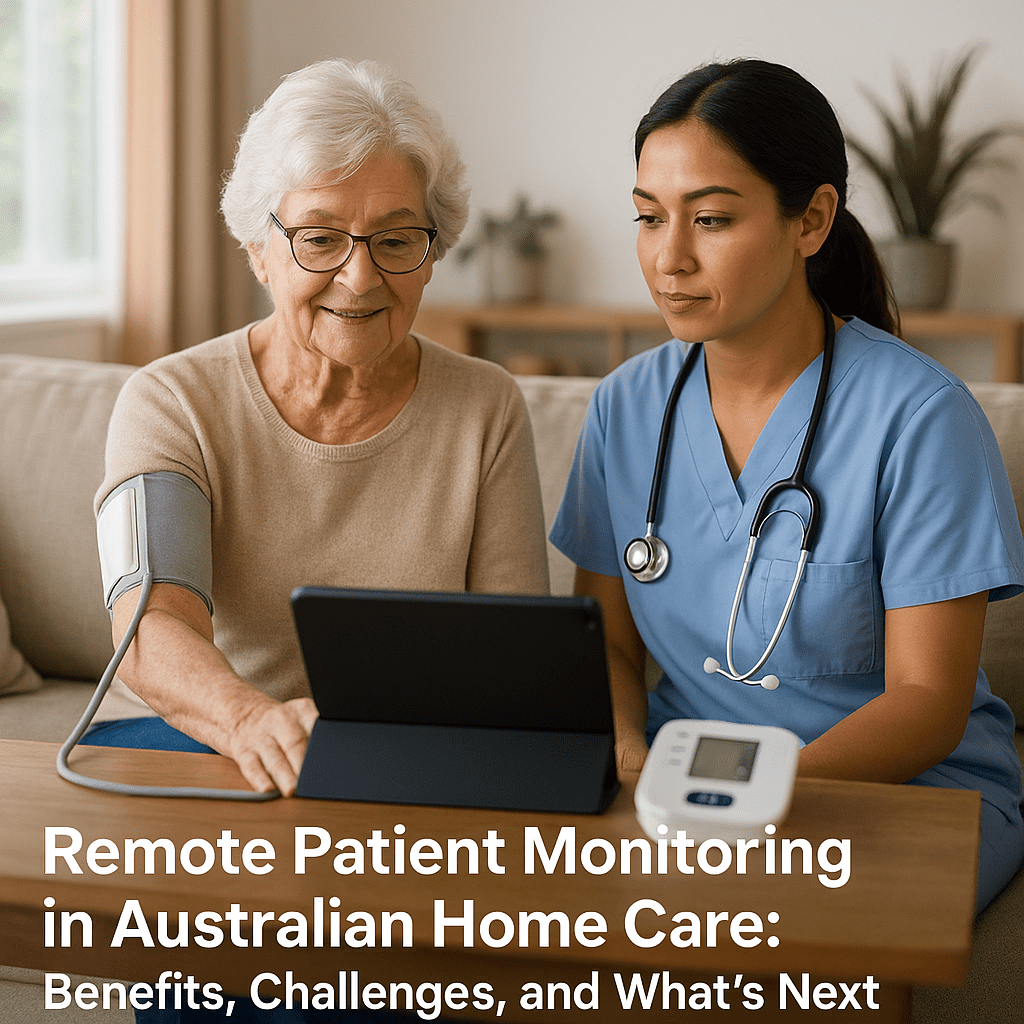
Remote Patient Monitoring in Australian Home Care: Benefits, Challenges, and What’s Next
Based on research from the Australian Department of Health and Aged Care, CSIRO eHealth Research Centre, Australian Digital Health Agency, and recent studies as of February 2024.
By SMPLSINNOVATION — Health Technology Consulting, Simplified (and kind of fun)
1. Introduction
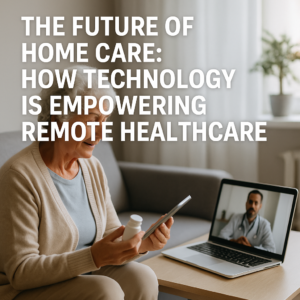
Australians love being cared for at home, just like they love their morning coffee. Home care means comfort, independence, and better health, especially when supported by smart technology.
That’s where Remote Patient Monitoring (RPM) comes in. Think of RPM as your healthcare team visiting you daily—but without driving to your house. RPM uses smart devices to track things like blood pressure, heart rate, or oxygen levels. The data gets sent straight to doctors or nurses so they can act early if something doesn’t look right.
In 2024, Australia is giving its aged care and digital health systems a big upgrade. The Department of Health and Aged Care’s Aged Care Reforms and the National Digital Health Strategy 2023–2028 both share the same goal: to make healthcare smarter, safer, and more human.
RPM is becoming a key part of this plan, helping manage the growing number of older Australians and people with long-term illnesses.
2. The Growing Role of RPM in Australian Home Care
According to the Australian Digital Health Agency’s February 2024 report, about 45% of home and community care providers now use some kind of RPM system. By connecting RPM data to My Health Record, doctors can see what’s happening with patients almost in real time.
For example, if someone checks their blood pressure at home on Wednesday, their doctor can view the results by Thursday morning—no need to wait for the next visit.
Several pilot programs have shown great results:
– CSIRO Telehealth Trials (2023–2024): Medication use improved by more than 30% among heart failure patients.
– Regional CareLink Queensland Pilot: A 25% drop in hospital readmissions over 6 months using wearable devices.
– South Australian Community Connect Program: A central system helps nurses plan visits based on real-time alerts.
The 2024–2025 Federal Health Budget also set aside $400 million for health technology, with RPM listed as a top priority for helping older Australians live safely at home.
3. Key Benefits of RPM for Australian Patients and Care Providers
Here are 10 reasons why RPM is a game-changer for home care:
1. Better control of chronic illness—doctors can adjust treatment before problems get worse.
2. Fewer hospital visits—early alerts help prevent emergencies.
3. More independence—people stay involved in their care.
4. Stronger links between home and clinic—no missing data or confusion.
5. Smarter use of staff time—care teams focus on those who need help the most.
6. Better support for family carers—updates give peace of mind remotely.
7. Improved medicine routines—smart tools remind people to take medication on time.
8. Personalised care—data helps tailor each person’s plan.
9. Easier teamwork—doctors, nurses, and specialists can all work from the same data.
10. More enjoyable lives—fewer hospital trips and more time for hobbies and family.
One study even found that people using RPM felt safer at home. Technology can really be a comfort.
4. Technology Driving RPM Forward
RPM is growing fast in Australia because of new tech developments like:
1. 5G networks bringing better connections to rural areas.
2. Smart medical devices that send data automatically.
3. AI that can predict when someone’s health may be getting worse.
4. Stronger cloud security to protect personal information.
5. Better data standards so systems “speak the same language.”
6. Lighter wearables that even older users find easy to wear.
7. Smart home health hubs for quick video calls and device control.
8. Dashboards that show doctors and nurses real-time updates.
9. Faster local data processing for urgent situations.
10. Clearer graphs and alerts that make it easier to act fast.
In the end, easy-to-use devices are key. If Grandma finds it simple, it will work for everyone.
5. Challenges Slowing RPM Adoption
Of course, it’s not all perfect. Here’s what’s still in the way:
1. Slow internet in some remote areas.
2. Different computer systems that don’t talk to each other.
3. Privacy and cybersecurity concerns.
4. Unclear funding—who pays for what?
5. Limited digital skills among some staff and patients.
6. Long approval times for medical devices.
7. Some professionals still prefer face-to-face care.
8. Too many alerts causing information fatigue.
9. Building patient trust about data privacy.
10. More local studies are needed to prove cost savings.
The technology is ready, but the system is still catching up.
6. Policy and Regulation
The National Digital Health Strategy 2023–2028 has brought more structure to digital health. It focuses on:
– Connecting health, aged care, and disability services through stronger digital systems.
– Improving cybersecurity for RPM technology and providers.
– Ensuring data standards and privacy rules are followed.
– Making sure RPM programs meet the same safety standards as in-person care.
– Training workers to confidently use digital tools.
These steps help move RPM from pilot projects to everyday practice across the country.
7. What’s Next for RPM in Australian Home Care
Here’s what’s coming soon:
1. Predictive care powered by AI—doctors will act before a problem happens, not after.
2. Smooth handovers between home and hospital through shared digital records.
3. Community-based networks using digital tools to deliver care locally.
At SMPLSINNOVATION, we help health providers design systems that make this shift easier—and more enjoyable. We believe technology should serve people, be easy to use, and make care more human.
8. Conclusion
Remote Patient Monitoring isn’t just another digital health trend—it’s becoming a key part of how Australians receive care at home. It helps people stay healthy, independent, and connected, while giving care teams the insights they need to act early and support better lives for everyone.