Navigating the Future of Medication Management in Aged Care: The Role of Smart Dispensing Technologies
By SMPLSINNOVATION — Because health tech should be both smart and simple.
1. Introduction
Managing medications in aged care can feel like a huge challenge. With so many prescriptions, different doses, and strict schedules, it’s easy for things to get confusing. As the world’s older population grows, this challenge will only become bigger. The World Health Organization says that by 2030, one in six people will be over 60 years old.
Technology is stepping in to help. In aged care, digital tools are turning medication management from a stressful, manual job into an easier, safer, and more accurate process.
This blog will explain how smart medication dispensers are changing aged care. They improve safety and efficiency, and help caregivers stay organized. We’ll look at how things currently work, what new research shows, and how modern tools like robotics and artificial intelligence are creating a kinder, smarter way to care.
2. The Current Landscape of Medication Management in Aged Care
Today, many aged care facilities still use paper charts, handwritten lists, and color-coded pill boxes. Staff often manage dozens of different medication routines every day. Even the most careful nurse can make mistakes, especially when things get busy.
Common challenges include:
1. Keeping paper records, which takes a lot of time and can lead to errors.
2. Human error, such as giving the wrong medication or missing a dose.
3. Residents forgetting to take their medicine or not understanding instructions.
4. Keeping up with strict health and safety rules.
5. Staff shortages, leaving fewer people to handle more work.
6. Medication waste, which can cost facilities a lot of money each year.
7. Systems that don’t share information easily, causing communication gaps.
A review from the Journal of Geriatric Medicine in 2024 showed that medication errors are still one of the top three preventable issues in aged care. With staff shortages and rising costs, moving to digital systems is no longer optional—it’s necessary.
3. Technological Evolution in Medication Dispensing
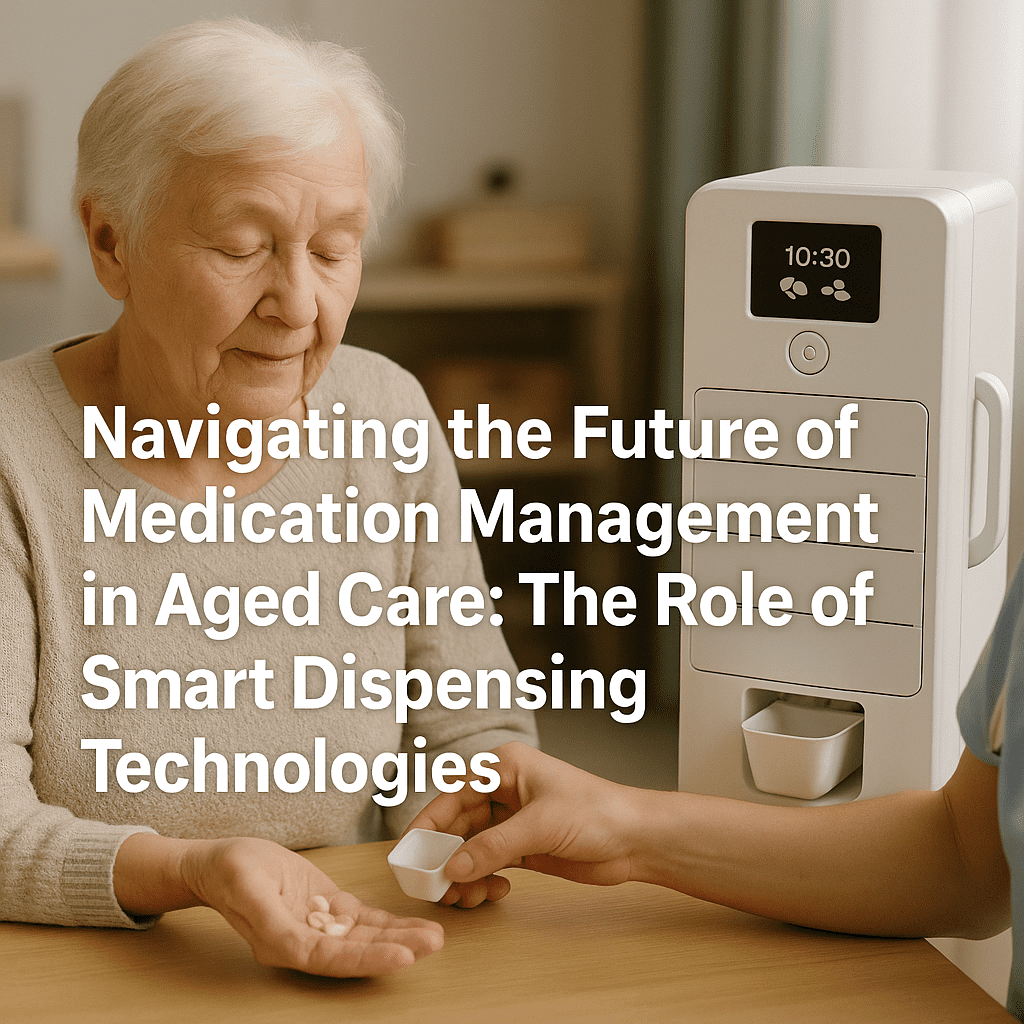
Smart dispensing technologies are advanced systems that help sort, schedule, and track medications automatically. They often use artificial intelligence, machine learning, and connected devices to make medication management safer and more accurate.
If old pill boxes are like flip phones, smart dispensers are like smartphones—modern, efficient, and full of helpful features.
Here’s how they’ve evolved over time:
– Early 2000s: Simple pill boxes that beeped when it was time for a dose.
– 2010s: Internet-connected dispensers that could send data to caregivers.
– 2020s: Fully automated systems that use AI to predict and prevent problems.
Some examples of today’s smart technologies include:
1. Automated dispensers that release pills at the right time.
2. Digital blister packs that track each dose.
3. AI tools that alert caregivers if someone misses a dose.
4. Remote pharmacist systems that verify and manage prescriptions.
5. Voice-assisted devices that help users take medicine easily.
6. AI systems that predict drug interactions or missed doses.
7. Secure prescription record systems using blockchain.
8. Biometric safety tools, like facial or fingerprint recognition.
9. Cloud dashboards that collect and share medication data.
10. Robotic machines that handle sorting and packaging.
Each of these tools helps make care easier, safer, and more efficient.
4. Core Benefits Driving Adoption
Why are these technologies so important? Here are the main reasons aged care facilities are using them:
1. Improved safety: Automated systems lower the risk of mistakes.
2. Better medication routines: Reminders and alerts help residents stay on track.
3. Higher efficiency: Less paperwork means more time for personal care.
4. Easier compliance: Built-in records meet healthcare standards.
5. Cost savings: Less medication waste and fewer hospital visits.
According to a 2024 study in the International Journal of Digital Health, facilities using smart dispensing systems reduced medication problems by about 40 percent and saved around 10 hours of staff time each week.
5. Evidence from the Latest Research
Recent studies have found strong support for smart medication technologies.
Key findings from early 2024 include:
1. A University of Melbourne review found adherence improved by 32 percent with smart systems.
2. In the UK, facilities using AI tools saw 27 percent fewer errors.
3. U.S. nursing homes with robotic systems reduced hospital readmissions by 15 percent.
4. In Japan, digital blister packs improved medication tracking and safety.
Still, not every facility can afford these systems. Smaller or rural centers may face challenges with funding and training. That’s why companies like SMPLSINNOVATION focus on making technology simple and accessible.
6. Ethical, Privacy, and Data Protection Considerations
As technology grows, so do privacy concerns. Protecting sensitive health data is very important.
Some key ethical and privacy issues include:
1. Cybersecurity risks — keeping all systems safe from hackers.
2. Clear consent — making sure residents understand how their data is used.
3. Data rights — deciding who owns medical information.
4. AI fairness — checking that algorithms give accurate results.
5. System reliability — balancing automation with human oversight.
6. Legal compliance — following privacy laws like HIPAA, GDPR, and the Australian Privacy Act.
The best systems balance technology with human care, making sure safety and empathy are always top priorities.
7. What’s Next: Trends Shaping the Future
The next few years will bring even smarter medication systems. Here are ten trends to watch:
1. Personalized schedules designed by AI.
2. Smartwatches that connect to medication dispensers.
3. Voice and gesture controls for people with limited movement.
4. Augmented reality glasses that help caregivers double-check medications.
5. Self-learning AI that improves over time.
6. Automatic restocking systems to prevent shortages.
7. Decentralized data giving patients more control.
8. Better integration between pharmacies, nurses, and administration software.
9. Small, adaptable robots that handle different medication tasks.
10. Eco-friendly dispensing machines that reduce waste.
8. Conclusion
Medication management in aged care is entering a new age powered by technology and innovation. While cost, training, and privacy concerns remain, smart dispensing is helping make care safer, smarter, and simpler.
At SMPLSINNOVATION, we are passionate about turning complex technology into everyday solutions that make healthcare better for everyone. Because good health technology should always be both smart and simple.