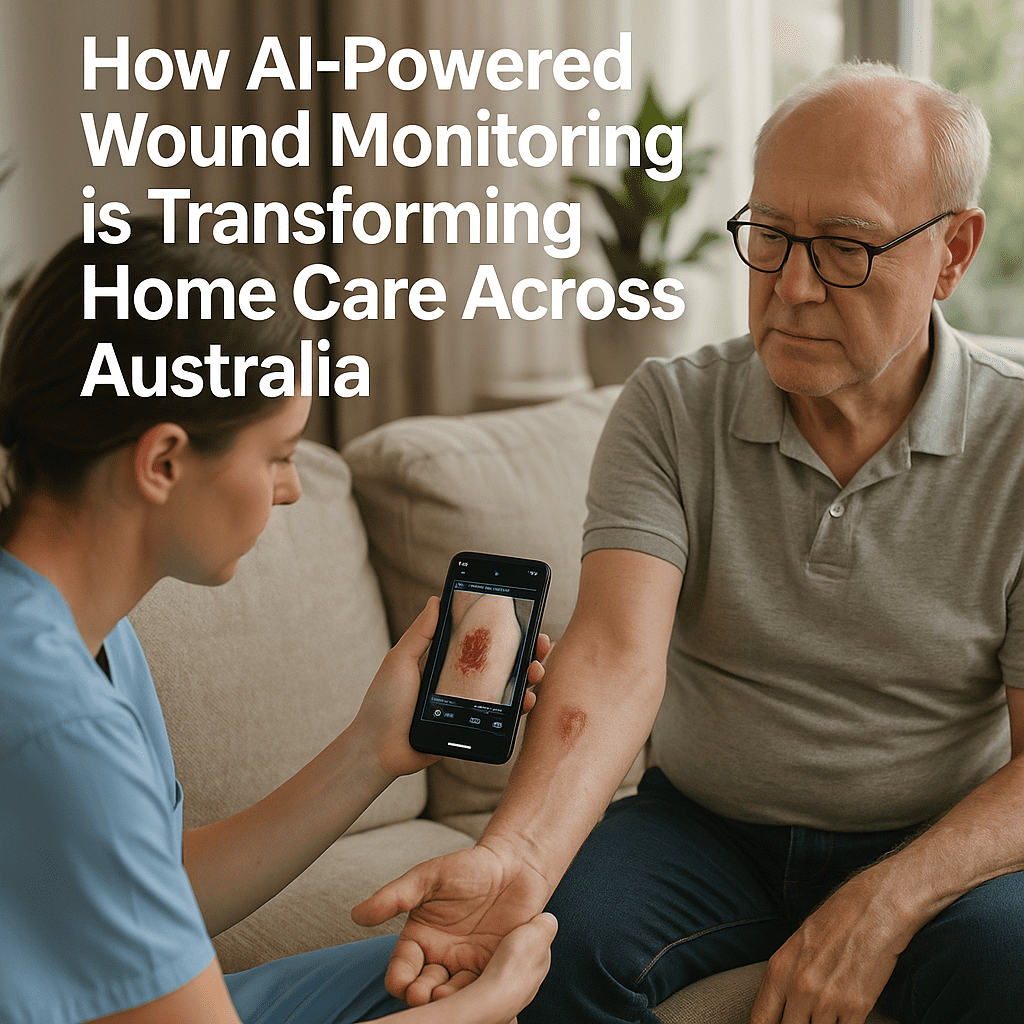
How AI-Powered Wound Monitoring is Changing Home Care Across Australia
By SMPLSINNOVATION | Health Technology Consulting | June 2024
1. Introduction: The Rise of AI in Home Care
Welcome to the future of wound care—where smart technology helps people heal faster and safer at home. Across Australia, home healthcare is changing in amazing ways thanks to artificial intelligence, or AI.
Each year, more than 420,000 Australians deal with chronic wounds. Treating these costs over 3 billion dollars. Many of these wounds are linked to diabetes, aging, and poor circulation, putting stress on hospitals, clinics, and families.
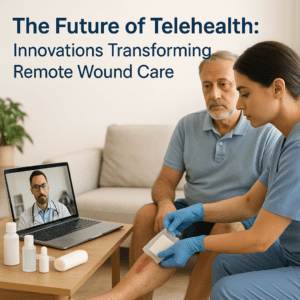
But there is good news. AI-powered wound monitoring is helping doctors and nurses keep track of wounds from a distance. It helps catch infections early and reduces the need for hospital visits. Home care is becoming easier, safer, and smarter.
2. What Is AI-Powered Wound Monitoring?
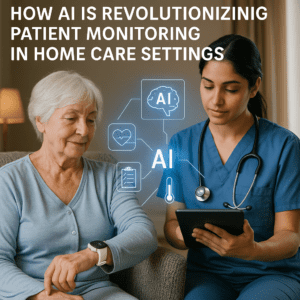
AI-powered wound monitoring uses computer vision, machine learning, and cloud systems to look at wounds, track healing, and send alerts before problems occur.
Here’s how it works:
– Computer Vision: AI “looks” at wound photos, checking color, size, and tissue condition.
– Machine Learning: AI learns from many examples to guess how a wound will heal.
– Cloud Systems: Photos and data are safely stored so doctors can view and share them.
– Wearable Sensors: Smart sensors check moisture, temperature, and inflammation.
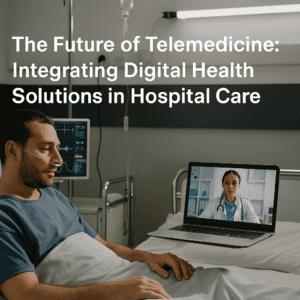
– Telehealth Tools: Patients can talk to doctors or nurses without leaving home.
In Australia, these systems must follow rules from the Therapeutic Goods Administration (TGA) to make sure they are safe and reliable.
3. The Current State of Wound Care in Australia
Even with good healthcare, wound care still faces big problems:
– Around 2% of the population has chronic wounds, and this number is growing.
– People in remote areas often struggle to see wound care specialists.
– Hospital visits for wound problems cost millions each year.
– There are not enough nurses to handle all complex wound cases.
AI is starting to close these gaps and support health workers across the country.
4. Ten Ways AI Is Changing Wound Care at Home
1. Automatic size and shape measurements.
2. Early infection detection.
3. Healing time prediction.
4. Easy updates in digital health records.
5. Remote medical advice using photos or videos.
6. Custom care plans for each person.
7. Automatic alerts when a wound shows warning signs.
8. Easy-to-make reports for doctors and nurses.
9. Less human error when checking wounds.
10. Better use of time, money, and travel.
Soon, even a smartwatch might help check a wound’s healing progress.
5. Leading Projects in Australia
Many Australian groups are leading this health-tech movement:
– CSIRO is testing apps that classify wounds using phone photos.
– Wounds Australia is joining with start-ups to bring digital care to aged care homes.
– Royal Brisbane and Women’s Hospital and the University of Queensland are studying AI imaging tools.
– The University of Sydney and Westmead Hospital are exploring thermal imaging for diabetic foot care.
– Start-ups like SilverChain and TeleWound AU are trying smart dressings and digital dashboards.
Australia is also teaming up with global AI experts to make healthcare smarter and more available to everyone.
6. What Patients and Clinicians Think
For patients, especially in remote areas, AI tools give peace of mind because they can see how their wound is healing on a device. Clinicians like having faster reports, clear data, and fewer emergency calls. Some studies show healing times can be up to 35% faster with digital monitoring.
In Indigenous health programs, mobile-friendly technology and culturally aware training are helping improve care and communication.
7. Challenges and Ethics
There are still some challenges to overcome:
– Data safety and privacy must come first.
– AI needs to work well for all skin tones and photo types.
– Human doctors should always make the final decisions.
– Getting TGA approval can take time.
– Some hospitals still use old computer systems that are hard to update.
Using AI responsibly will make sure it truly helps patients and supports doctors.
8. The Future of AI Wound Monitoring
Here’s what’s coming next:
1. 3D wound imaging for more accurate measurement.
2. Smart bandages that release medicine automatically.
3. AR tools for training home carers.
4. Voice-guided apps that help patients take photos correctly.
5. Devices that process data locally for better privacy.
6. Shared systems between hospitals, GPs, and home care teams.
7. Dashboards that combine wound data with diet and activity levels.
8. AI tools that explain why they make certain decisions.
9. Energy-saving technology for sustainable healthcare.
10. National wound databases to improve research and policy.
Soon, a dressing might even remind you to drink water or schedule your next check-up!
9. Conclusion: Smarter Care, Happier Healing
AI wound monitoring is more than just new technology—it’s a big step toward better care at home. It saves time, helps doctors focus on patients, and gives people more control over their healing.
At SMPLSINNOVATION, we’re helping healthcare providers use these smart tools. Whether you run a hospital, create new tech, or provide home care, now is the perfect time to explore AI in wound care.
The future of healthcare in Australia is looking truly wound-erful.
SMPLSINNOVATION
Transforming how healthcare thinks, works, and heals—one smart solution at a time.