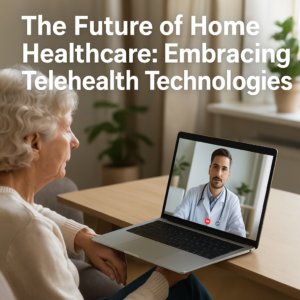

How AI-Powered Remote Monitoring Helps Manage Chronic Diseases at Home
Based on information published in March 2024 by NEJM AI, Nature Digital Medicine, HealthTech Magazine, and FierceHealthcare
By SMPLSINNOVATION – Your friendly neighborhood health-tech geeks
I. Introduction
The 2020s have been full of new technology, and now healthcare is catching up. Chronic diseases such as heart failure, diabetes, COPD, and high blood pressure continue to cause many health problems and deaths around the world. With more people getting older and wanting care at home, healthcare providers are looking for better ways to give constant support.
That’s where AI-powered remote monitoring comes in. It’s like having a small medical team inside your smartwatch. Using sensors and smart computer programs, it can notice things like changes in your heart rate or remind you about your medicine.
In just a few years, AI has made remote monitoring a key part of managing long-term diseases. It helps doctors take action sooner, lowers hospital visits, and lets patients live healthier lives at home.
II. The State of Chronic Disease Management in 2024
Here’s the situation today:
– Chronic diseases cause about 74% of all deaths around the world, according to the World Health Organization.
– More than 1 billion adults are now over 60 years old, and that number is still growing.
– Shortages of healthcare staff make it hard for traditional care models to keep up, especially in home care.
Home care faces three main problems:
1. Patients are not monitored often enough. Doctors may rely on patients to report how they feel.
2. There are limited resources. Nurses and caregivers can only help so many people in person.
3. Care often happens after symptoms get worse, instead of before.
To solve these problems, new tools like digital therapeutics and virtual care systems are being used. AI remote monitoring helps by watching patient data all the time, finding patterns, and giving early warnings before issues become serious.
III. Key AI-Powered Remote Monitoring Technologies
AI comes in many forms. Here are ten major technologies helping people manage chronic diseases in 2024:
1. Wearable sensors that track heart rate, oxygen, and irregular rhythms in real time.
2. Smart glucose monitors that predict blood sugar changes hours in advance.
3. Smart inhalers that track use and help people manage asthma or COPD.
4. Breathing monitors that find signs of sleep apnea or breathing distress.
5. Heart failure prediction tools that use data to warn of problems early.
6. Cameras that study how a person walks to detect fall risks in older adults.
7. Smart pill dispensers that remind patients to take medicine and alert caregivers if doses are missed.
8. Speech analysis tools that can detect early signs of cognitive decline.
9. AI systems that read ECG data fast to spot heart rhythm issues.
10. Platforms that combine many types of health data—like blood pressure, heart rate, and sleep—for a complete picture.
When these tools work together, they create a connected, “always-on” care environment.
IV. How AI Improves Remote Monitoring
Here’s what AI does behind the scenes:
1. It studies health data in real time, noticing even small changes.
2. It predicts when a disease might get worse before it happens.
3. It sends alerts to care teams so they can act sooner.
4. It learns each patient’s normal health patterns and gives personalized advice.
5. It connects smoothly with electronic health records so doctors see the right information at the right time.
With AI, healthcare goes from occasional check-ins to continuous, real-time care.
V. Benefits for Patients, Caregivers, and Providers
AI-powered monitoring helps everyone involved.
For Patients:
1. Gives people more control and confidence in managing their health.
2. Finds problems early, before symptoms get worse.
3. Sends reminders, making it easier to take medicine on time.
For Caregivers:
1. Reduces stress and time spent on manual tracking.
2. Improves communication between families, nurses, and doctors.
3. Helps plan care more effectively and avoid last-minute emergencies.
For Healthcare Providers:
1. Saves time by automating regular monitoring tasks.
2. Provides better data for making medical decisions.
3. Lowers hospital visits and overall healthcare costs.
VI. Current Research and Real-World Examples
Recent studies show just how well AI monitoring works:
1. NEJM AI found that remote AI glucose monitoring lowered blood sugar levels and reduced ER visits.
2. Nature Digital Medicine reported that AI-plus-human care models cut hospitalizations for heart failure patients by 35%.
3. FierceHealthcare shared that Cleveland Clinic used AI-based heart monitoring to speed up response times by 40%.
4. HealthTech Magazine showed that smart inhalers improved medication use by 20% among COPD patients.
5. UC San Diego Health started a program combining wearables, AI, and patient data to predict hospital readmissions.
These examples prove AI-powered monitoring is both effective and practical.
VII. Challenges and Important Considerations
AI has great potential, but there are still challenges:
1. Patient data must stay private and secure.
2. AI systems can show bias if not trained on diverse data.
3. Doctors need training and trust in the technology.
4. Different digital systems don’t always work well together.
5. Rules and regulations must keep up with new technology.
Solving these issues will take teamwork between tech companies, healthcare providers, and policy makers.
VIII. Conclusion
AI-powered remote monitoring is changing how chronic diseases are managed at home. With predictive tools and smart sensors, care is becoming more personal and proactive.
By 2024, remote monitoring is no longer a fun gadget but an important part of modern healthcare.
At SMPLSINNOVATION, we help healthcare teams bring these technologies to life—with energy, creativity, and teamwork. Because when technology makes care feel more human, everyone benefits.
Want to bring AI-powered care into homes? Let’s make it happen.