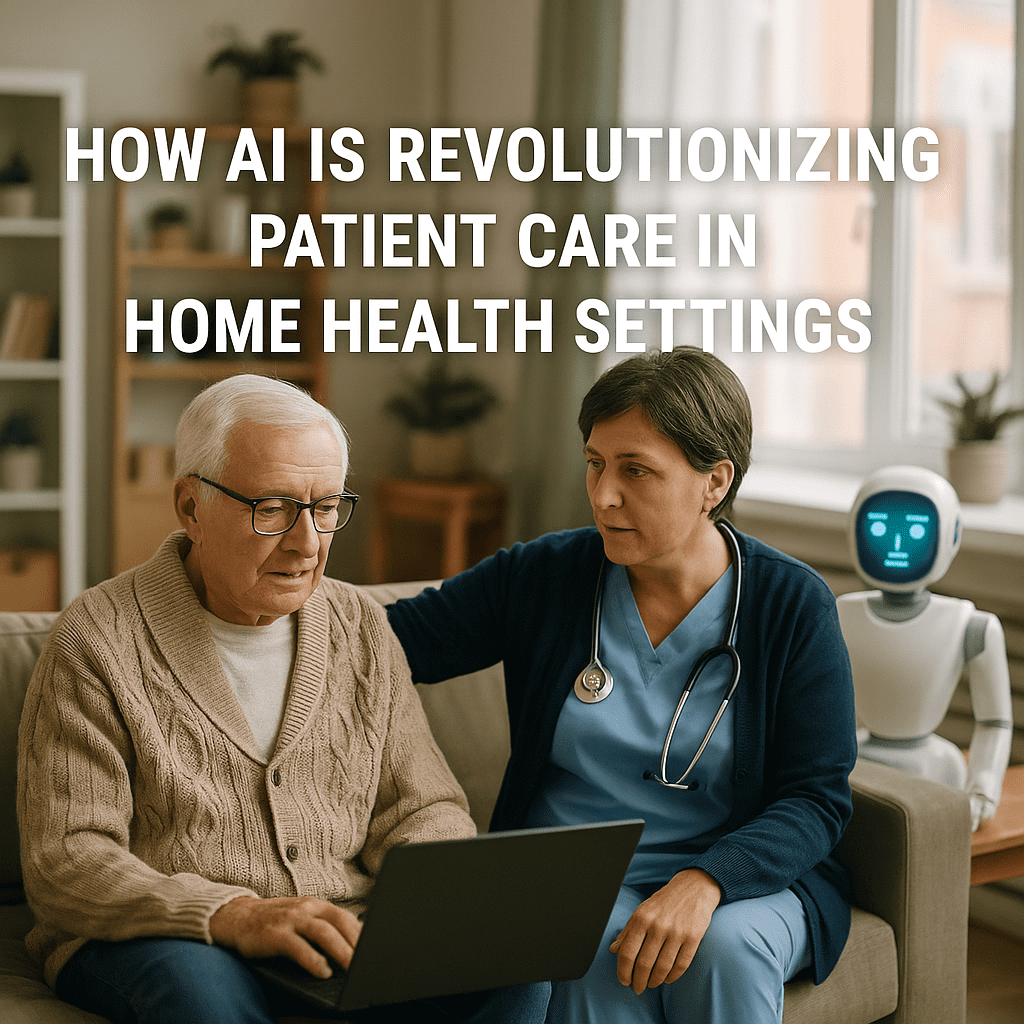
How AI Is Changing Patient Care in Home Health
By SMPLSINNOVATION — Health Technology Consulting That Feels Human
I. The New Frontier of Home Health
Imagine it’s the year 2030 and your refrigerator knows your blood sugar levels better than your doctor once did. Actually, that’s already starting to happen. The line between hospitals and homes is fading quickly, thanks to new technology and the growing need for care.
All around the world, more people are living longer with conditions like diabetes, heart disease, and lung problems. Hospitals are struggling to keep up. Experts from the McKinsey Health Institute and NEJM Catalyst say the next big step in healthcare is not building more hospitals. It’s turning our homes into places of constant, smart care.
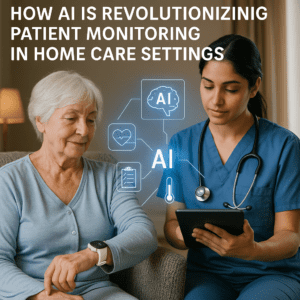
Welcome to the age of AI-powered home health. Your house can now check your pulse, your watch can call for help before you faint, and your care team can spot problems before you even notice them. Artificial intelligence is no longer just a buzzword. It’s the upgrade home healthcare has been waiting for.
II. Why 2024 Is a Big Year for AI in Home Health
If 2023 was the year people started to play with AI, 2024 is the year it began to truly make a difference. Experts from Nature Digital Medicine and HealthTech Magazine say that in 2024, AI started to improve real patient results at home.
Three big changes made this possible:
1. Smart AI systems now combine medical history, wearable data, and other information to predict risks with great accuracy.
2. AI-powered wearable devices, like watches and earbuds that check heart rate and blood pressure, are getting better and easier to use.
3. Friendly AI companions, like chatbots and virtual helpers, remind patients to take medicine, offer health tips, and keep lonely people company.
Now, our homes are turning into “intelligent clinics” that never close and never forget.
III. Ten Ways AI Is Transforming Home Health Care
Here are ten amazing ways AI is changing health care at home:
1. Predictive Health Monitoring – AI watches your heart rate, breathing, and movement to predict things like falls or heart problems before they happen.
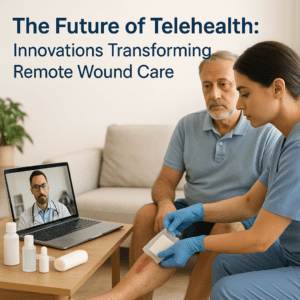
2. Remote Diagnostics – AI can spot skin rashes, wounds, or ulcers from a simple smartphone photo, helping doctors give faster care.
3. Medication Management – Smart pill boxes work with AI to remind patients to take medicine and alert caregivers if something is missed.
4. Virtual Nursing Assistants – AI chats can guide patients through recovery steps without long wait times.
5. Personalized Care Plans – AI learns from each person’s habits and health to create care plans that fit their lifestyle.
6. Mental Health Support – AI tools can read tone and messages to notice signs of stress, sadness, or burnout early.
7. Rehab and Mobility Coaching – Motion-sensing AI helps people do physical therapy correctly and encourages healthy habits.
8. Chronic Disease Management – AI tracks long-term health conditions like diabetes and helps doctors adjust treatment right away.
9. Caregiver Support – AI systems make it easier for doctors, nurses, and families to share information and work as a team.
10. Continuous Feedback – AI devices send live data to care teams, so they can make faster, smarter decisions.
Each of these tools helps fill the gap in home health care, offering safety and quality even when a doctor isn’t there in person.
IV. New Technologies Changing Home Health in 2024
AI in health care is made up of many new tools working together. Here are ten exciting technologies shaping care at home:
1. Multimodal Sensors – These measure heart rate, oxygen, temperature, and movement with one easy-to-wear patch or band.
2. Federated Learning Models – These allow AI to learn from hospital data without moving or sharing private information.
3. AI in Edge Devices – This means data is processed in your home instead of in the cloud, making systems faster and safer.
4. Generative AI for Notes – These tools summarize nurse and home visits automatically, saving time for real care.
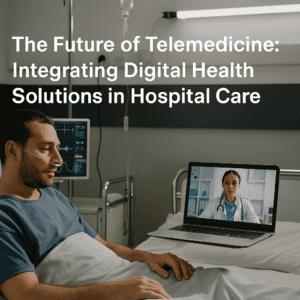
5. Telepresence Robots – Robot helpers with cameras let doctors check in remotely, especially for people far from clinics.
6. Digital Twins – A computer model that copies your health data so doctors can test and predict treatments more safely.
7. Smart Wearables That Learn – Devices that get more accurate the longer you use them.
8. Voice Controls – Voice-activated systems make it easy for older adults to use health tools without needing tech skills.
9. Computer Vision for Fall Detection – Cameras with AI can tell the difference between real falls and harmless movements, avoiding false alarms.
10. Smart Home Connections – Lights, air systems, and appliances that adjust based on your health readings for comfort and safety.
All of these technologies show one thing: home health care is becoming smarter, quicker, and more personal because of AI.
V. Ethics and Rules for Safe AI
Even great tech needs rules. At SMPLSINNOVATION, we believe that trust matters most.
Here’s what experts and policy makers are focusing on in 2024:
1. Balancing Privacy and Convenience – We must protect patient data with strong encryption and clear consent.
2. Transparent Algorithms – Patients and doctors should understand how AI makes its choices.
3. Regulatory Compliance – AI tools used for medical decisions must follow FDA and HIPAA rules.
4. Fairness – AI should work for everyone, no matter their background. Balanced data helps prevent bias.
5. Human Oversight – AI should support, not replace, doctors and nurses. The goal is teams of AI plus human care, not AI instead of human care.
AI can make health care faster and more personal, but it also must be honest, fair, and human-centered.
VI. The Future: Healthier Homes and Happier Lives
Imagine your smartwatch sees that you didn’t sleep well. It tells your AI nutrition coach, which changes your dinner plan. Then, your voice assistant sets up a check-in with your doctor for the next day. You never leave home, but your care keeps improving.
This is not a dream — it’s what home health will soon look like.
At SMPLSINNOVATION, we’re excited to help healthcare providers bring in smarter systems. Our mission is simple: make advanced health technology feel easy and human.
Because the best AI works quietly in the background, helping caregivers, supporting patients, and giving people back what truly matters — time, trust, and personal connection.
Here’s to smarter homes, stronger care, and technology that reminds us that health should always feel human.
SMPLSINNOVATION — Making complex healthcare technology feel refreshingly simple.