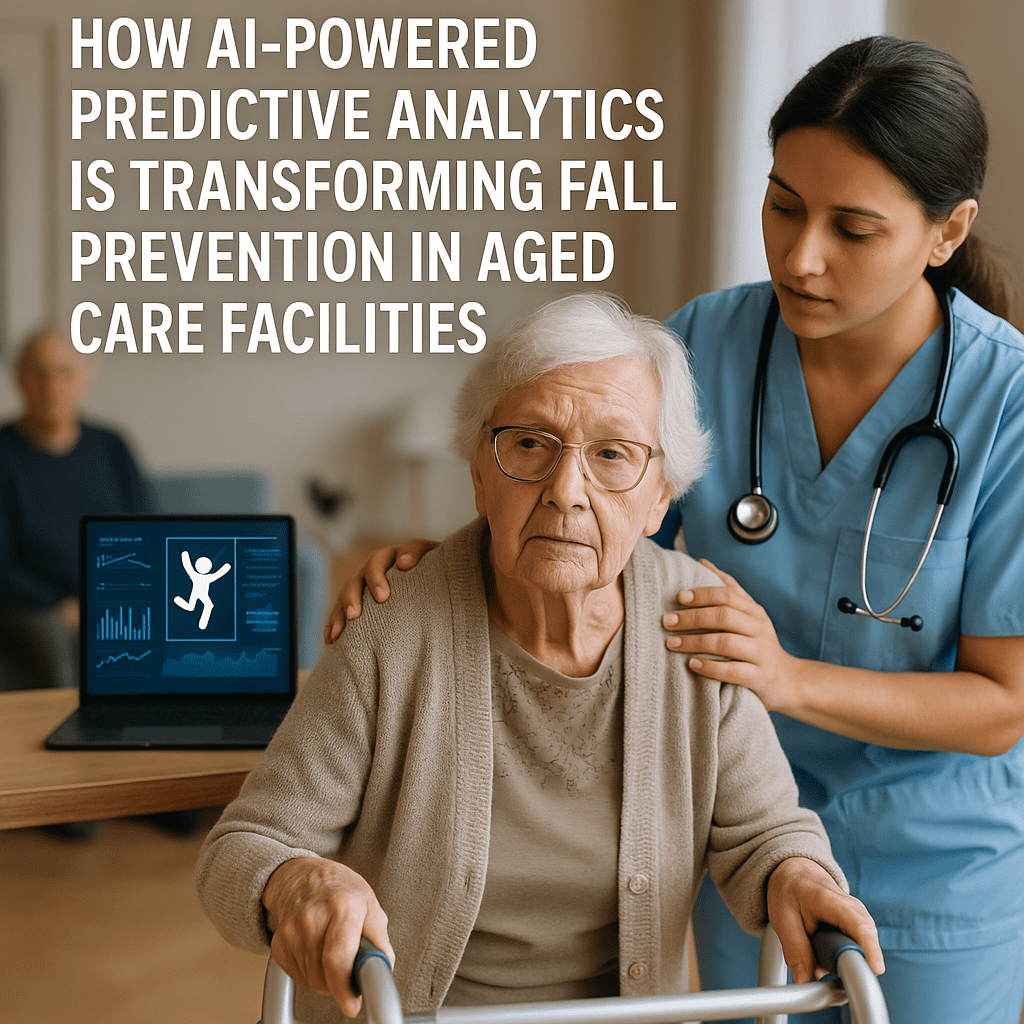
How AI-Powered Predictive Analytics Is Transforming Fall Prevention in Aged Care Facilities
By SMPLSINNOVATION — where smart tech meets smarter smiles!
I. Introduction
The world’s population is getting older — and that’s not just a saying. The World Health Organization (WHO) says the number of people over 60 will double by 2050. While living longer is wonderful, it brings new challenges for healthcare, especially when it comes to falls. Falls are one of the most common and serious accidents in aged care facilities.
Every year, millions of older adults fall, leading to injuries, hospital visits, and sometimes the loss of independence. The Centers for Disease Control and Prevention (CDC) reports that one in four adults over 65 falls each year. Around the world, medical costs related to falls add up to more than 60 billion dollars.
But here’s the exciting part — AI-powered predictive analytics is changing the way we care for our seniors. Instead of waiting for a fall to happen, this new technology helps predict and prevent them. Thanks to smart sensors, machine learning, and real-time data, aged care facilities can now act before an accident occurs.
At SMPLSINNOVATION, we believe this technology can save both money and lives — and that’s something worth smiling about.
II. The Current State of Fall Prevention
Before AI came along, fall prevention relied on three main things:
1. Manual risk assessments — Caregivers watched and tested residents for balance, strength, and medication risks.
2. Environmental design — Non-slip floors, handrails, and good lighting to reduce hazards.
3. Routine check-ins — Staff making sure residents were safe, especially at night.
These steps help, but they are mostly reactive. By the time someone shows signs of falling, it might already be too late. Reports from 2024 show that nearly 40% of injury-related hospital stays for older adults come from falls. Traditional methods can’t tell us when or where the next fall will happen.
That’s where predictive analytics comes in — like a super-smart helper that spots risks before they turn into accidents.
III. What Is Predictive Analytics in Aged Care?
Predictive analytics uses past and present data to guess what might happen next. When powered by artificial intelligence (AI) and machine learning (ML), it learns and improves over time.
Think of it as a digital detective that looks for clues using data from:
– Motion sensors that track movement and posture.
– Wearable devices that monitor heart rate, temperature, and walking steadiness.
– Electronic Health Records (EHRs) that show medical history and medication information.
– Environmental sensors that measure lighting, floor grip, and room conditions.
Combined together, this data helps create a smart care system that can warn caregivers about fall risks — sometimes days or weeks in advance.
It’s not just predictive, it’s preventive intelligence.
IV. The Technology Behind AI-Driven Fall Prevention
As of 2024, the latest technology includes:
1. Real-time motion monitoring using cameras and AI to track posture and gait.
2. Machine learning that studies small changes in how a person walks.
3. Wearable devices that notice early signs of dizziness or fatigue.
4. Cloud-based systems showing fall risk levels for all residents.
5. Edge computing that processes data quickly on-site to save time.
6. EHR updates that keep predictions accurate when medical info changes.
7. Data fusion that combines video, sound, and sensors for a complete view.
8. Explainable AI that tells caregivers why an alert was triggered.
9. Generative AI that suggests personalized care routines.
10. Predictive maintenance that checks assistive equipment to prevent accidents.
Together, these tools make aged care environments safer and more responsive.
V. Real-World Examples
Many facilities have already seen amazing results:
1. In Australia, a leading aged care group used AI motion sensors and reduced falls by 45% in six months.
2. In the U.S., a pilot program used predictive wearables and cut overnight falls by nearly 30%.
3. In Europe, an elder care group used AI to scan rooms and spot trip hazards before incidents happened.
These studies show how AI can improve safety, lower stress for staff, and create calmer environments for residents.
VI. Key Benefits of AI-Driven Predictive Analytics
Here are some major benefits:
1. Early detection of high-risk residents.
2. Fewer hospital visits and lower costs.
3. Faster caregiver response through alerts.
4. More accurate data, less guesswork.
5. Easy connection with current systems.
6. Smarter algorithms that learn over time.
7. More time for caregivers to focus on people.
8. Peace of mind for families.
9. Better facility design using data insights.
10. Higher staff morale and confidence.
Together, these make aged care safer and happier for everyone.
VII. Challenges and Ethics
Of course, there are challenges to think about:
– Privacy and consent — Residents should know how their data is used.
– Fairness — AI needs diverse data to avoid bias.
– Training — Staff must feel comfortable using new tools.
– Costs — Initial setup can be expensive but pays off later.
– Regulations — It’s important to meet all data security rules.
At SMPLSINNOVATION, we see these not as problems but chances to build better, more caring technologies.
VIII. The Future of AI and Fall Prevention
AI in aged care will keep getting smarter. Soon we might see:
– Personal coaches that encourage safe movement and fun exercises.
– Digital twins that simulate a person’s health to predict changes.
– Smart wearables that call for help before a fall happens.
– Robots that gently assist residents during movement.
The future of aged care is safe, caring, and full of innovation.
IX. Conclusion
While some falls can’t be avoided, being unprepared isn’t an option anymore. With AI-powered predictive analytics, aged care facilities can shift from reacting to preventing.
At SMPLSINNOVATION, our goal is to make technology simple, beautiful, and effective. When tech helps caregivers work better, residents feel safer, and everyone benefits.
Who says healthcare innovation can’t be smart, kind, and full of heart?
Let’s make the future of aged care bright, safe, and simple.