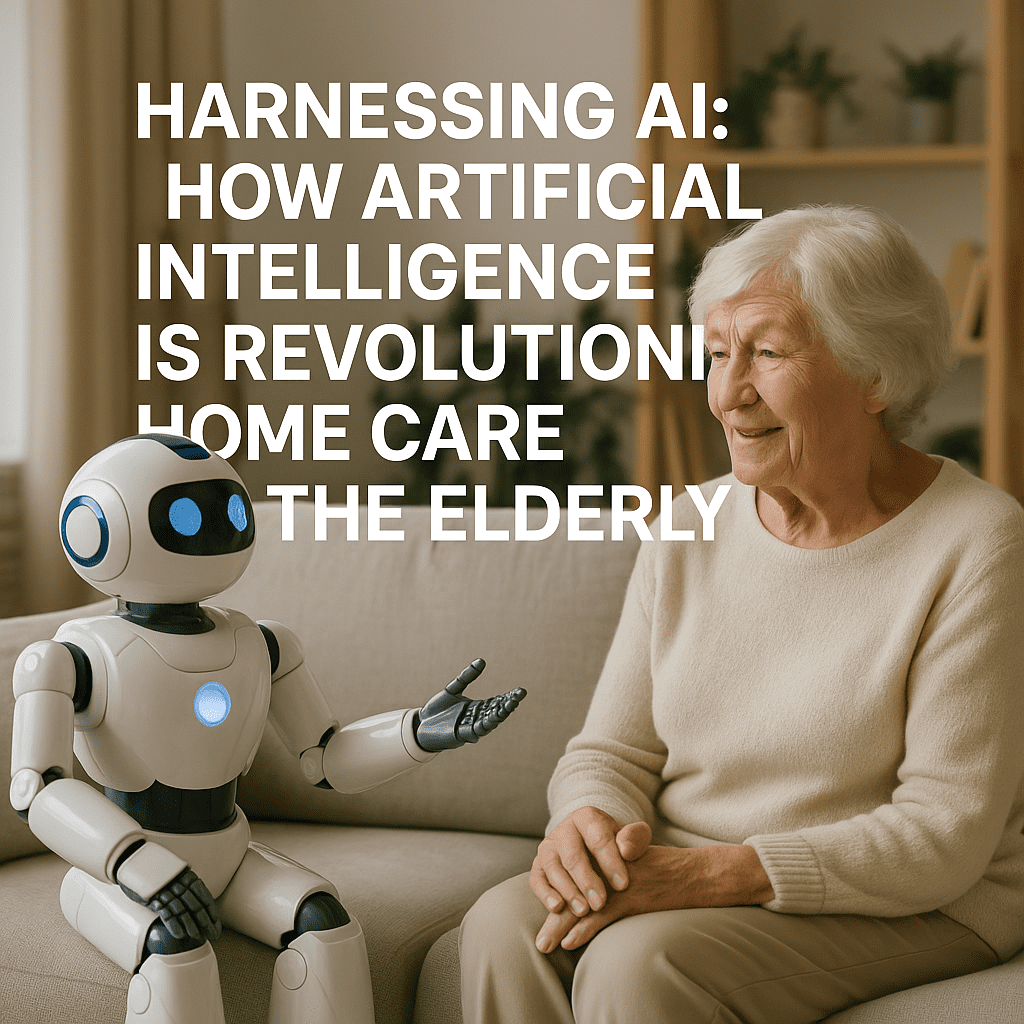
Harnessing AI — How Artificial Intelligence is Changing Home Care for Older Adults
By SMPLSINNOVATION | Health Technology Consulting, May 2024 Edition
I. Introduction
The world’s population is getting older and wiser. By 2030, one in six people will be 60 or older, says the World Health Organization. Many of us hope to age gracefully, but the truth is, more people need help at home than ever before.
Here’s where Artificial Intelligence, or AI, steps in. AI isn’t just for social media or online shopping anymore. It’s now helping seniors, families, and caregivers in real life. The goal is simple: help older adults live safely, happily, and independently at home.
At SMPLSINNOVATION, we love seeing technology and compassion work together. So grab a cup of tea and let’s explore how AI is changing home care for the elderly — from smart health tools to friendly robot helpers.
II. The Growing Pressure on Home Care Systems
Before we talk about the technology, let’s understand why it matters.
1. The Demographic Wave
People aged 65 and older are the fastest-growing age group in the world. By 2050, this group is expected to double. There will be more seniors, fewer caregivers, and the same number of hours in a day — which puts a lot of pressure on care systems.
2. The Economic Challenge
The OECD says costs for elder care could reach 2.5% of global GDP by 2035. At the same time, caregivers are in short supply. It’s hard work, both physically and emotionally, and many people are overwhelmed.
3. Seniors and Technology
The good news is that older adults are becoming more comfortable with technology. Studies show that more than 70% of people over 65 in developed countries own a smartphone or tablet. Since 2020, digital health and AI use by seniors has grown by 34%. They’re using video calls, smart devices, and voice assistants every day.
III. AI Technologies Changing Elderly Home Care
Here are ten ways AI is making a difference in home care:
1. Predictive Health Monitoring – AI can study health data and predict problems like falls or heart issues before they happen.
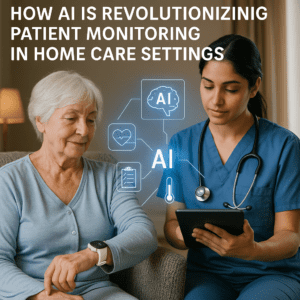
2. Remote Patient Monitoring – Smart systems send health information, like heart rate or sleep data, directly to doctors and family members.
3. Voice Assistants – Devices such as Amazon Echo or Google Home can remind seniors to take medicine or call for help in an emergency.
4. Computer Vision – Cameras with privacy settings can detect unusual movement, like if someone is struggling to stand, and alert caregivers.
5. Robotic Companions – Friendly robots such as ElliQ can chat, give reminders, and help reduce loneliness.
6. Language-Based AI – Chat tools can ask how someone feels or help with brain exercises to track mental health.
7. Smart Scheduling – AI can plan care shifts based on workload, helping caregivers avoid burnout.
8. Wearable Devices – Watches and fitness trackers collect health data that AI can use to track overall well-being.
9. AI Chatbots – Virtual helpers can answer health questions or connect people with doctors for follow-up care.
10. Brain Training Apps – AI games and puzzles adjust to the user’s ability, helping keep the mind sharp.
All of these tools are powerful and easy to use.
IV. How AI Improves Daily Life and Independence
AI helps seniors live better, safer, and more independent lives. Here’s how:
– Safety: Sensors and wearables can detect sudden changes or falls and send instant alerts.
– Medicine Reminders: Smart pill boxes and voice reminders help people take the right pills at the right time.
– Social Connection: AI companions can chat, play games, or connect seniors with family and friends online.
– Mobility: Smart devices like AI-guided walkers help seniors move safely around the house.
– Personalized Care: AI learns from habits and health patterns to suggest better diets, exercises, or routines.
This technology is not a dream of the future — it’s real and working right now.
V. Ethics, Privacy, and Safety
AI can do great things, but it must be used carefully.
1. Privacy Protection: Systems that use personal health data must follow rules like GDPR, HIPAA, and the EU AI Act. They must keep data secure and only collect what’s needed.
2. Reducing Bias: AI must be trained on diverse data so it can work fairly for everyone, no matter their background.
3. Humans Still Matter: AI should never replace human care. The best results happen when automation helps caregivers have more time to connect and show empathy.
At SMPLSINNOVATION, we believe AI should make caregiving easier — not replace the caring touch.
VI. Leading Innovators in AI Home Care (As of May 2024)
1. CarePredict – Uses motion sensors and AI to detect early signs of health changes.
2. Intuition Robotics – Makers of ElliQ, a friendly robot that encourages activity and conversation.
3. Nobi Smart Lamps – Ceiling lamps that detect and help prevent falls using AI.
4. SafelyYou – Uses AI video tools to analyze and reduce fall-related incidents.
5. Catalia Health – Uses robots and software to help patients stay on track with care plans.
6. IBM Watson Health – Offers predictive tools for managing chronic conditions.
7. Tembo Health – Combines AI and telehealth to bring doctor visits into the home.
8. Labrador Systems – Their Retriever robot helps carry items like food or groceries.
9. Sensely – A talking virtual nurse that helps people understand and manage symptoms.
10. GiraffPlus – A European project using sensors, robots, and video calls to help families stay connected.
These companies show how technology can bring peace of mind to both seniors and caregivers.
VII. The Future of AI in Home Care
In the next few years, AI will become even more helpful in daily elder care. Experts predict new tools like AI-based diet plans, mental health support apps, and “digital twins” that model a person’s long-term health.
Three big trends to watch are:
– Combining audio, video, and health data for a complete view of wellness.
– Using federated learning, which allows AI systems to learn from many sources while protecting privacy.
– Making AI that can understand emotions from tone and expressions and respond with empathy.
It’s like having a friendly digital partner who really understands you.
VIII. Conclusion
AI is changing how we think about aging at home. It’s making care smarter, safer, and more personal. From predicting health changes to encouraging daily activity, AI is showing that technology and kindness can work beautifully together.
For seniors, it means more dignity and freedom. For caregivers, it means less stress and more support. And for innovators like SMPLSINNOVATION, it’s a chance to keep creating a brighter, healthier future.
Here’s to smarter homes, happier lives, and aging that’s not just graceful — but also smart and full of heart.
Want to use AI in your senior care services? Connect with the SMPLSINNOVATION team — we’ll bring clear ideas, creativity, and maybe a few smiles along the way.