AI-Powered Fall Detection Systems in Aged Care Facilities: Making Residents Safer and Helping Staff Respond Faster
Posted by SMPLSINNOVATION — April 10, 2024
1. Introduction
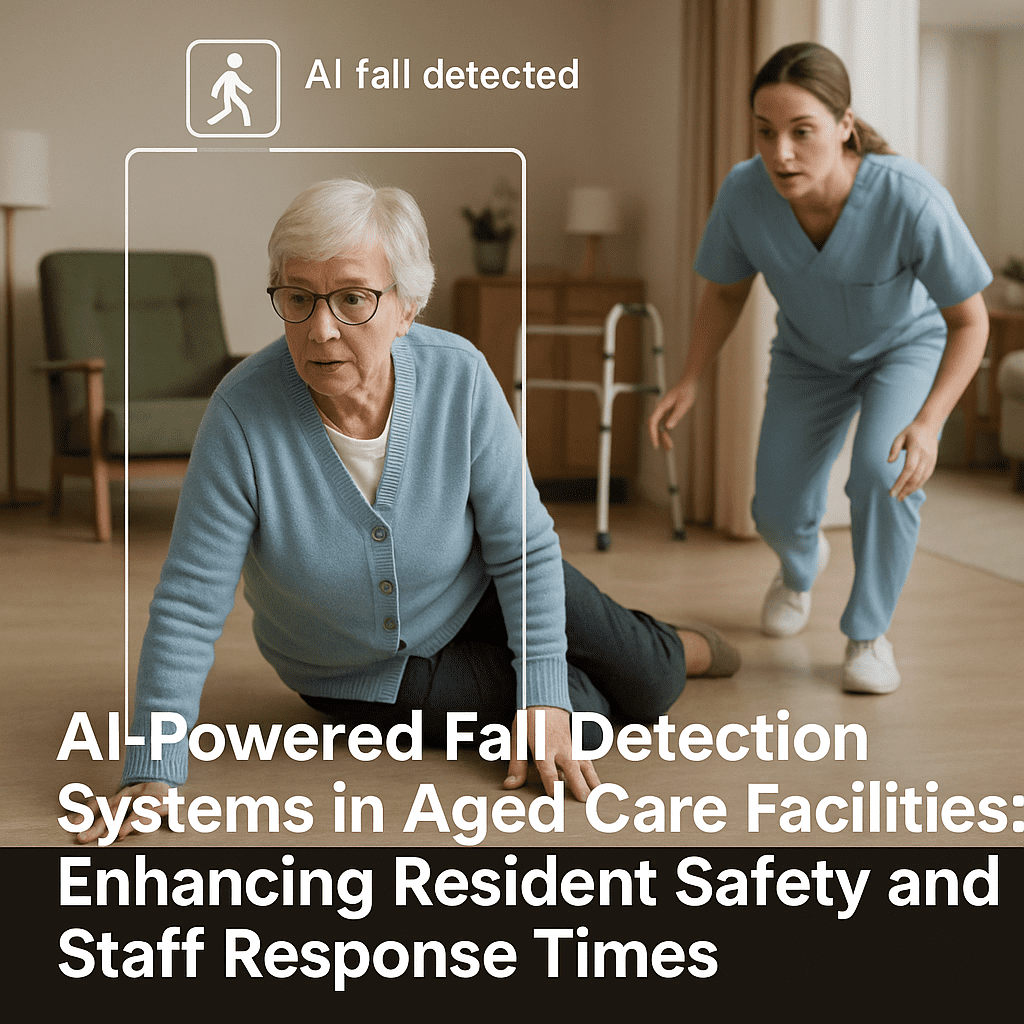
Picture this: it’s a quiet afternoon in an aged care home, birds are singing, and residents are enjoying a cup of tea. Suddenly, an alarm goes off because someone might have fallen. Every second matters, and a slow response can make a big difference between a quick recovery and a serious injury.
Falls are one of the biggest safety challenges in aged care. They are stressful, costly, and happen far too often. But this is where artificial intelligence, or AI, steps in to help.
AI-powered fall detection systems are changing how aged care works. They help keep residents safe and allow staff to respond quickly. At SMPLSINNOVATION, we’ve looked at the latest research from top journals, and the results are exciting—the future of resident safety is looking very smart.
This post explains how new AI tools are helping care homes spot falls, respond faster, and even predict risks before they happen. This is where technology meets care, and the results are inspiring.
2. The Ongoing Problem of Falls in Aged Care
Falls are, sadly, very common in aged care homes. Around 30% to 50% of residents fall each year. That’s a huge number, and it shows how much better safety systems are needed.
Traditional ways of monitoring—like staff walking around or simple motion sensors—don’t always work well. Staff can’t be everywhere at the same time, and old sensors often make mistakes.
There are three main problems:
1. Low accuracy: Older sensors can’t always tell whether someone fell or just bent down.
2. Delayed responses: Every minute of delay increases the risk of harm.
3. Tired staff: Constant monitoring is tiring and time-consuming.
Besides the emotional toll, the cost of falls around the world is in the billions each year. Clearly, this is a big issue that needs smart solutions.
3. How AI is Changing Fall Detection
AI isn’t like a robot from the movies. It’s more like a smart helper that sees and understands things humans might miss. With machine learning, special sensors, and quick processing, AI can spot falls almost instantly—and with impressive accuracy.
Here’s how it works:
– AI models learn movements by studying thousands of examples. They can tell regular actions, like sitting down, from unusual ones, like a fall.
– Some systems process data right on the device instead of sending it to the cloud, which makes detection much faster.
– Different types of sensors—like cameras, microphones, or wearables—work together to give a complete view of what’s happening.
Ten AI advances in 2024 include:
1. Smart cameras that detect falls even in low light.
2. Depth cameras that track body movement in 3D.
3. Wearables that notice small changes in walking patterns.
4. Edge AI that makes alerts almost instant.
5. Sensors built into floors and walls that work together.
6. Self-learning programs that can discover new movement types.
7. Personalized profiles that adapt to each resident.
8. Dashboards that predict who might fall next.
9. Privacy-friendly systems where data stays secure.
10. AI-human teamwork, where caregivers review AI alerts.
By combining these techniques, care facilities can make their environments safer and happier for everyone.
4. The Big Benefits Seen in 2024
Homes that started using AI-powered systems early in 2024 saw amazing improvements. They didn’t just catch falls faster—they changed how their workplaces ran.
The four biggest benefits are:
1. Better safety: AI cuts detection times from minutes to seconds, getting residents help quickly.
2. Faster responses: Alerts go straight to staff phones or dashboards, showing where help is needed.
3. Smarter prevention: Data shows patterns, helping staff prevent future falls.
4. Happier staff: Fewer false alarms mean less stress and more quality time with residents.
Research shows that these tools not only save time but also lift staff morale. AI doesn’t replace human care—it makes it stronger.
5. Real-Life Examples Around the World
Here are some real examples of AI fall detection in action:
– United Kingdom: A London care home saw a 47% drop in missed falls within three months.
– Australia: Homes using wearable sensors and pressure mats responded 35% faster.
– Japan: Care homes used privacy-safe systems to share learning and improve accuracy.
– Canada: AI listening sensors cut false alarms by more than half.
– Singapore: Hybrid systems confirmed alerts in under 20 seconds.
– United States: AI dashboards helped prevent 60% of potential falls before they happened.
Around the world, care homes are already seeing the difference this technology can make.
6. Ethics, Privacy, and Safety
With powerful new tools come important responsibilities. When using AI in healthcare, privacy and fairness matter most.
Experts highlight three key areas:
1. Keep data private by using secure, local systems.
2. Be open about how the technology works.
3. Make sure the AI is fair for everyone, since not all people move the same way.
The best systems always balance innovation, care, and trust. At SMPLSINNOVATION, we remind ourselves that if the technology wouldn’t make Grandma comfortable, it needs improving.
7. The SMPLSINNOVATION View
At SMPLSINNOVATION, we believe technology should support, not replace, human care. AI should act like a helpful teammate—smart, reliable, and focused on safety and comfort.
Here’s our simple checklist for any facility starting with AI fall detection:
1. Check your cameras and network.
2. Start small, then expand once it works well.
3. Involve staff from the start—they know the residents best.
4. Keep privacy a top priority.
5. Keep the AI updated and accurate.
6. Stay transparent with residents and families.
7. Connect AI with existing systems for smooth teamwork.
8. Test the system often to keep it reliable.
Technology and compassion can work hand in hand. When done right, AI helps create safer, calmer, and more caring homes for elderly residents everywhere.