Using Remote Patient Monitoring to Improve Medication Adherence in Home Care Settings
By SMPLSINNOVATION — Simplifying the complicated (and smiling while doing it!)
I. Introduction
Let’s be honest: remembering to take your medicine every day can be tricky, even when you’re healthy and have that neat little pillbox by your side. For people who deal with several health problems, doctor visits, and lots of medications, it can feel like juggling while riding a unicycle uphill.
Taking medicine the right way at home is one of the biggest challenges in healthcare. Improving it can help people stay healthier, avoid hospital visits, and live better at home.
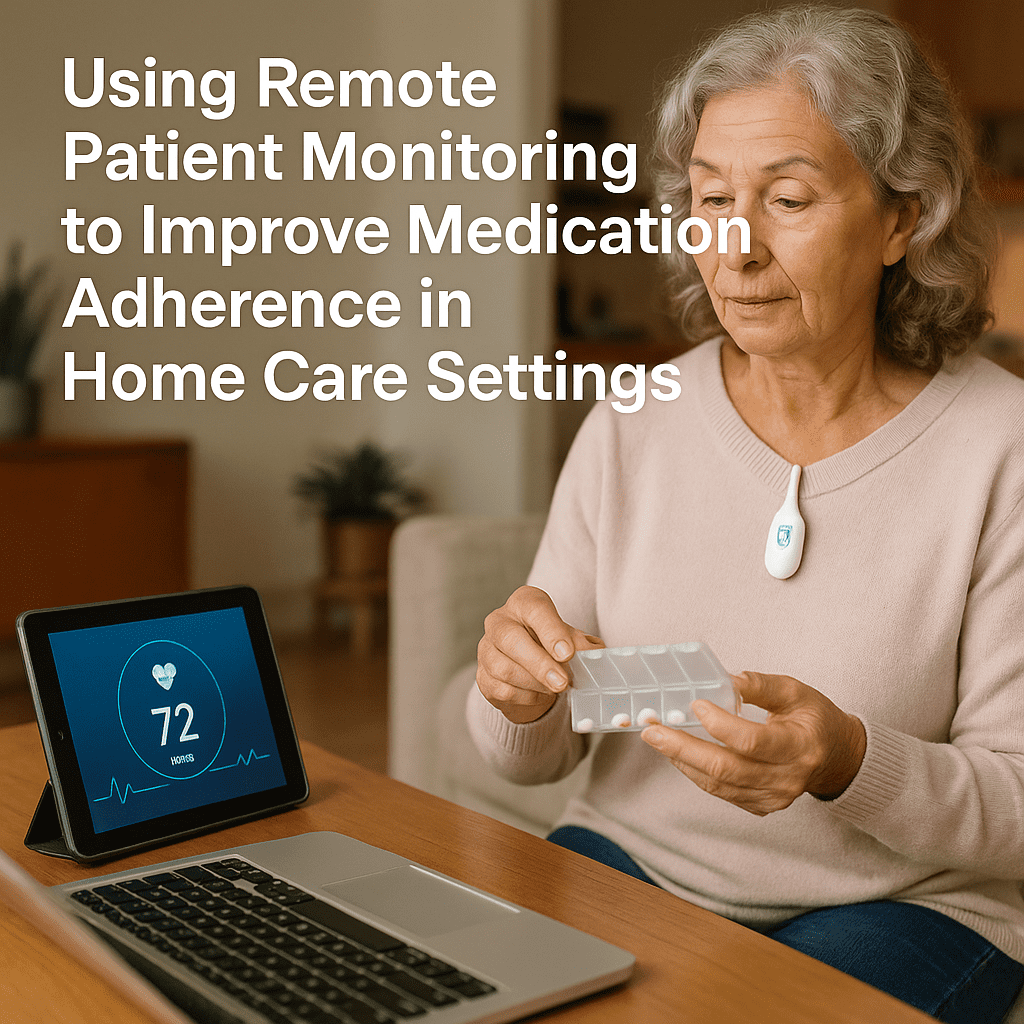
That’s where Remote Patient Monitoring, or RPM, comes in. It’s a high-tech way to bring the clinic right into a patient’s home. RPM lets doctors track a person’s vital signs, medicine use, and health data in real time through smart devices. Add in alerts, data analysis, and video visits, and suddenly your simple pill bottle becomes part of the future.
This post explains how RPM can help improve medication adherence, support caregivers, and keep healthcare more personal—and yes, even fun sometimes.
II. The Current Landscape of Medication Adherence in Home Care
Not taking medicine as instructed is one of the most expensive problems in healthcare today. The numbers are surprising.
1. The Centers for Disease Control and Prevention (CDC) says about half of patients in the U.S. don’t take their medicine as prescribed.
2. The World Health Organization (WHO) says that improving medication routines for long-term illnesses could help more people than any new medicine.
3. The National Institutes of Health (NIH) reported in 2024 that not taking medications as directed costs between $300 billion and $528 billion each year because of hospital readmissions and added treatments.
Key Barriers in Home Care
– Complicated drug schedules, with some patients taking ten or more medications
– Memory or thinking problems, especially for older adults
– Limited caregiver support or irregular home visits
– Financial issues such as the cost of medicine or transportation
– Trouble using technology for those not used to digital devices
Consequences of Poor Adherence
When people skip doses or stop taking their medicine early, hospital readmissions go up. That’s bad for patients and also for hospitals that get paid based on results. Chronic diseases like diabetes or heart failure become harder to manage, and home health workers end up dealing with extra stress.
Caregivers often have to ask daily, “Did you take your medicine?” RPM helps replace that worry with real-time updates and peace of mind.
III. The Evolution and Capabilities of Remote Patient Monitoring
RPM is not just about checking blood pressure or tracking heart rate. It’s a bridge that connects patients and doctors, turning healthcare into a team effort.
1. Definition
According to CMS guidelines from 2024, RPM uses digital tools to collect health data from one place and send it securely to healthcare providers in another.
2. Devices That Make It Work
Some of the most common RPM devices include:
– Smart pill dispensers that track doses and send reminders
– Bluetooth blood pressure cuffs
– Continuous glucose monitors
– Digital weight scales
– Pulse oximeters
– Thermometers
– Medication bottle caps with sensors
– Wearable activity trackers
– Smart inhalers
– Tablets or touch screens for telehealth visits
3. Data Flow and Record Integration
The data goes straight into a patient’s electronic health record, giving doctors a live update on how things are going. This helps doctors act quickly if a patient starts missing doses.
4. Regulatory and Reimbursement Updates
As of 2024, CMS has expanded payment options for RPM services. Providers can bill for medication tracking as long as the data helps guide patient care.
5. Security and Interoperability
New rules like TEFCA make it easier to share health data safely, while HIPAA and GDPR updates make sure privacy and consent always come first.
In short, your data stays safe, your doctor stays informed, and your life gets a little easier.
IV. How RPM Supports Medication Adherence in Home Care
So, how does RPM actually help people take their medicine?
1. Real-time tracking shows if a dose was missed
2. Automated reminders send phone or voice alerts
3. Data dashboards highlight patterns like skipped doses
4. Alerts go to care teams if a patient misses medicine
5. AI designs reminders that fit each person’s habits
6. Simplified tracking for people who take many different pills
7. Fun reward systems that encourage regular use
8. Telehealth visits for quick help or medicine changes
9. Smart analytics that warn of problems early
10. Teamwork among doctors, nurses, and pharmacists through shared data
RPM not only helps patients take their medicine, it helps them understand why staying on track matters.
V. Key Benefits of RPM-Enabled Medication Adherence Programs
RPM makes a big difference, and the benefits can be measured.
1. Higher rates of medication adherence and better control of chronic illness
2. Fewer emergency room visits and hospital readmissions
3. Happier patients who feel more in control
4. More independence for seniors who want to stay home
5. Time savings for care agencies through fewer manual follow-ups
6. Better decision-making using real-time data
7. Easier support for caregivers with instant alerts
8. Clear visibility between visits
9. Stronger alignment with value-based care goals
10. Lower overall costs for healthcare systems
The result? Healthier patients, less stress for caregivers, and fewer frantic calls about missed pills.
VI. Implementation Considerations and Best Practices
Starting an RPM program takes planning and teamwork—it’s more than just giving out smart pill bottles.
1. Choose the right tools for your patients’ needs
2. Train patients and caregivers until they feel comfortable
3. Protect privacy following HIPAA and GDPR rules
4. Connect RPM data with medical and pharmacy systems
5. Set alert limits to avoid overwhelming messages
6. Give care teams a way to adjust plans based on data
7. Encourage cooperation between nurses, doctors, and tech staff
8. Use collected data to improve future care plans
9. Track results like lower hospital readmissions and better health scores
10. Keep checking patient satisfaction to make sure the program continues to work well
VII. Conclusion: Simplifying Adherence, Amplifying Health
Remote Patient Monitoring helps turn the everyday challenge of taking medicine into a connected and supportive experience. It gives patients, caregivers, and healthcare providers the tools they need to work together and stay on top of health goals.
At SMPLSINNOVATION, we love creating RPM programs that actually make life easier—and bring a few smiles along the way. We believe technology should simplify life, not complicate it.
Here’s to fewer missed doses, healthier homes, and a future where your medicine routine practically runs itself—so you can focus on living well.
Ready to explore medication adherence solutions for your home care program? Visit SMPLSINNOVATION to learn how we can help you turn remote monitoring into real progress.