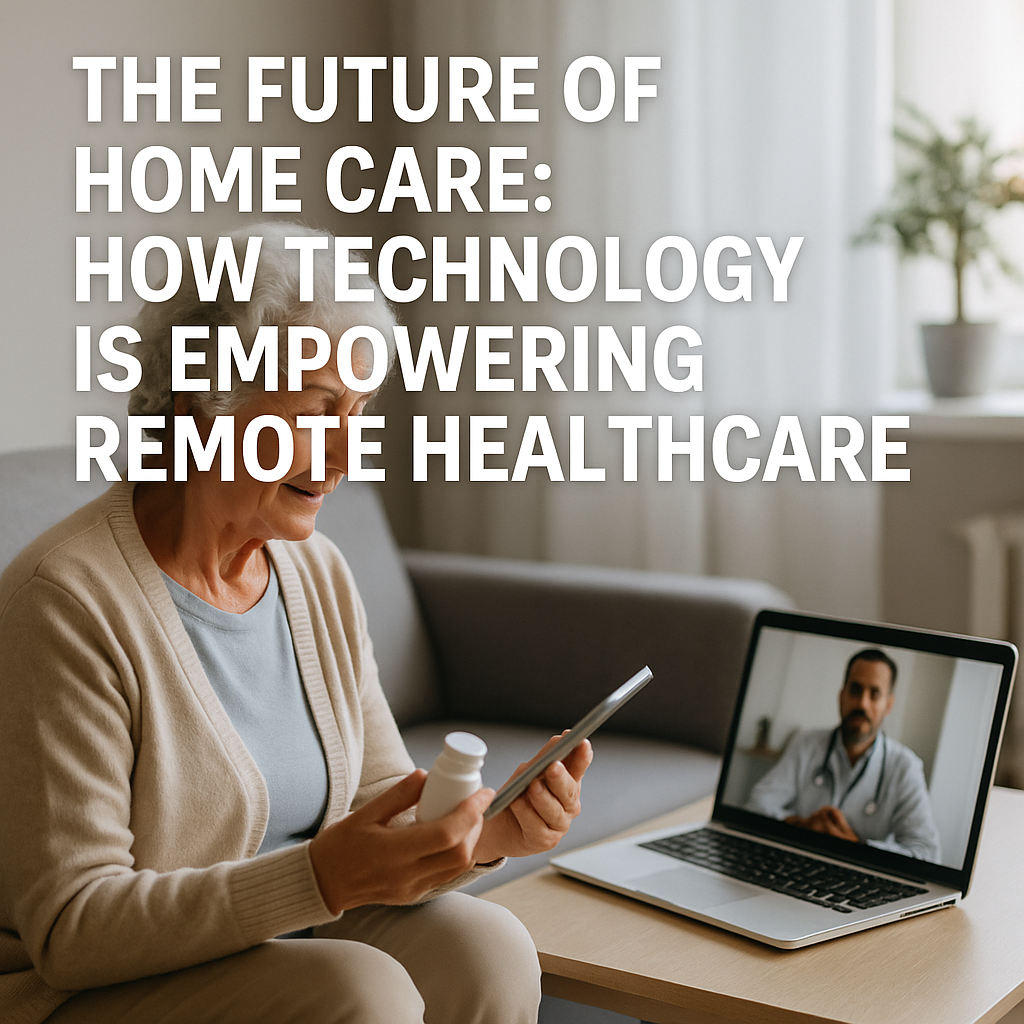
The Future of Home Care: How Technology is Empowering Remote Healthcare
Date: February 6, 2024
By SMPLSINNOVATION – Health Technology Consulting
I. Introduction
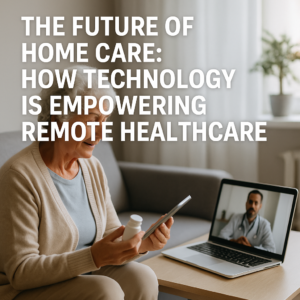
The pandemic taught us something important—healthcare doesn’t always have to happen inside a hospital. Today, our homes can be safe, smart, and well-equipped places for care. No more uncomfortable gowns or loud machines.
The world of healthcare is changing fast. With more older people needing care, more chronic diseases, and fewer healthcare workers, technology is helping us rethink how and where care happens.
According to The Lancet Digital Health (Feb 2024), nearly one-third of primary care visits in rich countries now happen through remote monitoring or virtual consultations. The World Health Organization says that 72% of nations have added national programs to support digital and remote healthcare.
In short, our homes are becoming the new frontier for medicine—and technology is the tool leading the way.
II. Evolution of Home Healthcare
Home healthcare has come a long way from when nurses carried paper charts. We’ve moved from “wait until it’s bad” care to continuous care that uses smart devices to share updates directly with doctors.
Three Big Changes
1. From visit-based care to connected systems: In the past, home care meant nurse visits or phone calls. Now, smart sensors send doctors health data all day, helping them spot problems early.
2. From manual tracking to automation: Instead of writing down blood pressure or sugar levels, devices now do it automatically and upload results to medical records. It saves time and reduces mistakes.
3. From isolation to integration: Home care now connects telehealth, diagnostics, and AI tools together, making care seamless.
Recent Growth Trends (2023–2024)
The HIMSS Digital Health Outlook 2024 highlights important trends:
– The Internet of Medical Things (IoMT) grew by 30%, especially in chronic care.
– Telemonitoring payment programs expanded in the U.S., UK, and Japan, making more in-home care possible.
– AI-based diagnostics for home use became approved, marking a big shift toward decentralized care.
Together, these trends are turning homes into smart health hubs that reduce hospital stays and catch problems earlier.
III. Top 10 Technologies Changing Home Care in 2024
People love gadgets, especially ones that help them stay healthy. Here are the top 10 technologies improving home care, according to McKinsey Digital Health Pulse (Feb 2024) and Nature Digital Medicine Review (Feb 2024).
1. Wearable Health Sensors
Modern patches and sensors can track heart rate, oxygen, temperature, and stress. They are small and comfortable—like high-tech bandages.
2. AI-Powered Remote Diagnostics
Artificial intelligence can now find signs of illness by analyzing voice, video, or health data. It’s like having a digital doctor who never sleeps.
3. Smart Home Integration
Smart home devices like Alexa can work with health data. Your fridge can help monitor your diet, and your lights can adjust to your sleep cycle.
4. Virtual Nursing Assistants
AI-powered helpers remind patients to take medicine, do exercises, or drink water—without sounding bossy.
5. Connected Medication Dispensers
Automated pill boxes give out the right medicine at the right time and alert caregivers if doses are missed.
6. Advanced Video Telemedicine
High-quality video calls let doctors see skin tone, breathing, and expression changes clearly, all from your living room.
7. Robotics for Assistance
Robots can help lift patients, deliver medication, and assist with daily tasks, helping people live safely and independently.
8. Digital Biomarker Platforms
These systems track small changes in things like heart rhythm or walking style to warn about possible health issues early.
9. Augmented Reality (AR) for Training
AR training helps caregivers and nurses learn how to do wound care or physical therapy exercises with 3D visuals.
10. Blockchain for Data Security
Blockchain keeps medical data safe and ensures only approved people can access it. It helps protect privacy and build trust.
IV. Empowering Patients and Caregivers
With the right tools, patients are no longer just receivers of care—they are now active participants.
1. Easy Self-Management
Health apps now show progress in simple, colorful ways. Patients can easily understand trends and celebrate small wins.
2. Helping Caregivers
Caregivers now get real-time alerts and can work with doctors remotely. This reduces stress and helps them feel more supported.
3. Better Design and Accessibility
Home care technology is now easier to use, with bigger icons, voice commands, and simple menus. It’s being designed with help from older adults and people with disabilities.
4. Digital Inclusion
Pew Research (Jan 2024) found that 83% of adults over 65 now feel comfortable using home health tech, thanks to better design and support.
V. Challenges and Considerations
Technology in healthcare also brings some challenges:
1. Data Privacy and Security: Even advanced systems need users to stay careful with passwords and devices.
2. Fair Access: Not all areas have good internet or resources to adopt new systems. Bridging the gap is important.
3. Rules and Laws: Regulations differ by region and can be confusing, especially around telehealth payments.
4. Clinical Proof: Some devices are not well tested, so patients and doctors must choose carefully.
5. Human Connection: Technology should add to, not replace, the caring touch of healthcare professionals.
Governments and companies are already working on solutions, including better training, easier rules, and models that emphasize empathy alongside technology.
VI. The Future: What’s Next
Imagine your home working together with your doctor to keep you healthy before problems appear. The combination of AI, smart devices, and personalized care will make medicine more predictive and personal than ever before.
By 2026, experts expect that most post-hospital care will happen at home using connected systems. Hospitals may become more like data centers that support home-based care.
SMPLSINNOVATION is helping make this shift easier and more reliable. The goal is to bring kindness, humor, and efficiency to digital healthcare—because saving lives shouldn’t be stressful.
VII. Conclusion
Home is becoming the heart of healthcare. With sensors, AI, and innovation, people can stay healthy and connected without leaving their couch.
For healthcare providers and caregivers, the message is clear: those who choose digital-first care today will lead tomorrow’s health revolution.
SMPLSINNOVATION is helping organizations create these patient-centered solutions. When technology and empathy work together, everyone wins—especially patients in pajamas.
Interested in transforming your healthcare operations?
Visit SMPLSINNOVATION.com to learn how we can help you build smart, patient-friendly remote care systems.