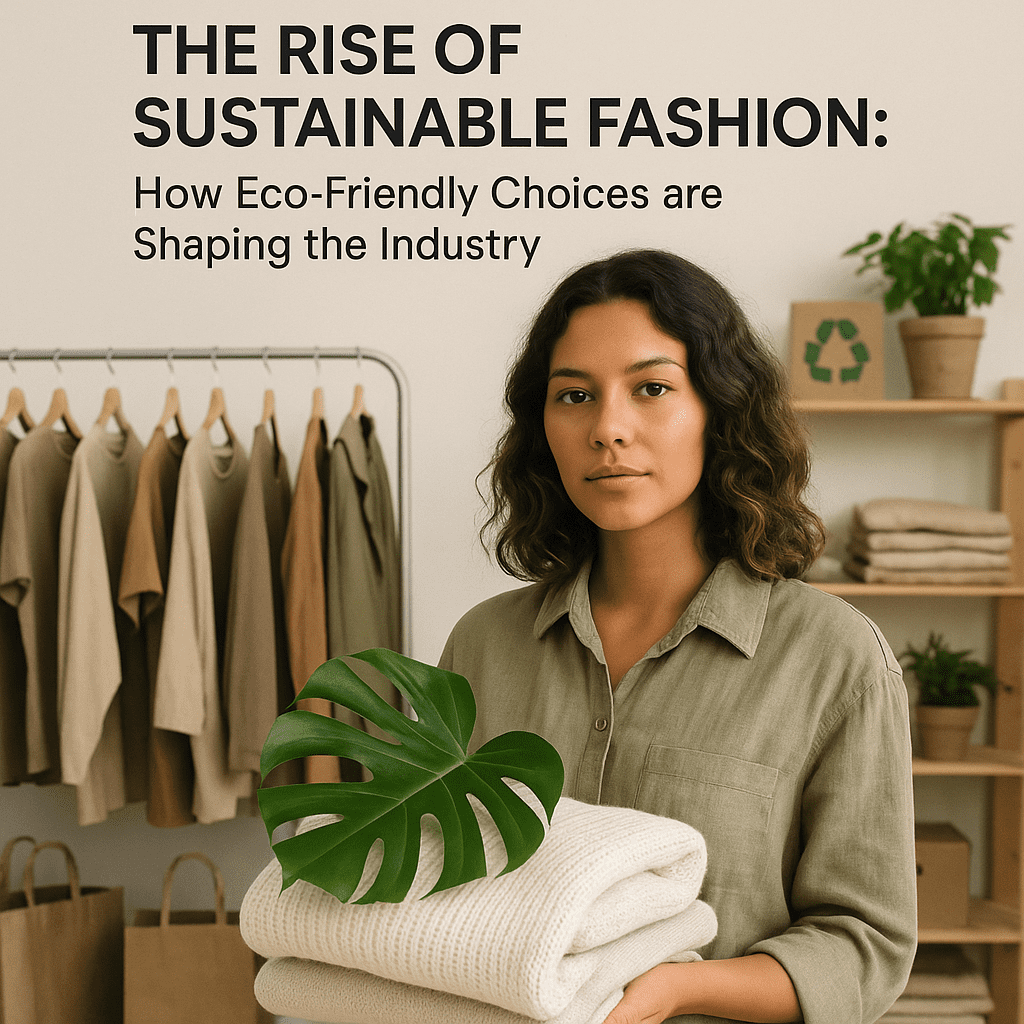
The Rise of Sustainable Fashion: How Eco-Friendly Choices Are Shaping the Industry
Based on data from Business of Fashion, McKinsey’s State of Fashion 2025, Vogue Business Sustainability Briefing February 2025, and WWD Green Transition Report February 2025.
I. Introduction: The Big Shift Toward Sustainable Fashion
Remember when “eco-fashion” meant wearing a rough hemp poncho and sandals made from old tires? Those days are gone. The fashion industry, one of the biggest in the world, is going through a huge change. This time, it’s about being green, smart, and stylish.
By 2025, sustainability is no longer just a trendy word—it’s a must. According to McKinsey’s State of Fashion 2025, more than 60% of big fashion companies have made sustainability a key part of their plans. They’re responding to new climate rules and to shoppers who expect better. Since 2024, the green movement has sped up. Governments demand change, and investors want proof that brands care about the planet and people.
For companies like SMPLSINNOVATION, which helps health and technology businesses go digital, fashion is a great example of how an industry can change fast when innovation, data, and ethics come together.
II. The Main Reasons Driving Sustainable Fashion in 2025
This shift didn’t just happen. It’s being pushed by ten big forces:
1. Consumers want honest brands. People now ask where their clothes come from and who made them. Brands that share this information earn trust.
2. New laws fight waste. Europe’s Textiles Strategy 2030 is being rolled out, pushing companies to design clothes that can be reused instead of thrown away.
3. New eco materials are rising. Inventors are turning seaweed, lab waste, and orange peels into fabrics.
4. Investors want green proof. They now expect fashion companies to share carbon data just like they share financial data.
5. Young generations are speaking up. Gen Z and Gen Alpha want brands that stand for good causes.
6. Secondhand and rental shopping is booming. Online resale sites like Depop and The RealReal have become global favorites.
7. Factories are going green. Using renewable energy has cut textile emissions by almost 20% since 2022.
8. Artificial intelligence improves production. AI can spot sustainability problems before clothes are even made.
9. Local production is growing. Making clothes closer to home cuts shipping pollution and helps local jobs.
10. Repair and reuse are trendy again. Many stores now offer repair services so clothes last longer.
These changes are creating a fashion world that’s smarter and cleaner.
III. The Top 10 Eco-Friendly Materials Changing Design in 2025
Modern sustainable fashion is full of amazing new materials that mix science and nature. These are the top ones:
1. Regenerative Cotton and Hemp – These plants heal the soil and capture carbon.
2. Lab-Grown Leather – No animals needed, but still stylish.
3. Recycled Polyester – Made from old plastic bottles turned into new clothes.
4. Bio-Based Nylon – Made from plants such as castor beans.
5. Algae Fabric – Soft and good for the planet.
6. Mycelium Leather – Made from mushrooms, great for bags and shoes.
7. Banana and Pineapple Fibers – Strong, light, and earth-friendly.
8. Circular Denim – Old jeans made into new ones without losing quality.
9. Wool with Natural Dyes – Colored with plants instead of chemicals.
10. Reclaimed Silk and Biodegradable Trims – Luxury without guilt.
If sustainability had a red carpet, these fabrics would be the stars.
IV. The Technology and Startups Behind Circular Fashion
In the future, clothes won’t be made to end up in landfills. Instead, they’ll be made to last and be reused. Many new tech companies are helping this happen:
– Circularity-as-a-Service platforms help brands collect and recycle clothes.
– Blockchain and digital passports track a garment’s life from start to finish.
– AI tools help designers make smarter, greener choices.
Top innovators include:
1. Resorcify – Uses sensors to track how materials get reused.
2. Eon Group – Links digital IDs to physical clothes so they can be traced.
3. Ambercycle – Turns old fabrics into new ones using recycling technology.
4. Resortecs – Makes threads that dissolve to help recycling.
5. Spinnova – Turns wood pulp into soft, eco-friendly fibers.
6. Renewcell – Creates new fabric from old cotton.
7. ByRotation – Lets people rent clothes and uses AI to extend their life.
8. ThredUp Labs – Uses data to help resell clothes more easily.
9. Stella McCartney with Bolt Threads – Designs luxury items with lab-grown materials.
10. Good On You – Rates brands based on their impact so consumers can shop wisely.
Tech and fashion are now working side by side for a better planet.
V. New Policies and Certifications Supporting Sustainable Fashion
The green shift in fashion isn’t just about trends; laws and rules are shaping it too. Some of the most important updates in 2025 are:
1. Europe’s Digital Product Passport tags clothes with traceable data.
2. The U.S. Textile Transparency Act demands clear supply chain details.
3. China’s Circular Economy Plan supports large textile recycling systems.
4. Extended Producer Responsibility makes brands handle clothing waste.
5. More materials are now GOTS, Bluesign, or OEKO-TEX certified.
6. The EU’s carbon border rules tax high-emission imports.
7. New packaging rules reduce plastic hangers and tags.
8. Sustainable Finance Disclosure rules make investors report climate impacts.
9. Digital labeling is replacing paper tags.
10. Fair wage and worker safety policies link directly to sustainability scores.
When creativity meets regulation, fashion becomes both ethical and high-tech.
VI. Why Sustainable Fashion Makes Good Business Sense
Being sustainable isn’t just good for the planet—it’s good for business too. Here’s why:
1. Local and recycled production cuts costs.
2. Eco-friendly products can sell for higher prices.
3. Investors support sustainable companies more.
4. Honest brands create loyal customers.
5. Early adopters stay ahead of new laws.
6. New ideas come faster when tech and sustainability team up.
Sustainability is now a smart business plan, not an extra task.
VII. Lessons for Healthcare and Technology Industries
What does fashion have in common with healthcare and tech? A lot more than you might think.
Fashion’s turn toward sustainability is much like what’s happening in healthcare technology:
– Transparency builds trust. Whether it’s knowing where your shirt comes from or how your data is used, honesty matters.
– Circular thinking creates value. Just like recycling fabrics, healthcare can reuse knowledge and data.
– Digital tools like AI help both worlds work faster and smarter.
The future, in any industry, will belong to those who innovate responsibly and put the planet—and people—first.