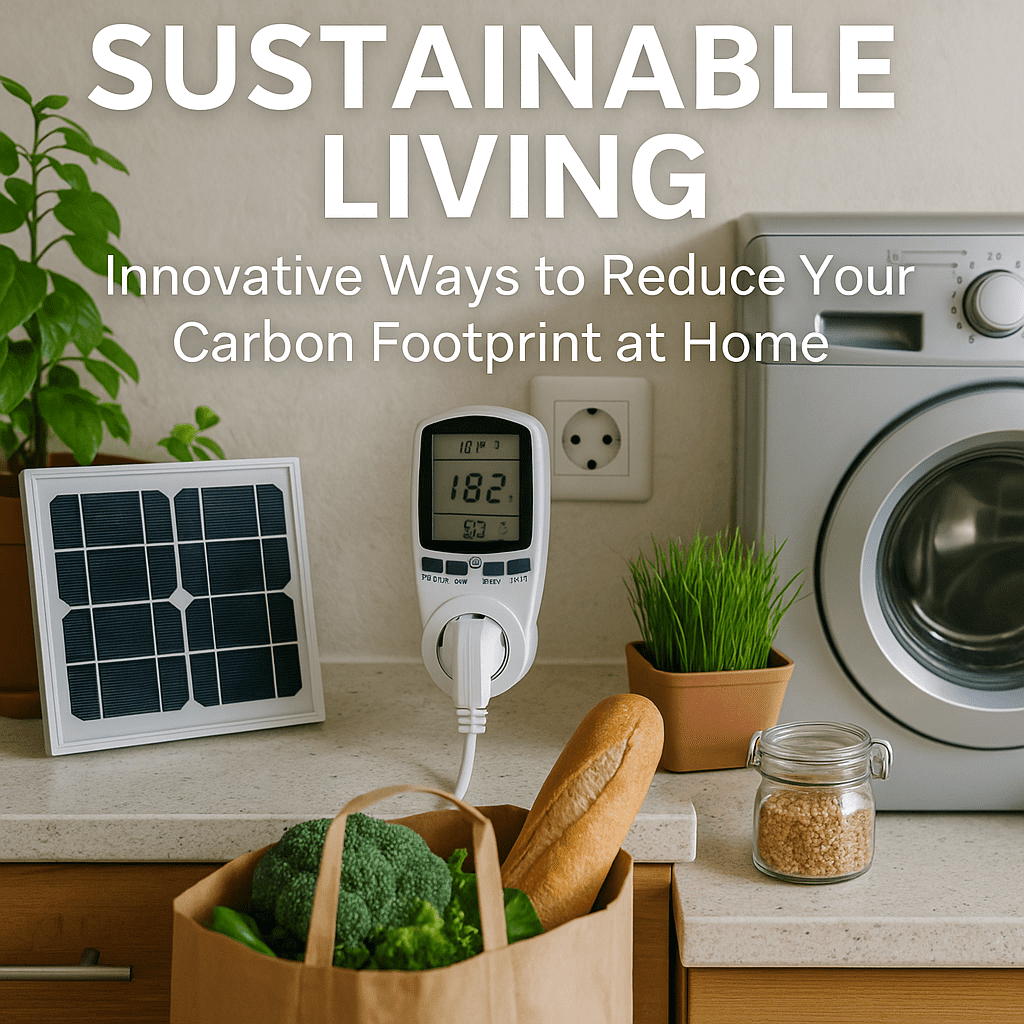
Sustainable Living — Innovative Ways to Reduce Your Carbon Footprint at Home
By SMPLSINNOVATION | June 2024
I. Introduction: Why Sustainable Living Matters in 2024
If you’ve ever looked at your energy bill and sighed, you’re already halfway to being more eco-friendly. In 2024, the need to act is greater than ever. The United Nations says the world must cut carbon emissions by almost half by 2030 to avoid serious climate damage. Our homes play a big part, as household activities like electricity, heating, food, and waste create about 20% of global greenhouse gases.
The good news is that living sustainably doesn’t mean you have to move into a cabin in the woods with solar panels and goats. Thanks to new technology and smart ideas from organizations like the International Energy Agency and the World Economic Forum, it’s now easier and more enjoyable to live in a way that helps the planet.
Let’s look at the many ways you can make your home more energy-efficient and planet-friendly.
II. Energy Efficiency: The Heart of a Low-Carbon Home
Energy efficiency is one of the best ways to lower emissions. Experts say that improving energy use at home could reduce household pollution by up to 30%.
1. Upgrading to Modern Energy Appliances
– Smart Home Energy Systems help you use electricity when it costs less, turning off devices you’re not using.
– Energy Star+ Appliances now work up to 35% more efficiently than earlier models, saving both power and money.
– AI Thermostats learn your schedule and adjust temperatures automatically, cutting heating and cooling use by up to 20%.
2. Using Renewable Energy
– Community Solar Programs let you buy into local solar farms, even if you can’t install panels at home.
– Micro-Wind Turbines collect wind power right from your roof or balcony.
– Home Batteries store your solar power for nighttime use.
– Smart Heat Pumps use up to 50% less energy than traditional heating systems.
– Solar Roof Tiles look just like normal tiles but create clean energy.
– Solar Carports can charge your car while shading it.
– Hybrid Inverters manage both solar and grid energy for better performance.
3. Better Insulation and Building Materials
– Hempcrete Insulation adds strength and helps lock away carbon.
– Mycelium Foam made from fungi keeps heat in and is fully biodegradable.
– Eco-Insulated Glass reduces heat entry by up to 40%, helping your home stay cool.
– 3D-Printed Panels made from recycled materials are quick to install and eco-friendly.
– Reflective Paints on roofs bounce heat away and reduce air conditioner use.
III. Water Conservation Innovations
Even though water seems plentiful, many areas may face shortages by 2030. Smart home technology can help you save every drop.
1. Greywater Systems
– Compact Recycling Units reuse shower or sink water for toilets and gardens.
– Leak Sensors detect and alert you to any plumbing leaks.
– AI Watering Systems only water plants when needed.
– Solar Water Purifiers clean water using solar power.
– Smart Toilet Tanks control how much water each flush uses, saving up to 30%.
2. Water-Saving Fixtures and Appliances
– Low-Flow Showers give strong pressure while using less water.
– AI Faucets track water use and pause while you lather.
– Smart Washers and Dishwashers measure how dirty things are and adjust water use.
– Dual-Flush Toilets choose the right flush volume automatically.
– Hot Water Recirculation Pumps give instant hot water and reduce waste.
3. Community-Based Conservation
– Some cities recycle greywater on a community level.
– Governments offer rebates for rainwater collection systems.
– Compact Rain Saver Devices attach to balconies for small-space collection.
– Apps let neighbors compete to save water.
– Smart Meters show how much water is being used in your area.
IV. Sustainable Food Practices at Home
Food production causes about one-third of all greenhouse gas emissions, so changing how we eat can have a big impact.
1. Smart Indoor Gardening
– Countertop Hydroponic Gardens grow plants with less water and no pesticides.
– Vertical Aeroponic Towers use mist to feed plant roots, saving water.
– LED Grow Lights give plants the perfect light for healthy growth.
– Waste-Heat Gardens reuse warmth from stoves or fridges to grow herbs.
– AI Grow Monitors track plant health automatically.
– Compost-Powered Gardens use compost heat to help plants grow.
– Aquaponic Systems raise fish and plants together in a balanced system.
– Rooftop Kits let city dwellers grow their own veggies.
– Modular Garden Blocks can grow as your interest grows.
– Monthly Seed Deliveries send easy-to-grow plants to your door.
2. Eating with a Lower Carbon Footprint
– AI Meal Planners help you cook just what you need and reduce waste.
– Microbial Protein Foods offer tasty alternatives with fewer emissions.
– Edible Insects are high in protein and good for the environment.
– Seasonal Produce Apps tell you which fruits and vegetables have the lowest shipping impact.
– Compost Robots turn your kitchen scraps into soil automatically.
3. Food Storage and Preservation
– Vacuum-Sealed Containers keep food fresh longer.
– Smart Fridges remind you about food before it spoils.
– Community Fridge Programs let neighbors share extra food safely.
– Solar Mini Coolers are great for off-grid use.
– Natural Ozone Filters in fridges help stop bacteria growth.
V. Waste Reduction and Circular Living
If you still put everything in one trash can, that’s okay — it’s never too late to start recycling better. The idea of a circular economy means reusing and repurposing materials instead of wasting them.
1. Smarter Waste Management
– Smart Bins use AI to sort recyclables and organic waste.
– Waste-Tracking Apps show how much and what type of waste you make.
– Local Compost Programs turn food scraps into soil or energy.
– Home 3D Printers can reuse plastic waste for new items.
– Recycling Pickup Services collect hard-to-recycle materials.
– Digital Deposit Systems track bottle and can returns through QR codes.
– Waste-to-Energy Devices turn organic waste into heat for your home.
– Online Swap Markets let people trade or sell secondhand goods.
– Refill Stations help you buy in bulk using your own containers.
– AI Prediction Tools help you plan shopping to reduce extra waste.
Living sustainably at home is not just about saving money — it’s about doing your part for the planet. With new technology and a few smart changes, every household can make a big difference.