The Future of AI: Transforming Healthcare with Artificial Intelligence Solutions
By SMPLSINNOVATION — Turning Complex Tech into Simple, Smart Health Innovation
I. Introduction: The Robot Will See You Now (But Nicely)
Artificial Intelligence, or AI, has officially joined the healthcare world. What started as small research projects is now a big change happening in hospitals, clinics, and even in the fitness watches on our wrists. In 2024, AI isn’t just helping doctors—it’s becoming a trusted teammate that never gets tired or forgets things.
Why does this matter? Because healthcare is now entering a new stage where AI can understand pictures, words, sounds, and even genetic information all at once. It’s helping doctors focus more on people while keeping innovation safe and fair.
At SMPLSINNOVATION, we love mixing technology with care. In this post, we’ll look at how AI is improving diagnosis, treatment, and hospital work, share recent discoveries, and imagine what 2025 might bring. (Hint: your future doctor may have a chatbot as an assistant.)
II. The State of AI in Healthcare (2024 Update)
AI in healthcare right now feels like a tech fair has moved into a hospital. Big companies, new ideas, and strong rules are all working together to push medicine forward.
1. Recent Milestones
– The U.S. FDA approved a record number of AI tools that help with diagnosis, from X-ray readers to eye disease scanners.
– The European Union and the U.S. both introduced new laws to guide safe and fair AI use.
– The World Health Organization released a guide that focuses on equity, access, and safety.
2. Key Industry Players
– Google DeepMind is using AI to study proteins and find better cancer treatments.
– Epic Systems adds AI to medical records so doctors can write notes faster.
– Nvidia BioNeMo helps speed up drug discovery using AI.
– Startups like Tempus, PathAI, and Owkin are making AI that protects privacy and improves cancer care.
3. Adoption Trends
– AI is writing summaries and helping with patient care plans.
– Telemedicine visits now use chatbots and visual AI to help doctors diagnose from afar.
– Smart hospitals use AI to manage patient flow and equipment to run more smoothly.
III. Top Transformative AI Solutions in Healthcare (2024)
1. AI in Early Disease Detection: AI can find signs of disease early by combining scans and genetic data.
2. Predictive Analytics: Algorithms warn doctors before health problems like heart failure or asthma attacks happen.
3. AI-Driven Drug Discovery: AI can test possible medicines in weeks instead of years.
4. Clinical Decision Support: AI helps doctors choose treatments and avoid medicine conflicts.
5. Radiology and Pathology: AI finds tiny details in images that humans might miss.
6. AI in Surgery: Robots help surgeons by analyzing risk and improving precision.
7. Virtual Health Assistants: AI chatbots remind patients to take medicine and help monitor symptoms.
8. Genomics and Personalized Medicine: AI studies DNA to find treatments that fit each person.
9. Wearables and Remote Monitoring: Devices track heart rates, glucose levels, and send alerts to doctors.
10. Population Health and Disease Forecasting: AI predicts outbreaks and helps hospitals prepare.
11. Operations Optimization: AI helps schedule staff, manage supplies, and handle billing.
IV. Research Highlights (February 2024 Snapshot)
1. Nature Medicine reported that an AI combining scans and genetics was more accurate than human doctors in early cancer detection.
2. The Lancet Digital Health showed that AI could predict heart problems using ECG data, working well across different groups of people.
3. NEJM AI found that using AI for medical paperwork cut time spent by doctors by 40 percent without losing accuracy.
These studies show that AI is now a real partner in healthcare, not a simple tool.
V. Ethical, Regulatory, and Equity Considerations
Every great tool needs clear rules. In 2024, leaders are making sure AI in healthcare stays safe, fair, and honest.
1. Transparency and Explainability: New laws in the EU require AI to explain its results in easy language so everyone can understand decisions.
2. Data Privacy and Security: Health data is protected by strong privacy laws. AI now learns from data without moving it to one place, keeping it secure.
3. Bias and Health Equity: Better data diversity helps AI work for all people, no matter where they live or who they are.
4. Accountability and Oversight: Hospitals now have AI ethics committees that watch how AI is used.
5. Sustainability: AI uses energy, so hospitals are finding ways to make their systems more eco-friendly.
VI. The Road Ahead: What’s Next for Healthcare AI
Here’s what to expect next:
1. AI networks that safely share knowledge across countries.
2. Stronger global rules for safety and fairness.
3. Generative AI that helps doctors talk with patients and summarize research.
4. Tools that connect mental and physical health data for better treatment.
5. Smart homes that help monitor patient health.
6. Synthetic data that protects privacy while helping AI learn.
7. AI education in medical schools so doctors understand and use it well.
8. Affordable AI tools improving care in developing regions.
9. Robots that can perform small supervised procedures.
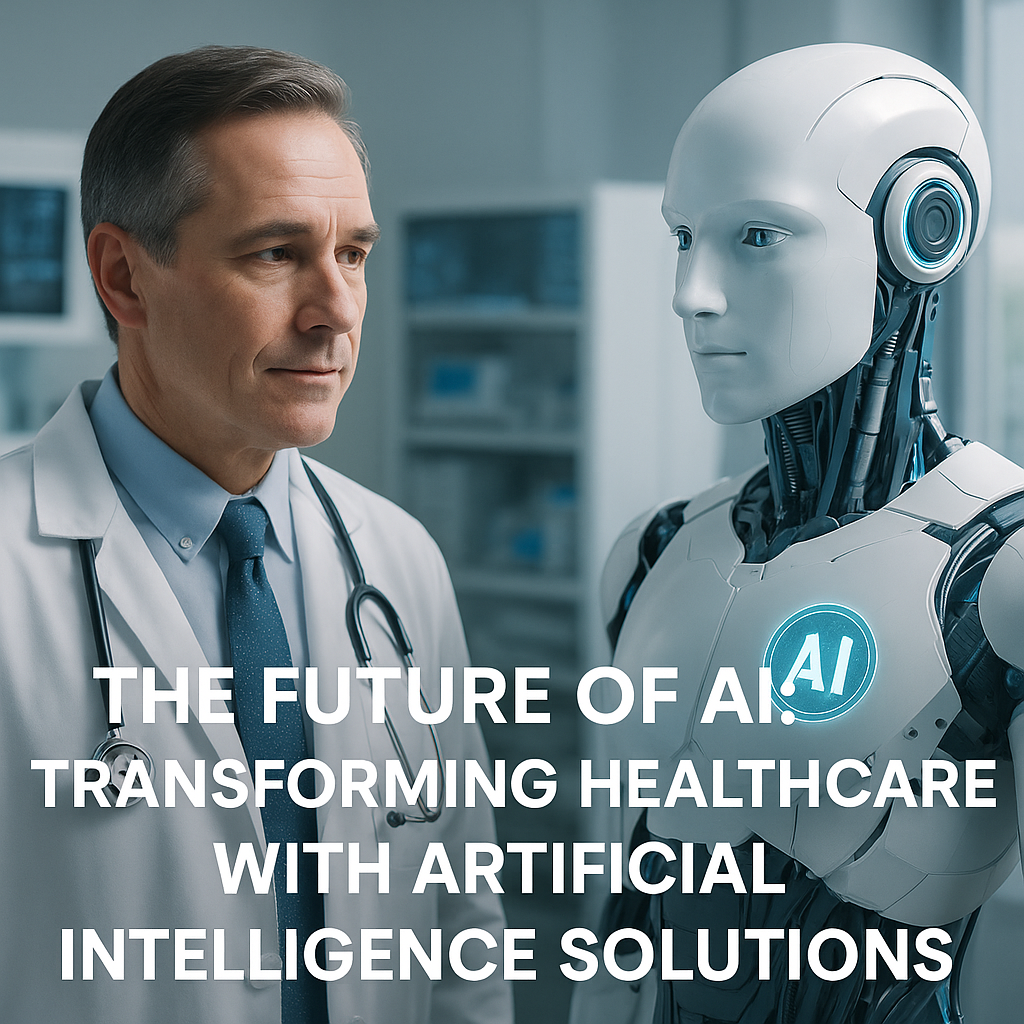
10. True teamwork between humans and AI to combine logic with empathy.
The key is collaboration—AI can process data, but humans bring care and understanding. Together, they can make healthcare stronger and kinder.
VII. Conclusion: The SMPLSINNOVATION Takeaway
In 2024, artificial intelligence isn’t just changing healthcare—it’s completely reshaping it. From faster diagnosis to smarter hospital systems, AI is helping doctors, patients, and administrators work together more easily.
At SMPLSINNOVATION, we believe the best technology is simple, safe, and made for people. AI in healthcare isn’t about replacing humans—it’s about helping them care better. The future of health is human and AI, side by side.