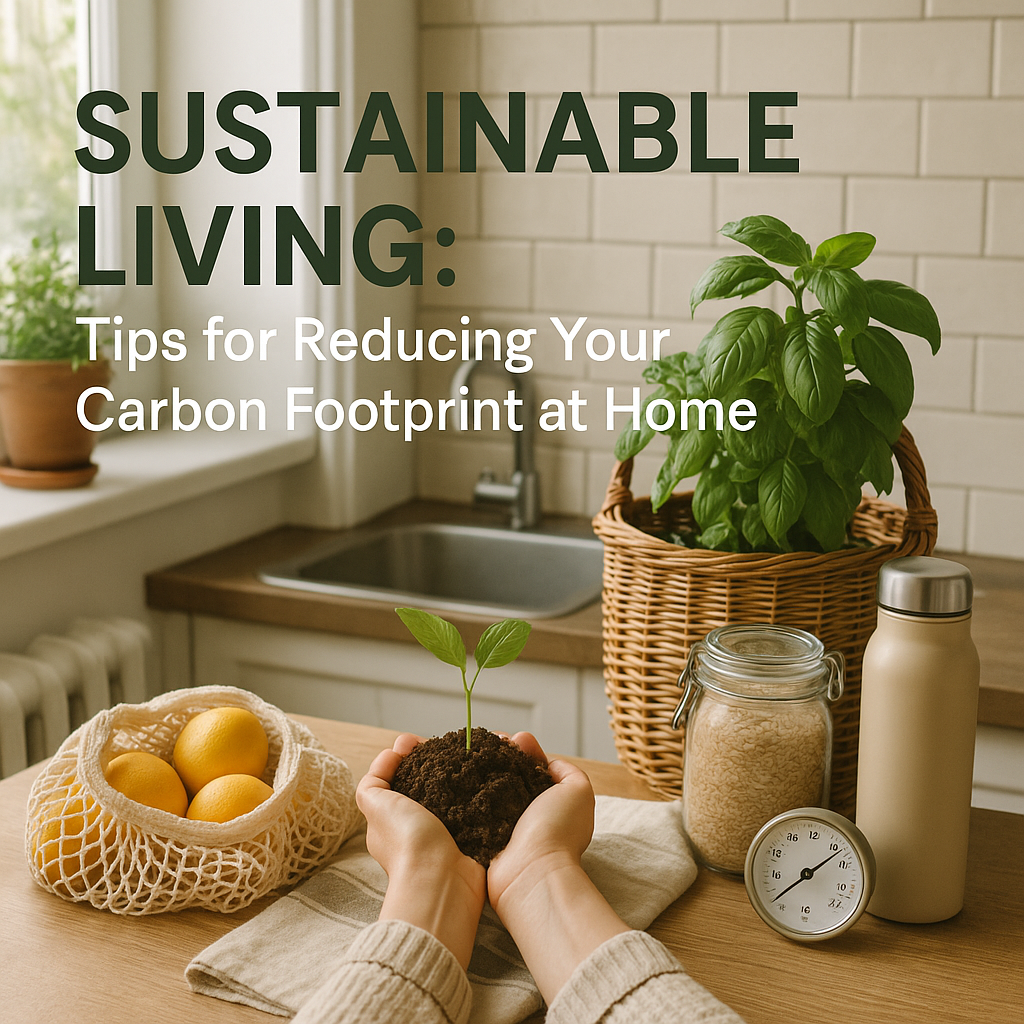
Sustainable Living: Tips for Reducing Your Carbon Footprint at Home
Publication Date: February 3, 2025
By SMPLSINNOVATION
I. Introduction
Have you ever thought about how your daily routine affects the planet? The truth is, a lot of what we do adds to climate change. Your carbon footprint is the total amount of greenhouse gases produced by your actions. From heating your house to making your morning tea, every small action adds a bit of CO₂ to the air.
According to the UN Environment Programme, homes create about 21% of the world’s carbon emissions. The International Energy Agency says household emissions are growing fast. But this isn’t about guilt—it’s about learning how much power we have to make a difference right at home.
At SMPLSINNOVATION, we help healthcare organizations use technology in ways that are good for people and the planet. We believe in practical, simple steps anyone can take to live more sustainably.
II. Understanding the Household Impact
You might think one home doesn’t matter much, but when millions of homes do the same things, the impact is huge. The average person’s home adds about 2.8 metric tons of CO₂ each year. The main sources are energy, food, waste, transportation, and the things we buy.
Here’s how energy and habits create most of that carbon:
– Energy: Heating and cooling cause nearly 40% of home emissions.
– Food: What you eat can be 25% of your carbon footprint.
– Waste: Trash in landfills gives off methane, a gas much stronger than CO₂.
– Transportation: Driving and flying create a big part of your footprint.
– Shopping: Every product uses energy and resources before you even buy it.
Luckily, new technology is making it easier to live smarter. Modern appliances can learn your habits and use less energy automatically. Solar panels are also cheaper and quicker to install than ever before.
III. Energy Efficiency at Home
You don’t have to move into a tiny cabin or treehouse to live efficiently. A few smart choices can help the planet and lower your bills at the same time.
According to EnergyStar, switching to energy‑efficient appliances can cut your energy use by about 30%. Try these 10 simple actions:
1. Use LED or smart lights. They use less power and last longer.
2. Install a smart thermostat. It adjusts room temperatures to save energy.
3. Seal windows and improve insulation. Keep warm air in during winter and cool air in during summer.
4. Choose Energy Star‑rated appliances. They make smart use of electricity.
5. Get an energy audit. This helps you find where your home wastes power.
6. Unplug devices or use smart power strips. Even when off, electronics take small amounts of electricity.
7. Use a heat pump for heating and cooling. It’s efficient and environmentally friendly.
8. Apply reflective coatings on your roof to keep it cooler on sunny days.
9. Set your water heater to 120°F or 49°C. That’s hot enough but saves energy.
10. Switch to renewable electricity through your power company if possible.
IV. Sustainable Food and Kitchen Practices
The food we eat has a big effect on the environment. The global food system creates about 31% of greenhouse gases. You don’t have to give up your favorite foods, but small changes can really help.
Try these 10 steps for a more eco‑friendly kitchen:
1. Eat more plant‑based meals, even one day a week helps.
2. Eat less red meat. Choose fish, chicken, or beans more often.
3. Buy local and seasonal food. It travels less and tastes better.
4. Compost food scraps. It reduces waste and helps gardens grow.
5. Avoid heavily packaged foods. Less packaging means less waste.
6. Store food properly so it lasts longer.
7. Shop at farmers’ markets or join a local produce program.
8. Grow herbs or small vegetables at home.
9. Use energy‑efficient cooktops like induction stoves.
10. Choose eco‑friendly cleaning supplies.
V. Waste Reduction and Recycling
The average American throws away almost 5 pounds of trash each day, and only about one‑third gets recycled. Changing a few habits can make a big difference.
Here are 10 easy ways to reduce waste at home:
1. Follow the steps: refuse, reduce, reuse, recycle, and rot.
2. Use reusable bags, bottles, and cups.
3. Buy in bulk to cut down on packaging.
4. Repair things instead of replacing them.
5. Donate or sell what you no longer need.
6. Refill containers for cleaners and soaps at refill shops.
7. Avoid single‑use plastics. Try metal or bamboo alternatives.
8. Recycle electronics at approved e‑waste centers.
9. Compost food scraps if you can.
10. Teach your family how to sort and recycle properly.
VI. Greener Transportation from Home
Even if you work from home, travel still affects your carbon footprint. Private vehicles cause nearly half of home transportation emissions. Here are ways to cut that down:
1. Walk or ride a bike for short trips.
2. Use buses or trains when you can.
3. Carpool with friends or coworkers.
4. Choose electric or hybrid cars.
5. Drive smoothly and keep your tires inflated.
6. Do several errands in one trip instead of many short ones.
7. Work from home a few days a week.
8. Offset your flight emissions through trusted offset programs.
9. Keep your car well maintained.
10. Support local improvements for bikers and pedestrians.
VII. The Tech Twist: Smart Solutions for a Sustainable Future
At SMPLSINNOVATION, we use technology to improve both health and the environment. A clean planet means cleaner air, less pollution, and healthier people.
Smart home systems today can:
– Track how much energy each room uses.
– Automate heating, cooling, and lighting to reduce waste.
– Connect with renewable power sources like solar panels.
When we combine smart tech with good habits, we can live comfortably while protecting our planet. Every small change counts, and it all begins at home.