Navigating the Future of Healthcare — The Impact of AI in Aged Care
By SMPLSINNOVATION | Published: Yesterday’s Date
I. Introduction — The New Frontier of Aged Care
Have you noticed that more grandparents are living longer these days? It’s true! The OECD Health Data 2024 says the number of people aged 65 and older will double by 2050. That’s great news, but it also means more people need help with healthcare, and the cost of caring for them keeps rising.
At the same time, Artificial Intelligence (AI) has gone from a new tech idea to a real helper in hospitals and homes. Studies in The Lancet Digital Health and Nature Ageing show that AI can now help doctors make better choices, predict health risks, write care plans, and even offer friendly chats through smart companions.
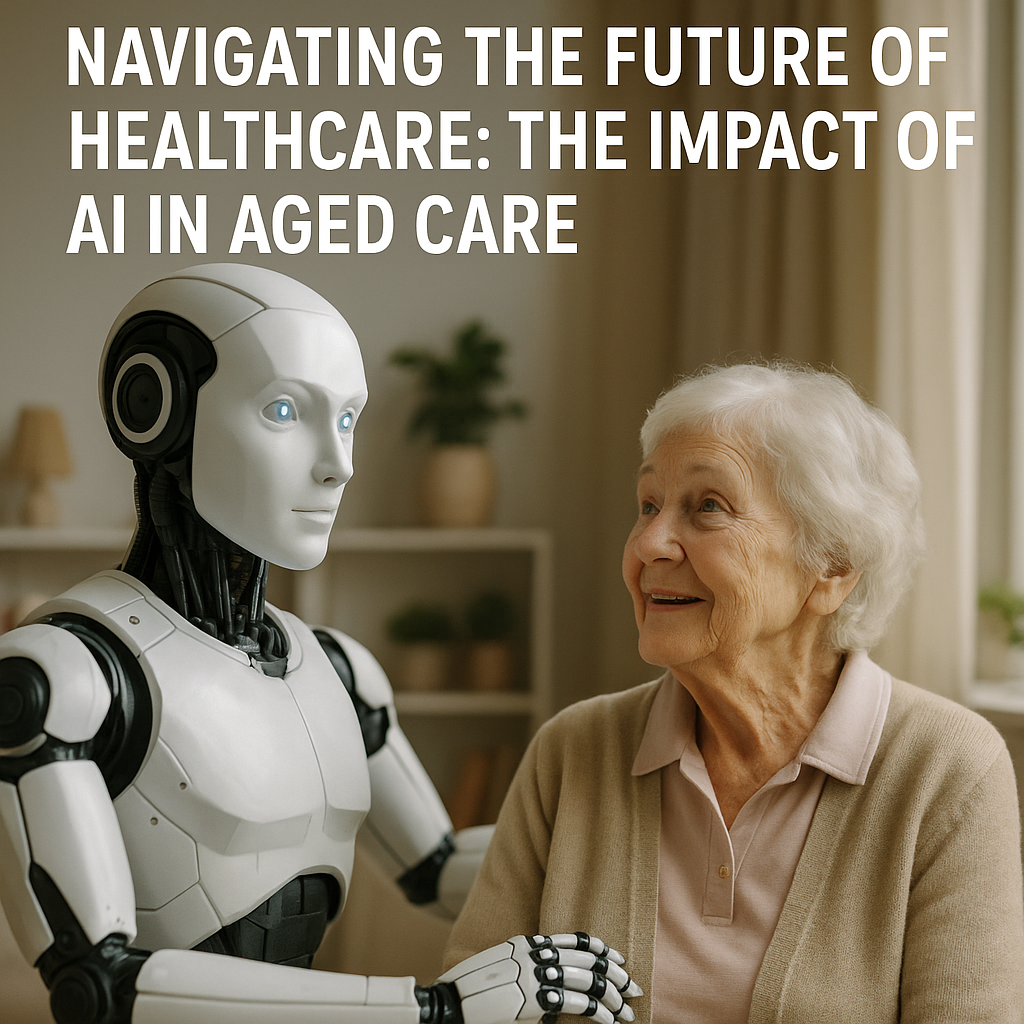
AI isn’t just another tech trend—it’s becoming a key part of creating kinder and smarter aged care. From robots that keep seniors company to systems that can predict a fall before it happens, AI is changing the way we age.
II. The State of Aged Care in 2024
Before we talk about the future, here’s what’s happening now:
1. The world’s population is getting older fast. By 2030, one in six people will be over 60, says the WHO.
2. There aren’t enough care workers. The OECD predicts a shortage of 13 million care workers globally by 2035.
3. Chronic illnesses are increasing. Diseases like diabetes, heart problems, and dementia are becoming more common in older adults.
This means more seniors need help, but fewer people are available to give it. This leads to stress and burnout for caregivers and pressure on the healthcare system.
McKinsey HealthTech Insights 2024 points out key problems:
– Unequal access to care in rural and urban areas.
– Differences in care quality between facilities.
– Caregiver burnout from heavy workloads and paperwork.
Now, AI is stepping in to help.
III. Core AI Technologies Shaping Aged Care
Here are some AI tools already making a difference in aged care:
1. Clinical Decision Support Systems help doctors make faster, more accurate decisions.
2. Predictive Analytics Platforms warn when a patient’s health might decline.
3. Robotic Helpers and Companions, like Japan’s “Paro” seal robot, assist with daily needs and emotional support.
4. Computer Vision detects falls and alerts caregivers right away.
5. Natural Language Processing tools help those with speech or memory problems.
6. Smart Medication Systems remind patients to take pills and inform doctors if they miss doses.
7. Remote Patient Monitoring uses sensors and wearables to send live health data to nurses.
8. GPT-based Advisors act like AI nurses, helping families understand care plans.
9. AI Nutrition Coaches create personal diet plans.
10. Cognitive AI programs keep dementia patients active and help track memory changes.
In the future, not all caregivers will wear uniforms—some might run on code.
IV. Benefits Driving Adoption
AI in aged care is already bringing big improvements:
1. More accurate disease detection and prevention.
2. Personalized care and treatment plans.
3. Less paperwork and more time for caregivers to focus on patients.
4. Greater independence for older adults.
5. Lower costs and fewer hospital visits.
6. Earlier warnings for health problems.
7. Better communication for families.
8. Fewer medication mistakes.
9. Improved emotional well-being through AI companions.
10. Consistent care quality across regions.
According to OECD Health Data 2024, places using AI in aged care have seen costs drop by up to 25% and patients report being happier with their care.
V. Case Studies and Global Implementations
Here are some real examples of AI in action:
1. Japan uses social robots in over 7,000 care homes, helping reduce loneliness.
2. The UK’s NHS AI program predicts when older adults may need extra help.
3. Finland’s smart home care network reduced emergency calls by 30%.
4. Singapore’s dementia robots help patients practice memory exercises.
5. Canada’s virtual nurse assistants help families get quick support.
6. Australia’s AI tool reviews medications and prevents dangerous drug mixes.
7. Denmark’s remote care hubs let nurses manage more patients safely.
8. South Korea’s fitness AI coach creates custom workouts for seniors.
9. The US Medicare HomePilot Program uses AI to support home-based care.
10. Germany’s Telecare Alliance links doctors, families, and care homes instantly.
These projects show that AI isn’t replacing human care—it’s making it stronger.
VI. Ethical and Regulatory Considerations
With powerful technology comes responsibility. We must address privacy, fairness, and trust.
– Data Privacy: Laws like GDPR protect personal health data.
– AI Bias: AI must be trained using data from different groups to be fair.
– Transparency: Doctors and caregivers should understand how AI makes its decisions.
The WHO’s AI in Health Report 2024 reminds us that humans must always stay in control. At SMPLSINNOVATION, we call this “AI with a heart”—technology that keeps empathy at its center.
VII. How Health Technology Partners Like SMPLSINNOVATION Fit In
Bringing AI into aged care is not about choosing fancy gadgets—it’s about choosing what truly helps people. SMPLSINNOVATION supports organizations with:
1. Assessing readiness for AI adoption.
2. Selecting the right solutions for each care need.
3. Integrating AI tools into daily work.
4. Setting up ethical and secure data practices.
5. Training staff to use AI with confidence.
We believe AI should feel like a friendly helper, not a replacement for human touch.
VIII. Conclusion — A Future That’s Human, Enhanced
AI in aged care is no longer something from the future—it’s here today. It helps with paperwork, warns doctors about health issues early, and gives seniors someone to talk to. Most importantly, AI is helping us build a future where people can age with dignity, safety, and joy.