Implementing Predictive Analytics in Hospital Discharge Planning: Benefits for Patient Flow and Aged Care Coordination
Publication Date Reference: February 25, 2024
Based on insights from Health IT News (Feb 2024), Journal of Hospital Medicine (Feb 2024), and Nature Digital Medicine (Feb 2024).
1. Introduction
Hospitals have learned a big lesson in recent years—sending a patient home is not as simple as signing a few forms. It takes planning, teamwork, and good communication, and those things don’t always go smoothly.
But things are changing in 2024. Predictive analytics is becoming a powerful tool that helps hospitals plan better. Instead of reacting, hospitals can now predict, prepare, and personalize the discharge process. This means better care for patients, smoother hospital operations, and less stress for staff.
At SMPLSINNOVATION, we love using smart technology to solve hard problems. Let’s look at how predictive analytics is helping hospitals improve patient flow and aged care coordination.
2. The Growing Role of Predictive Analytics in Healthcare
Predictive analytics might sound like something out of a science fiction movie, but it is really just using data to guess what might happen next. In hospitals, it helps predict when a patient will be ready to go home or if they might face problems later.
Three reasons it’s growing fast today:
1. Better technology like Artificial Intelligence (AI) and Machine Learning (ML) helps computers learn faster and give smarter results.
2. Health systems can now share data more easily, thanks to new standards like FHIR.
3. Hospitals need to do more with less—fewer beds, smaller budgets, and tight schedules.
A February 2024 study in Nature Digital Medicine showed that over 60% of large hospitals now use predictive analytics, up 30% from 2022. The most common use is discharge planning, because hospitals want to know when a patient will be ready to go home.
3. Key Challenges in Traditional Discharge Planning
Before using predictive analytics, hospitals faced many problems with discharge planning, including:
1. Poor communication between hospital teams and aged care centers
2. Manual, slow tasks that delay discharges
3. Little understanding of what might go wrong after discharge
4. Health records that do not share real-time information
5. No tools to predict bed availability
6. Unclear readiness assessments
7. Overworked case managers
8. Weak links to community support services
9. Mistakes in medication lists
10. Poor organization of transport and support services
In short, too many guesses and not enough data.
4. Predictive Analytics Solutions: Smarter Ways to Plan Discharges
Predictive analytics tools use data to make better discharge decisions. They keep learning and improving over time. Here’s how they help:
1. They predict which patients can go home soon by looking at electronic health records.
2. They connect with health record systems, saving time and reducing mistakes.
3. They show which patients might come back to the hospital soon, so extra care can be given.
4. They use cloud technology, so hospitals of any size can use them.
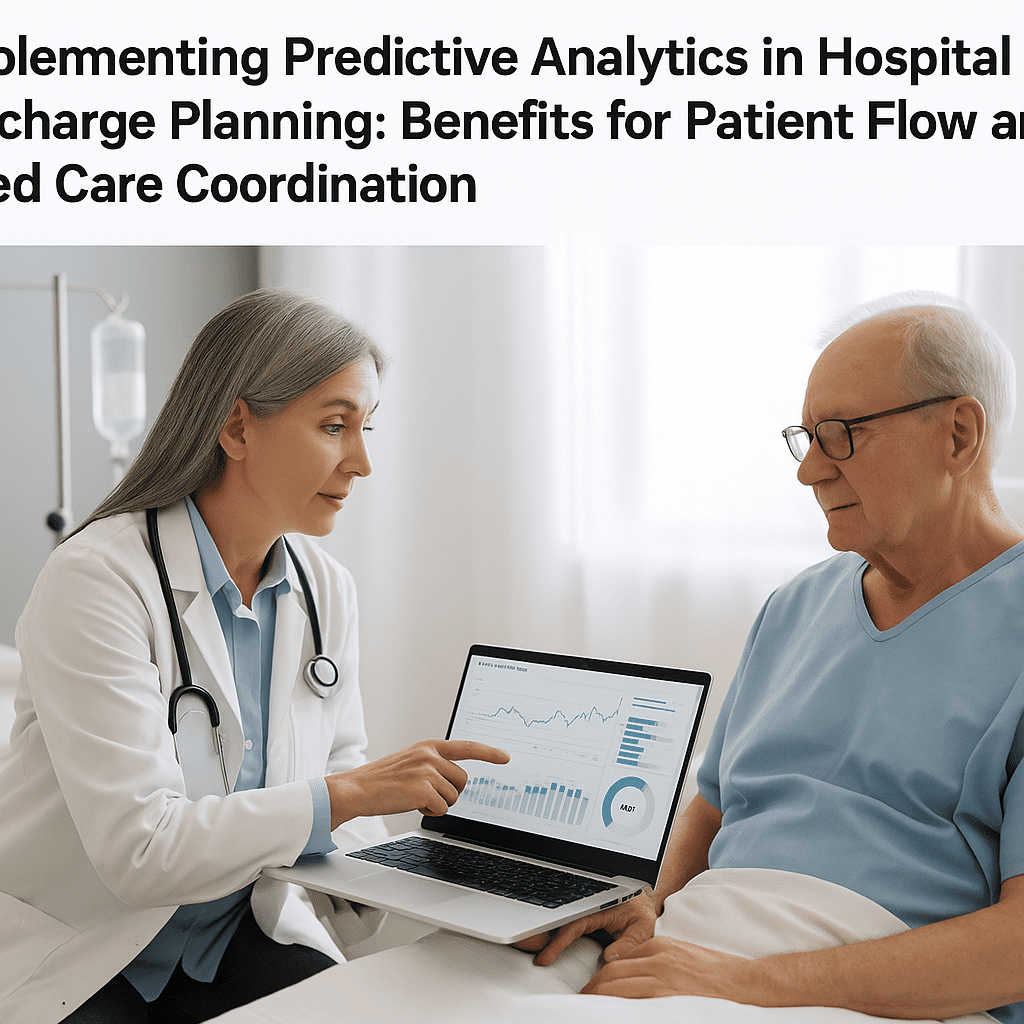
5. They show real-time dashboards that track patient readiness and barriers.
6. They alert different teams automatically—nurses, pharmacists, and therapists work together easily.
7. They notify aged care homes early about new arrivals.
8. They keep improving as they collect more information.
9. They have already cut discharge delays by about 20% in pilot programs around the world.
10. They automate documentation so staff can spend more time with patients.
5. Benefits for Hospital Patient Flow
Using predictive analytics helps hospitals run more smoothly. Some top benefits include:
1. Shorter hospital stays
2. Faster bed turnover
3. Easier planning for patient discharges
4. Better scheduling for tests and therapy
5. Less crowding in emergency departments
6. Better planning for busy days
7. Clearer communication with all staff
8. Lower costs through fewer readmissions
9. Better performance on quality targets
10. Happier patients who don’t have to wait long to go home
Everyone wins—patients, staff, and hospitals.
6. Benefits for Aged Care Coordination
For older patients, going home or to a care facility can be a delicate process. Predictive analytics makes this easier and safer by:
1. Giving early alerts to aged care providers
2. Matching patient needs with the right community resources
3. Improving continuity of care with up-to-date information
4. Sharing risk and frailty data before the patient arrives
5. Helping families understand care plans
6. Cutting down on paperwork and phone calls
7. Preventing medication mistakes
8. Allowing smooth planning for therapy services
9. Reducing hospital readmissions
10. Making transitions less stressful for patients and families
This means patients feel supported, and families feel confident in their care.
7. Real-World Takeaways and the SMPLSINNOVATION Perspective
At SMPLSINNOVATION, we see many hospitals using predictive analytics because it truly improves operations. Staff say it saves time and reduces pressure.
Three quick lessons we’ve learned:
1. Start small and grow—try it in one department first.
2. Keep your data clean for the best results.
3. Include staff in the process so they trust the system.
Using predictive discharge planning is like upgrading from a flip phone to a smartphone—it just makes life easier.
8. Conclusion
Hospitals are busy places, and every bed matters. Predictive analytics helps hospitals plan better, communicate better, and move patients smoothly through care. It’s not just about technology—it’s about giving patients the right care at the right time, and making hospital life easier for everyone involved.