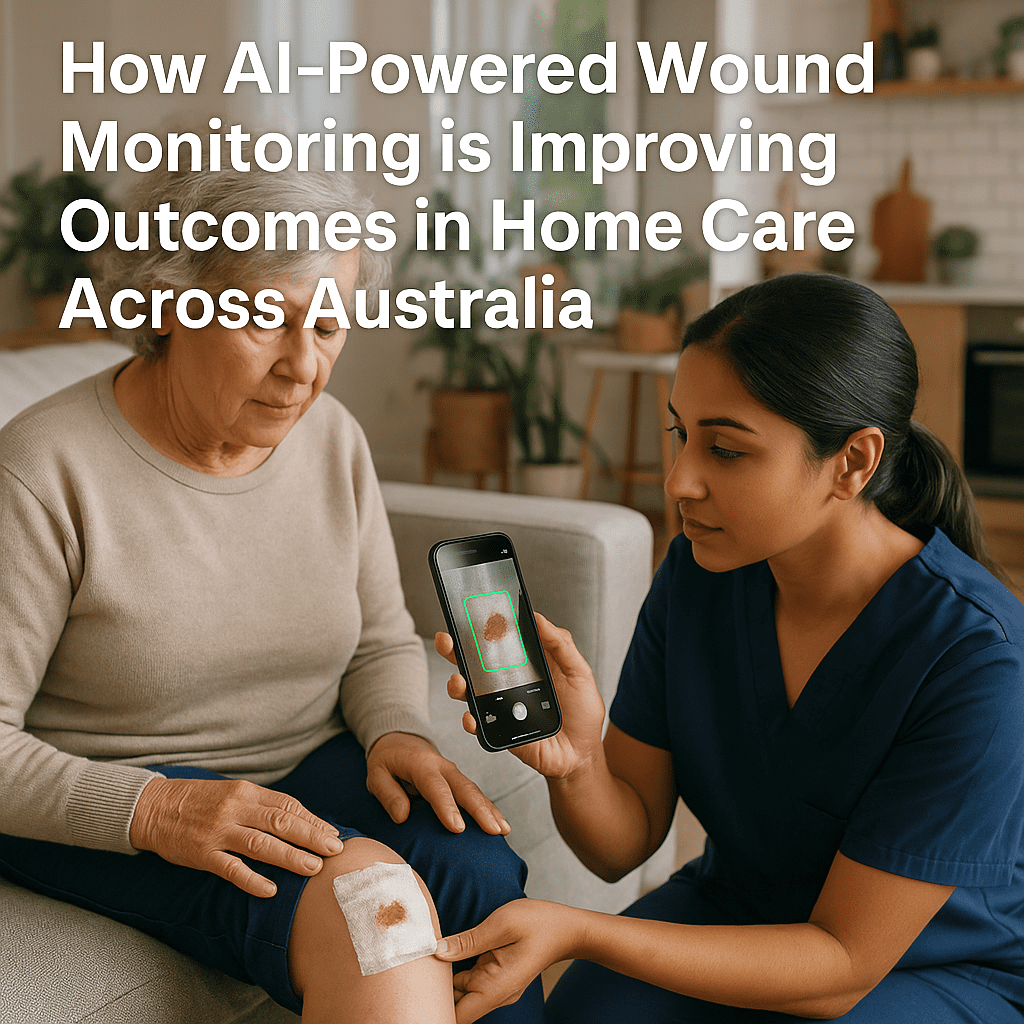
How AI-Powered Wound Monitoring Is Improving Home Care Across Australia
Date: February 6, 2024
By: SMPLS INNOVATION – Health Technology Consulting Experts
I. Introduction: Why Smarter Wound Care Matters
Managing long-term wounds is never easy. Across Australia, thousands of people need regular checks and expert care to help their wounds heal. As our population gets older, more Australians are living with chronic wounds. Because our country has large rural and remote areas, it’s often hard for people to get quick, regular care. This is where artificial intelligence (AI) can help.
AI is now being used to make wound care faster, easier, and more accurate. With new tools powered by AI, nurses and carers can keep a close watch on healing without making patients travel for every check-up. Recent news stories and health reports show that smart technology is improving care quality, reaching more people, and lowering costs.
II. The State of Wound Care in Australia
According to Wounds Australia’s 2023–2024 reports, around half a million Australians have chronic wounds at any time. These wounds cost the health system more than three billion dollars every year.
Challenges in Traditional Wound Care
1. Not enough nurses, especially in rural and remote areas.
2. Long distances mean patients often get checked too late.
3. Follow-ups are usually weekly, missing day-to-day changes.
4. Data is spread across paper forms and unconnected systems.
5. Without real-time data, infections are spotted too late.
6. Patients can lose motivation when healing is slow.
7. The costs of dressings, travel, and time off work can add up.
Positive Policy Steps
Australia’s Digital Health Strategy 2023–2028 is focused on better telehealth, remote care, and smarter data use. The My Aged Care program is also working toward better digital records. These efforts are helping AI tools fit easily into current healthcare systems.
III. How AI-Powered Wound Monitoring Works
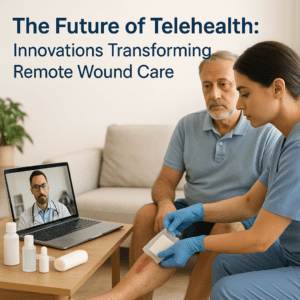
AI wound monitoring uses smart cameras, sensors, and apps to collect and study data about wounds. Patients or carers can use a smartphone or tablet to take pictures that are automatically analysed.
Here are ten key tools behind AI wound monitoring:
1. Image analysis tools measure wound size and colour changes.
2. Predictive models show how fast a wound should heal.
3. Phone apps let patients upload photos and healing updates.
4. Cloud dashboards help nurses track all their patients in one place.
5. The AI learns and gets more accurate over time.
6. Smart sensors track moisture, pH, and temperature to spot infections early.
7. Data is kept private using local learning systems.
8. Augmented Reality helps doctors measure wounds during video calls.
9. AI reads nurse and doctor notes to find hidden risk signs.
10. All data connects safely to existing medical records.
Clinical trials in 2024 showed that AI could identify wound areas with over 92% accuracy and infection risks with about 88% accuracy.
IV. The Benefits of AI in Home Care
Studies from CSIRO and other groups show that AI wound tools are more than just new gadgets—they really make a difference.
Top Benefits
1. Early alerts stop wounds from getting worse.
2. Faster healing thanks to quick feedback between carers and patients.
3. Patients feel more involved and confident.
4. AI guides patients on how to clean and dress wounds correctly.
5. AI supports less experienced carers with smart advice.
6. Records are automatic and always up to date.
7. Doctors can prioritise urgent cases easily.
8. Real-time alerts spot infections before they spread.
9. Multiple carers can access the same case without errors.
10. Fewer hospital visits mean big cost savings.
Examples from the Field
In 2023, a program in New South Wales saw healing times for leg ulcers drop by 35% when nurses used AI wound apps. In Queensland, smart wound imaging and telehealth together lowered hospital admissions by 28%. Clients also reported higher satisfaction levels.
V. Bringing AI Into Australia’s Home Care System
AI tools are now fitting into Australia’s home care framework.
Key Connections
– My Aged Care tools allow AI wound systems to share data safely.
– The National Digital Health Strategy encourages using AI in personal care.
– Clinical governance rules ensure safe, high-quality care with full documentation.
Teamwork Enhanced by AI
AI doesn’t replace nurses—it helps them do more.
1. Nurses use phones or tablets to take wound images and get quick feedback.
2. Doctors can see ongoing data and offer better advice.
3. Allied health workers like podiatrists and dietitians can help from the same online platform.
4. Home care agencies can track patient progress and meet quality goals.
5. Hospitals use AI reports to help patients move safely from hospital to home care.
Better Data Sharing
New digital systems make it easier to connect AI software with medical records. Challenges still exist in coding, consent, and privacy, but progress is being made. SMPLS INNOVATION focuses on helping teams choose the right tools, plan workflows, train staff, and manage data responsibly so programs can grow nationwide.
VI. The Future: From Smart Bandages to Smarter Systems
The future of wound care looks bright.
1. Smart bandages will track healing and spot infections automatically.
2. Doctors will use augmented reality to view wound changes in real time.
3. Patients might log updates just by talking.
4. AI will even predict where nurse shortages might affect care.
5. Secure digital records will keep patient data safe and trusted.
6. National wound databases could help track healing results across the country.
AI in wound care isn’t just about technology—it’s about helping people heal faster, safer, and with more confidence in their own homes.