How AI-Powered Virtual Care Platforms Are Enhancing Clinical Oversight in Australian Home Care
Published by SMPLSINNOVATION — February 11, 2024
1. Introduction
If you’ve ever tried helping your grandma set up a video call, you know how tricky technology can be. Now imagine this challenge across the whole Australian aged care system. That’s why strong digital solutions are needed in home care.
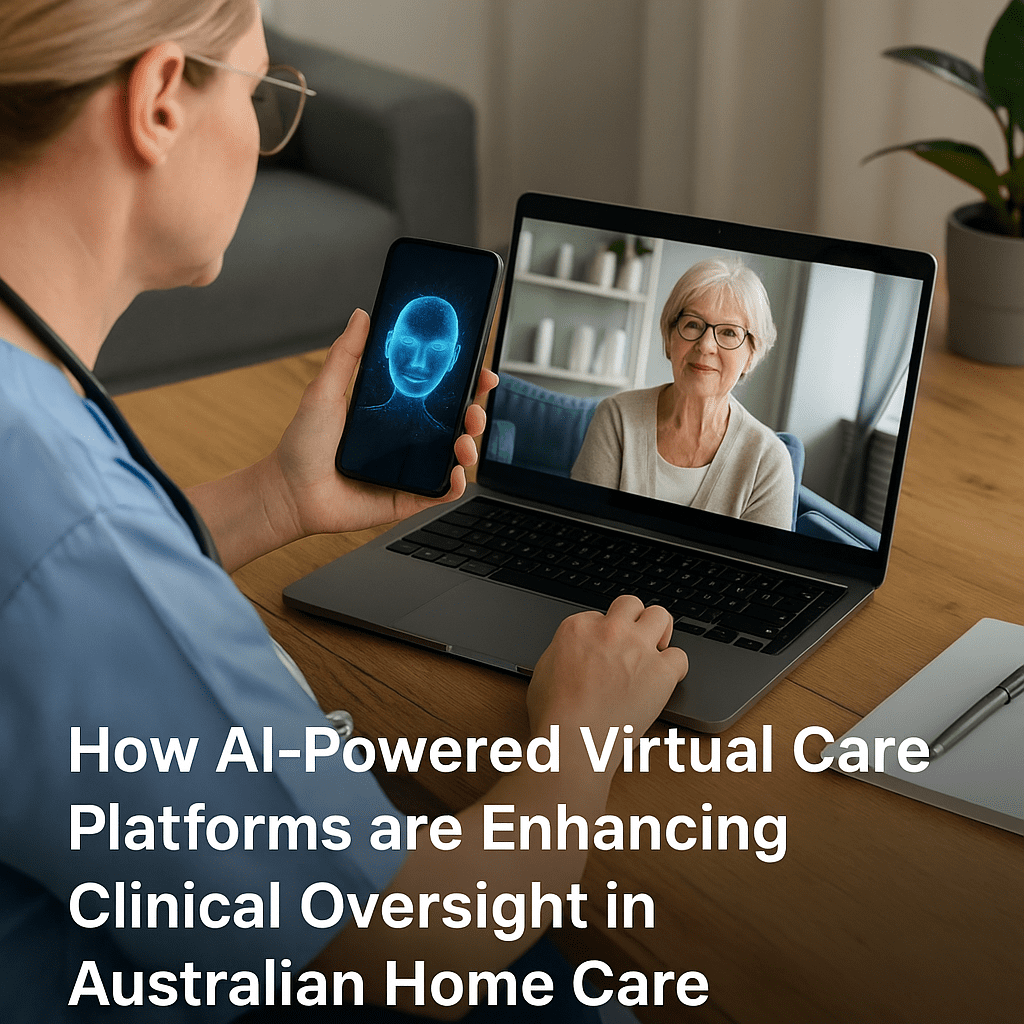
More Australians want to stay in their own homes instead of moving into aged care facilities. This puts more pressure on doctors, nurses, and carers to give quality support from a distance. This is where AI-powered virtual care platforms step in. These systems don’t just allow video chats. They can predict risks, check health data, reduce paperwork, and remind patients to take their medicines.
Think of them as a mix between a smart doctor’s helper, a data expert, and an assistant who never gets tired.
2. The Current State of Home Care in Australia
There are three main reasons digital health is becoming important in Australia:
– Government changes: The Department of Health and Aged Care is pushing for digital systems that connect home care providers with My Health Record. These changes came after the Royal Commission into Aged Care showed the need for stronger oversight and better patient safety.
– COVID-19 habits: Telehealth appointments are now part of normal care. Whether in rural towns or big cities, doctors expect to meet patients online.
– Shortage of staff: The aged care sector employs about 380,000 people, but there are still not enough workers. Digital tools help reduce pressure on staff.
With all this combined, AI virtual platforms are filling a very important gap.
3. What Are AI-Powered Virtual Care Platforms?
These platforms combine video consults with artificial intelligence. Instead of only reacting when something goes wrong, they focus on proactive care, trying to predict health problems before they happen.
Some key tools include:
– AI triage: chatbots or software that assess symptoms.
– Predictive monitoring: looking at vital signs to signal risks early.
– Remote patient management: clinicians can monitor patients through real-time dashboards and alerts.
Unlike simple telehealth, AI systems do more than just connect people. They actually interpret data, give advice, and link to medical support systems.
In Australia, some examples include:
– Telstra Health’s virtual care trials focused on aged care.
– Coviu using AI speech analysis for mental health and dementia risks.
– Eldercare projects that use wearables with AI dashboards.
4. Why Home Care Needs Stronger Clinical Oversight
Looking after patients at home is not the same as in a hospital. There are challenges like:
– Patients may forget medicine or not report symptoms quickly.
– Older people often have more than one chronic condition at the same time.
– Different care providers may not always share information properly.
These obstacles make stronger digital oversight vital.
5. Ten Ways AI Platforms Are Helping Home Care
1. Predicting risks early with data analysis.
2. Sending real-time alerts to health staff.
3. Tracking vital signs like heart rate and oxygen levels with wearables.
4. Checking if patients take the right medicine at the right time.
5. Writing medical notes and reports automatically with voice recognition.
6. Making care plans personalised to each patient.
7. Giving decision support to doctors and nurses.
8. Connecting with My Health Record for a complete view of patient history.
9. Using speech and image recognition to spot mental or physical health risks.
10. Providing chatbots for simple health questions and triage.
The result is safer care, faster response times, and less burnout for health workers.
6. Who Benefits From These Platforms?
– Clinicians: less paperwork, better data, and fewer late-night emergencies.
– Patients: safer care at home, fewer hospital visits, and personalised support.
– Families: better communication with carers and peace of mind.
– The health system: lower costs through fewer hospitalisations and better data for planning.
7. Challenges and Limits in Australia
Even though the benefits are big, there are still hurdles:
– Data security and privacy need strong protections.
– AI can be biased if not trained on diverse populations, including Aboriginal and Torres Strait Islander peoples.
– Older Australians may not find digital technology easy.
– Internet connections in rural areas can still be unreliable.
– Startup costs for devices, training, and systems are high.
This means AI is not a quick fix—it needs planning, funding, and good policy.
8. What’s Next for Australian Home Care?
Experts suggest several next steps:
1. Create national systems for testing AI in healthcare.
2. Expand connections with My Health Record.
3. Increase training in digital skills for staff and patients.
4. Fund trials to prove cost savings before full rollout.
5. Strengthen cyber protections to defend against hackers.
The future is heading toward more tech-enabled care. The key is making sure it reaches everyone, including rural and remote communities.
9. Conclusion
AI virtual care is no longer a bonus option—it is becoming a central part of home care in Australia. These tools help clinicians with early warnings, real-time monitoring, and smarter decision-making.
Challenges remain, such as digital skills, cybersecurity, and costs, but the direction is clear. Patients want it, families support it, and clinicians rely on it more each day.
At SMPLSINNOVATION, we believe the future of home care in Australia will soon mean fewer rushed visits and more smart, safe, and connected care at home.