How AI Powered Predictive Analytics Is Reducing Hospital Readmissions in Australia’s Public Health System
Published by: SMPLSINNOVATION
Date of Research: Based on reports and articles published on or before March 5, 2024
Sources: Australian Institute of Health and Welfare (AIHW), CSIRO’s Australian e-Health Research Centre, Department of Health and Aged Care, and studies in Medical Journal of Australia and The Lancet Regional Health – Western Pacific
1. Introduction
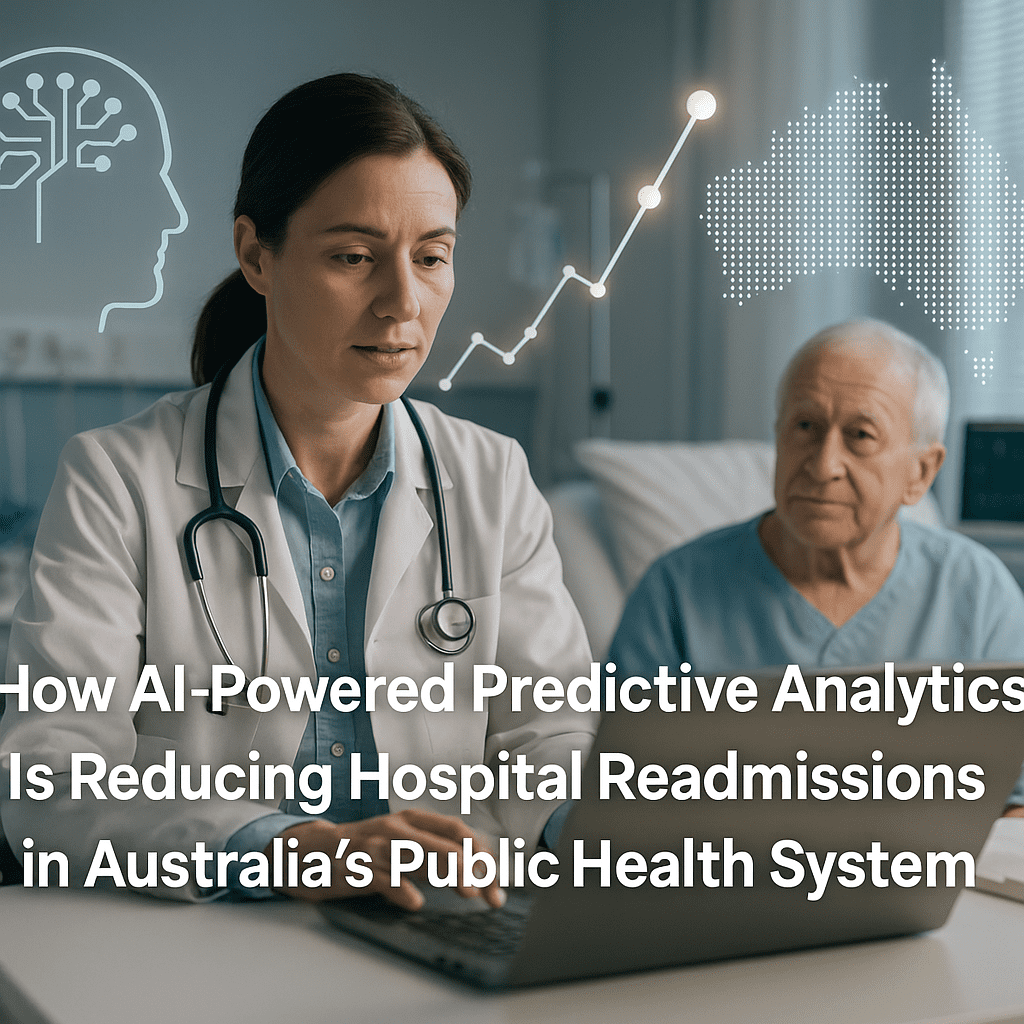
No one wants to go back to the hospital soon after being sent home. But across Australia’s public health system, hospital readmissions are still a major problem.
When patients return within 30 days of going home, it costs hospitals money, takes up doctors’ and nurses’ time, and slows down patient recovery. The AIHW says preventable readmissions cost hundreds of millions of dollars each year, along with the stress it causes patients and families.
Here’s the good news: hospitals are now using artificial intelligence, or AI, to help solve this problem. AI-powered predictive analytics can find patterns that people might miss. By looking at huge amounts of data, it helps doctors see which patients might need extra help so they don’t have to come back to the hospital too soon.
This post explains how predictive analytics works, highlights some Australian projects leading the way, and explores how it helps make public healthcare more proactive and caring.
2. Understanding Predictive Analytics in Healthcare
Predictive analytics gives doctors a kind of “crystal ball” powered by data and math instead of magic.
It works by
1. Combining data from different sources like electronic medical records, lab results, pharmacies, and social care.
2. Training machine learning models to spot links between patient details and their chance of being readmitted.
3. Producing risk scores or alerts that help doctors decide what actions to take.
To explain it simply:
Descriptive analytics tells you what already happened.
Predictive analytics tells you what will probably happen.
Prescriptive analytics tells you what to do next.
Since 2020, Australian hospitals have moved quickly from small trials to larger systems. The Australian Digital Health Agency (ADHA) helps make sure data can move safely and easily between hospitals.
With this setup, hospitals can act faster and care better for their patients.
3. The State of Hospital Readmissions in Australia
Before AI solutions came along, here’s what the situation looked like:
Readmissions within 30 days were around 6–8% across the country, according to AIHW 2023 data. Some conditions, like chronic heart failure or breathing problems, had rates above 15%.
Each readmission cost public hospitals between $6,000 and $12,000. Multiply that by thousands of cases, and the costs are huge.
Major factors include
– Ongoing illness management gaps
– Patients not taking medicine correctly
– Poor discharge planning
– Social issues like housing, transport, or distance from care
People living in rural and remote areas face higher risks simply because follow‑up services are harder to reach.
Predictive analytics helps by catching risks early, often before a patient leaves the hospital.
4. How Predictive Analytics Works to Prevent Readmissions
Here’s how hospitals use predictive analytics to reduce readmissions:
1. Data Collection: Hospitals gather information from medical records, labs, pharmacies, and even patient feedback.
2. Machine Learning: AI systems learn from past data to find red flags.
3. Risk Scoring: The system gives each patient a readmission risk score.
4. Clinical Action: Doctors and nurses take steps for high‑risk patients, such as follow‑up calls or extra care.
5. Connected Care: Telehealth and community care teams help patients after they go home.
All this happens under strict privacy rules and national data standards set by ADHA. Systems like FHIR help make sure data is shared safely.
Better data leads to better care — and fewer hospital returns.
5. Ten Case Studies from Around Australia
Hospitals across Australia are using predictive analytics in creative and effective ways:
1. NSW Health’s Readmission Risk Model (2023) helps spot high‑risk heart patients and has cut readmissions by about 10%.
2. Queensland Health’s Virtual Care Command Centre uses near real‑time alerts to improve care and reduce re‑entries.
3. Victoria’s Alfred Health uses AI to personalize discharge plans, leading to better follow‑up.
4. SA Health developed predictive tools to support mental health patients after discharge. Early results show stronger recovery.
5. WA’s Health Support Services DataLab predicts post‑surgical complications and arranges timely follow‑ups.
6. ACT Health and ANU built systems to forecast bed use and readmission risks, improving hospital planning.
7. Northern Territory’s Healthy@Home AI project helps Indigenous communities stay healthy after leaving the hospital.
8. Tasmania introduced AI scoring for patients with lung disease, improving community nurse scheduling.
9. Royal Brisbane and Women’s Hospital uses a predictive dashboard to spot patients likely to return to emergency care within two weeks.
10. Monash Health teamed up with CSIRO to predict long‑term readmission risks and design preventive programs.
These cases show that when doctors get the right data at the right time, patients heal better and hospitals run more smoothly.
6. Opportunities, Obstacles, and Ethics
Even with all these benefits, some challenges remain.
1. Data Quality: Systems must have clean, accurate data or predictions won’t work well.
2. Staff Training: Doctors and nurses need to understand and trust these tools.
3. Ethics: Patients should know when AI helps make decisions, and systems must avoid unfair bias.
Australia is already drafting rules for safe, responsible AI with help from ADHA and CSIRO. The goal is simple: use AI to help, not harm.
7. The Future: From Prediction to Prevention
In the near future, we can expect:
– Better sharing of health data across the country.
– More community-based analytics that link hospitals with pharmacies, aged care, and social services.
– AI tools that prevent risks during hospital stays rather than after discharge.
– Smart devices, like watches, that send real‑time health information to doctors.
The hope is that going back to the hospital becomes rare — because care keeps improving even after patients leave.
8. Why SMPLSINNOVATION Cares
At SMPLSINNOVATION, we aim to make healthcare technology simple and useful.
We work with hospitals, health networks, and government agencies to design tools that make care safer, faster, and easier for everyone involved. Our mission is to help build a future where technology supports both doctors and patients — and where good health starts with smart, compassionate care.