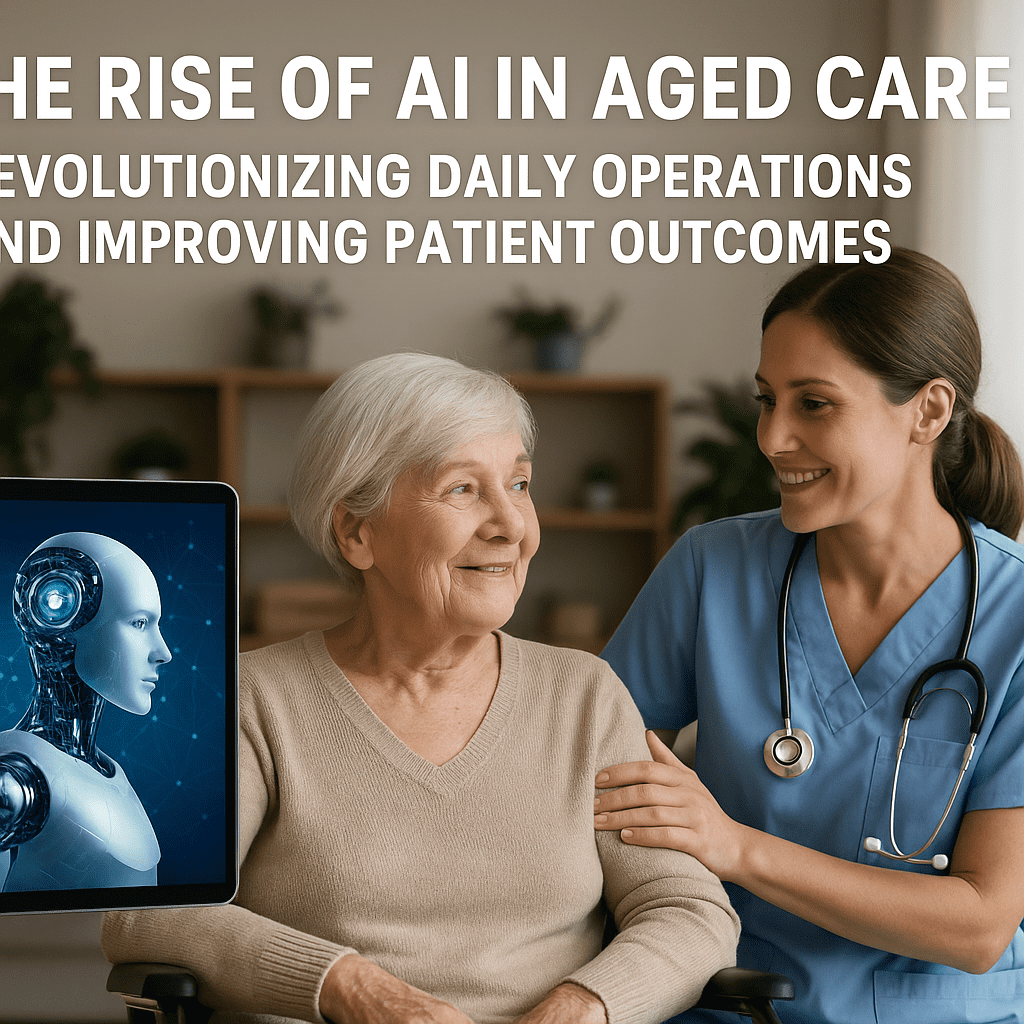
The Rise of AI in Aged Care: Revolutionizing Daily Operations and Improving Patient Outcomes
By SMPLSINNOVATION – Health Technology Consulting Experts
Published February 17, 2024
I. Introduction
If you’ve ever tried to help an older family member figure out how to “talk to the remote” or “order groceries from the air,” you know how fast technology changes our lives. Now imagine those same tools transforming entire aged care systems. That’s exactly what’s happening today.
According to recent reports from Nature Digital Medicine and the World Health Organization, artificial intelligence (AI) is no longer just a fancy tool for the future. It’s quickly becoming the foundation of how aged care homes and programs work.
With the number of people aged 65 and older expected to double by 2050, new technology like smart robots and predictive programs are helping improve comfort, dignity, and quality of life for older adults.
For care providers, 2024 is a turning point. AI, robotics, and thoughtful design are bringing more intelligence—and kindness—into aged care.
II. The Current State of Aged Care in 2024
Before we explore the technology, let’s take a look at what aged care is really like today. It’s not easy.
1. Demographic Pressures
By 2050, the United Nations says more than 1.6 billion people will be over 65. Having more older adults is wonderful, but it also means more health issues, complex care needs, and more work for already busy caregivers.
2. Workforce Shortages
The World Health Organization warns of a huge shortage in nurses, care workers, and support staff. Many are overworked and burned out.
3. Operational Inefficiencies
Care homes act like small hospitals, offices, and therapy centers all at once. Too much paperwork, separate data systems, and manual tasks cause stress and waste time.
AI is stepping in to help calm the chaos.
III. Key AI Technologies Transforming Aged Care
AI isn’t just for business or entertainment anymore. It’s changing how we care for older people in many ways.
1. Predictive health tools that spot warning signs before people feel sick.
2. Remote monitors that track heart rate and other vital signs from home.
3. Friendly chatbots that talk with seniors and ease loneliness.
4. Robots that help people move safely and stay independent.
5. Smart scheduling software that balances staff workloads.
6. Cameras with AI to detect falls or strange movement patterns.
7. Speech tools that type notes automatically for staff.
8. Smart medication reminders to prevent missed or wrong doses.
9. Online platforms that connect all patient data in one place.
10. Companion robots that recognize human emotions and respond with care.
All these tools are made to help people—not replace them.
IV. Revolutionizing Daily Operations in Aged Care Facilities
AI is not only improving patient care; it’s also simplifying everyday work.
1. Automated compliance reports can now be done in minutes, not days.
2. Smarter scheduling helps reduce burnout and create fair work shifts.
3. Predictive dashboards show when and where extra help is needed.
4. Virtual assistants remind residents about meals or appointments.
5. Sensors can spot early signs of broken equipment, saving money.
6. AI tools make it easier for families, doctors, and nurses to stay connected.
7. Data dashboards turn confusing numbers into simple, clear insights.
The days of endless clipboards and paperwork may soon be behind us.
V. Improving Patient Outcomes Through AI Integration
For residents and families, the real impact of AI is personal.
1. Predictive systems catch early signs of illness or memory loss.
2. Chatbots and digital friends reduce loneliness and bring comfort.
3. AI tailors food, exercise, and care plans for each person.
4. Voice assistants remind patients to take medicine on time.
5. Doctors get faster, data-based recommendations for treatment.
6. Sensors and fall detection make homes safer.
7. Family members can track loved ones’ wellbeing remotely.
AI gives caregivers more time to connect with people instead of paperwork.
VI. Ethical, Privacy, and Regulatory Challenges
AI in healthcare also raises serious questions.
1. Data security and consent are very important. Seniors must know how their data is used.
2. AI decisions must be clear and easy for humans to understand.
3. Systems must be trained fairly to avoid bias or errors in care.
4. New laws, like the EU AI Act and updated U.S. FDA guidelines, help set safety standards.
5. Ethical design means technology should support human choices, not control them.
At SMPLSINNOVATION, we remind our clients that responsible AI builds trust between patients, caregivers, and society.
VII. Global Examples and Case Studies
1. Japan’s National Care Robotics Program uses helper robots that support over 30,000 seniors each day.
2. Denmark’s AI Triage Platform has reduced emergency hospital trips by 25%.
3. Singapore’s Virtual Companionship Network uses talkative AI bots to lift moods and memory.
4. Canada’s smart cameras help prevent falls and reduce injuries.
5. The Mayo Clinic in the U.S. uses AI to organize and personalize care plans.
6. Australia’s smart homes use sensors to predict health changes in residents.
7. In the U.K., AI companion robots help reduce loneliness in care homes.
8. Belgium’s medication AI system cuts dosage mistakes by 40%.
9. South Korea’s digital dementia tools provide memory support and rehabilitation.
Across the world, these examples show that when AI is used wisely, it can make aged care smarter, safer, and more human.