How AI-Powered Predictive Analytics Is Helping Stop Falls in Aged Care Homes
By SMPLSINNOVATION — Where smarter care meets simpler solutions.
1. Introduction
Imagine a quiet hallway in a care home. Everything seems calm until a nurse hears a sudden crash. Every caregiver knows that awful sound. Falls among older adults are not only frightening but can lead to serious injuries, hospital visits, and long-term mobility problems.
According to the World Health Organization (Feb 2024), falls cause more than 684,000 deaths each year, making them the second most common cause of accidental injury deaths. The CDC (Jan 2024) says one in four adults over 65 in the U.S. falls each year, and many of these falls lead to injuries that need medical attention. In aged care homes, the risk is even higher because many residents deal with balance issues, memory loss, or complex medication routines.
The challenge is that preventing falls isn’t just about watching every resident all the time. It’s about knowing who might be at risk before the fall happens.
That’s where AI-powered predictive analytics comes in. This blog looks at how this new technology is helping care providers stop falls before they happen, keeping seniors safer and healthier.
2. The Current Situation in Fall Prevention
Before AI came along, preventing falls depended a lot on manual work and human observation.
Traditional methods included:
1. Staff doing regular rounds to check on residents.
2. Physical assessments every few months, which can miss small changes in balance or walking.
3. Checking for unsafe areas like slippery floors or poor lighting.
4. Reviewing incidents after a fall instead of preventing the next one.
Recent challenges have made things harder. The Lancet Public Health (Feb 2024) found that staff shortages and burnout are common. The WHO Data Hub (2024) showed that record keeping on falls isn’t consistent, and reports often come in late.
With an aging population and fewer workers, facilities can’t just work harder—they have to work smarter.
3. AI and Predictive Analytics: What’s New in 2024
Predictive analytics might sound complicated, but it’s really about using data to forecast what could happen next.
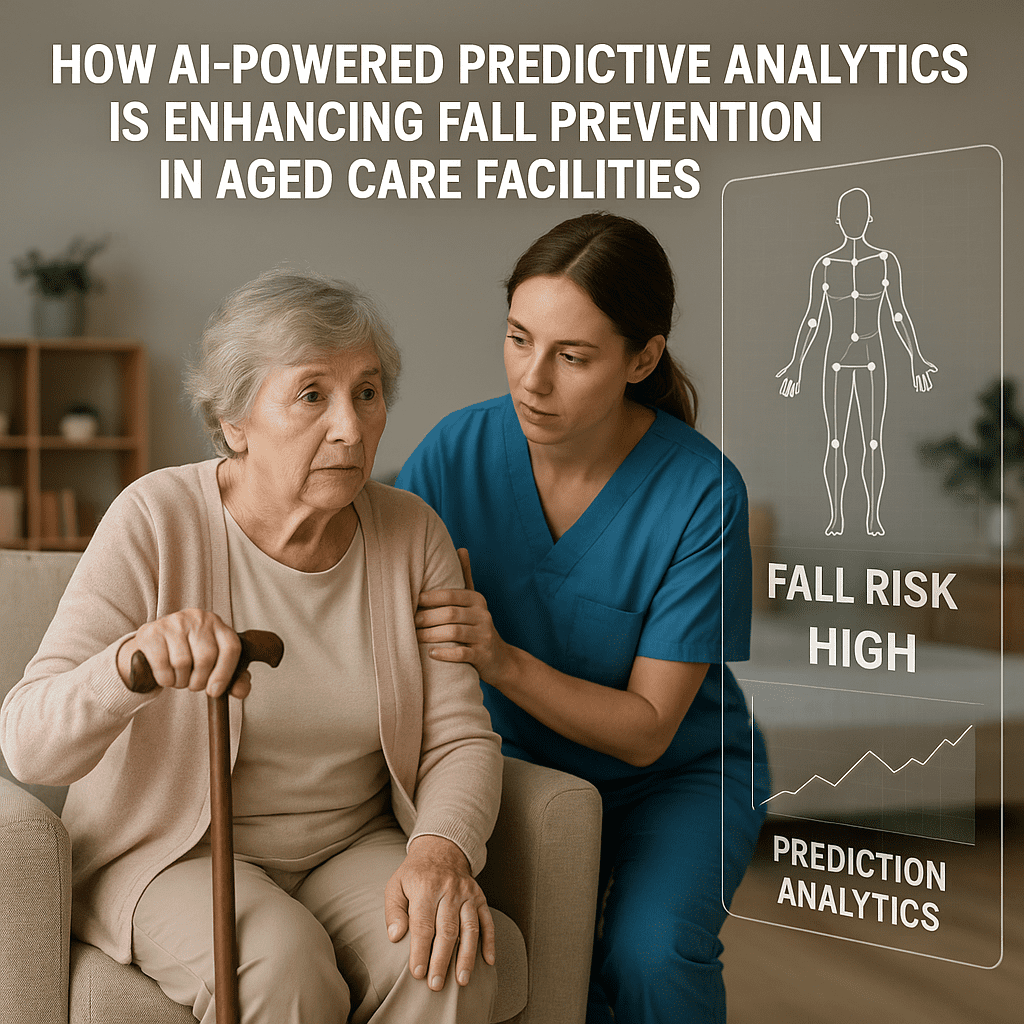
AI-powered predictive analytics uses sensors, machine learning, and data from many sources to predict fall risk. It studies movement, behavior, and even the environment to spot warning signs before a fall.
Key improvements in 2024 include:
1. Systems that combine data from cameras, motion, and sound sensors to get a full picture of resident activity.
2. Edge AI that processes data right in the care home for faster alerts.
3. Integration with wearable devices and medical records to update risk scores instantly.
Research has proven how powerful these systems are becoming. Nature Digital Medicine (Feb 2024) reported a 24% improvement in fall-risk accuracy compared to models from 2022. Frontiers in Aging AI Review (Feb 2024) found a 30% drop in false alarms, meaning fewer interruptions for staff and residents.
AI has moved from being a guessing tool to becoming a reliable partner in care.
4. Ten Ways AI Predictive Analytics Is Helping Prevent Falls
1. Continuous monitoring of walking speed and posture to spot early signs of risk.
2. Detecting small changes in balance or stride that appear days before a fall.
3. Creating personalized safety plans for each resident.
4. Sending automatic alerts to caregivers when someone’s risk level rises.
5. Including information about medications and sleep patterns that can affect balance.
6. Using sensors that detect “near-falls” to study what caused them.
7. Predicting when mobility aids like walkers or wheelchairs need maintenance.
8. Watching environmental conditions such as lighting and floor safety.
9. Helping managers schedule more staff during times when falls are most likely.
10. Analyzing data across all residents to design better prevention programs.
With these tools, safety becomes a natural part of everyday care.
5. Real-World Examples
Australia’s Department of Health launched an AI project in 65 facilities in early 2024. In six months, they saw 28% fewer falls and 37% faster response times. Staff said the system felt like “an extra digital teammate.”
In the United Kingdom, the NHS Digital Care AI Pilot used video analytics and sensors to detect falls in just six seconds and reduced false alarms. Residents were happier because staff could spend more time with them.
Canada’s SmartCare Ontario Project looked at how weather affected fall risks. By including humidity and temperature data, homes saw 10% fewer falls linked to slippery floors.
These projects show that predictive analytics is already making care homes safer.
6. Why Care Homes Are Adopting AI
At SMPLSINNOVATION, we’ve seen how excited healthcare teams are about this technology. Here’s why:
1. Fewer falls mean lower costs and fewer legal issues.
2. Staff can focus more on residents who need extra care.
3. Families feel more confident knowing their loved ones are safe.
4. The systems help meet new health and safety standards.
5. Residents recover faster and feel more secure.
Caregivers often tell us that AI doesn’t replace empathy—it makes it stronger. It helps staff be in the right place at the right time.
7. The Future of Fall Prevention
By the end of 2025, it’s expected that over 60% of aged care facilities in developed countries will use some kind of predictive fall system.
Future developments include:
– AI models trained with global data to improve accuracy everywhere.
– Systems connected with robotics so companion robots can help during high-risk moments.
– Improved data privacy through safe, shared learning between facilities.
Soon, a grandmother’s smartwatch, the care home’s lighting, and the nurse’s phone could all work together to prevent falls. That’s not science fiction—it’s the next step in keeping seniors safe.