How AI is Changing Aged Care with Smart Monitoring Systems
By SMPLSINNOVATION – where health tech meets the human heart
1. Introduction
People everywhere are living longer. By 2030, there will be more people over 60 than children under 10. This big change means health care will need to keep up. Many aged care homes and families are already stretched thin, caring for more seniors with fewer helpers.
That’s where Artificial Intelligence, or AI, steps in.
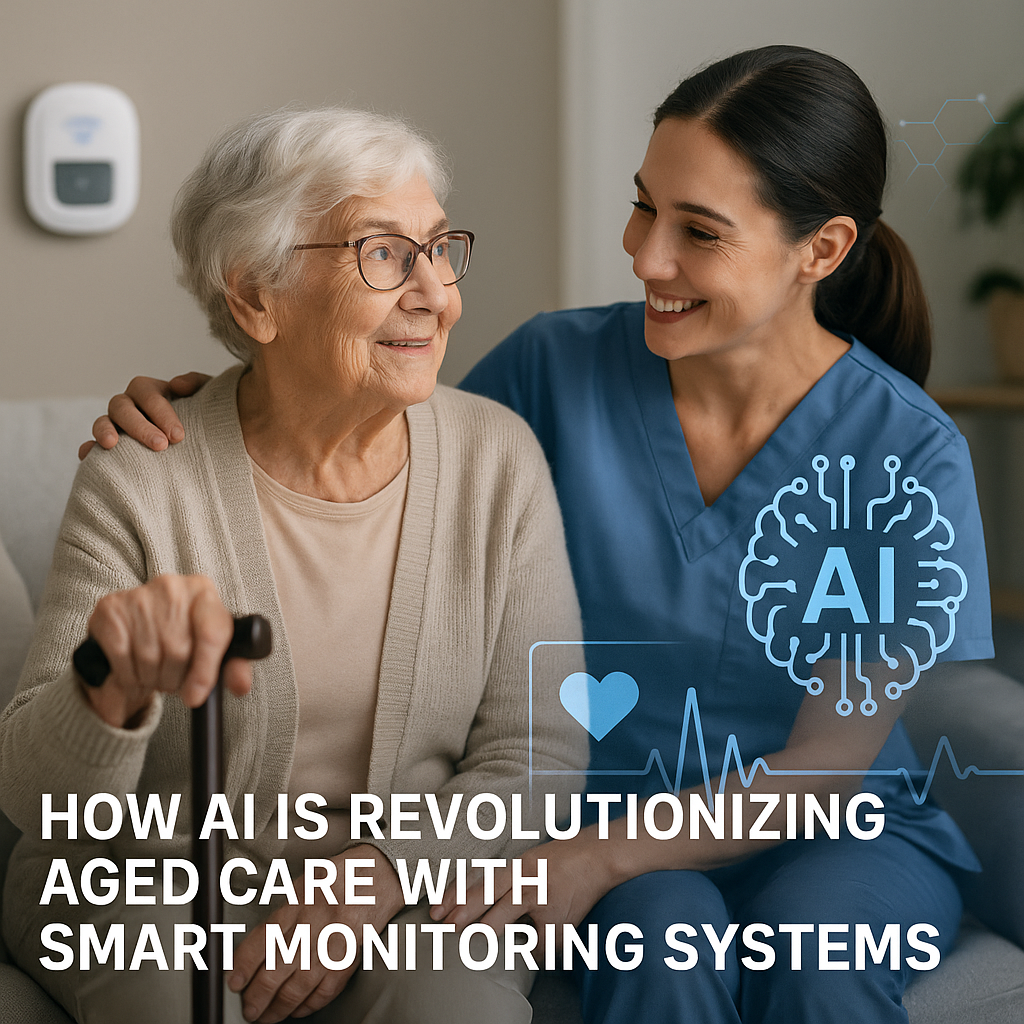
AI used to be known for playing chess and doing math. Now it’s quietly changing how we care for older adults. For example, sensors can notice if Ms. Tanaka’s walk has changed and warn of a possible fall. A voice assistant can remind Mr. Harris to take his medicine or water his plants.
Studies from Nature Aging and The Lancet Digital Health in April 2024 show that new AI tools are helping to watch over seniors continuously and kindly.
At SMPLSINNOVATION, we see AI as more than just machines. It’s about helping seniors live longer, safer, and happier lives with dignity.
2. The Global Aging Context
The world is getting older fast. By 2050, there will be about 1.6 billion people aged 65 and older, according to the United Nations.
But there aren’t enough caregivers to go around. The World Health Organization warns that the shortage of nurses and elderly care workers keeps growing. Budgets are tight, and many caregivers are tired and burned out.
AI can help take some of the pressure off. It can handle routine tasks, give early alerts about health changes, and free up caregivers to spend more time connecting with people.
With AI, technology helps caregivers spend more time being human.
3. What Smart Monitoring Systems Mean Today
Old-fashioned devices used to be bulky or limited. Today, smart monitoring systems use AI to quietly keep track of health and safety.
Here’s how they work:
1. Smart wearables track heart rate, walking speed, and signs of dehydration.
2. Sensors in the room notice movement, temperature, or if someone hasn’t eaten.
3. AI programs can predict health changes like infections or falls before they happen.
4. Voice assistants remind seniors to take medicine or stay active.
5. Some systems even notice mood changes from voice or body language.
6. Smart home tools adjust lighting or temperature for safety.
7. AI reminders help with food and medicine.
8. Emergency alerts go straight to family or doctors if a problem happens.
9. Private systems keep data safe on the device instead of online.
10. Cloud tools let families and caregivers see updates in real time.
These systems don’t just help people live longer. They help them live better.
4. How AI Is Changing Aged Care Right Now
AI makes aged care more personal, proactive, and caring. Here are some examples:
1. Personalized Care: AI learns what each person needs and adjusts daily routines.
2. Early Warning: Studies show AI can predict fall risks with over 90% accuracy.
3. Mind Health: AI can track speech or sleep changes that may point to early dementia.
4. Less Paperwork: AI organizes records and schedules automatically, giving caregivers more time for people.
5. Remote Care: Doctors can check in from afar while seniors stay independent.
6. Planning Resources: AI helps hospitals and nursing homes prepare for changing needs.
7. Friendship Tech: Chatbots and robot pets reduce loneliness.
8. Recovery: AI adjusts exercise plans during rehab.
9. Safer Homes: Smart systems adjust lights and heat to prevent falls and improve rest.
10. Trust and Fairness: AI is now being built with clearer rules so people understand how it works.
5. Case Studies in 2024
AI is already being used around the world.
Japan: Facilities use friendly robots that track health, serve meals, and lead group exercises. They’ve seen 40% fewer falls and happier residents.
Australia: A national program using wearables and sensors reduced emergency hospital visits by 18% in six months.
Sweden: Cameras with emotion sensors alert social workers when seniors feel lonely or sad.
Canada: New fall detectors protect privacy by not using video recordings.
Singapore: Smart apartments with AI systems alert care teams before problems happen.
These examples show that AI helps caregivers do their jobs better, not replace them.
6. The Ethics and Empathy Equation
Some people worry about privacy and fairness, and these concerns are important. The World Health Organization says AI in health care must always be ethical and safe.
That means:
1. Seniors must give clear consent.
2. Everyone should understand how AI makes decisions.
3. Data must stay secure.
4. AI should work for all people, not just some groups.
5. Humans must always have the final say.
AI should work hand in hand with empathy.
7. Looking Ahead: The Future of Aged Care
By 2035, AI will likely be part of most senior care homes. The real excitement isn’t just in smart machines, but in how they can make life kinder.
At SMPLSINNOVATION, we help organizations build and guide these systems responsibly. From digital health tools to smart homes that remind Grandma her tea is ready, the future looks bright.
In this future, seniors can live with peace of mind, caregivers can focus on people instead of paperwork, and technology will make care truly human again.