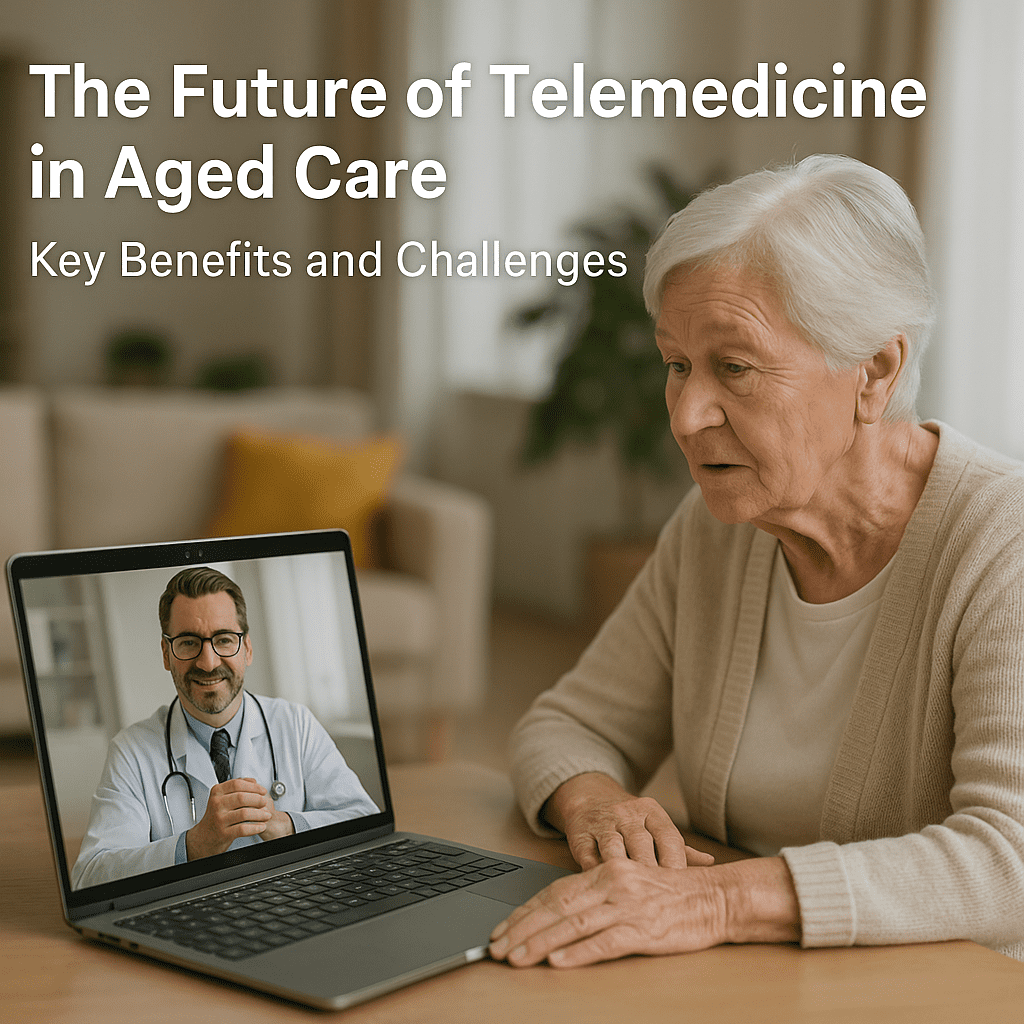
The Future of Telemedicine in Aged Care: Key Benefits and Challenges
Date: February 7, 2025
By: SMPLSINNOVATION – Health Technology Consulting
1. Introduction
You may have noticed it already – the silver tsunami is here. By the year 2030, one in six people in the world will be 60 years old or older, says the World Health Organization (WHO). That means more birthdays to celebrate and more healthcare needs to meet.
As more older adults need long-term care, the world faces a big question: how can we give quality and kind care to all seniors without overworking the staff or breaking the budget? The answer often involves a camera, Wi-Fi, and a friendly doctor smiling from a laptop screen.
Telemedicine, once seen as futuristic, is now a normal part of healthcare. As of early 2025, more than 60% of adults over 65 have used telehealth at least once. What started as a temporary solution during the pandemic has turned into a permanent and important part of aged care.
Four main forces are helping this change grow:
1. Demographic Pressure: The number of people aged 80 and above will triple by 2050.
2. Workforce Shortages: The world is short about 10 million health workers, especially nurses.
3. Better Technology: Smart devices, sensors, and strong internet are easier to get than ever.
4. Patient Preference: Seniors like the comfort and ease of care at home instead of crowded waiting rooms.
2. Understanding Telemedicine in Aged Care
Telemedicine in aged care is more than just video calls between doctors and patients. It includes many services, tools, and ways of working designed to keep older adults safe, healthy, and independent.
It usually includes:
– Virtual appointments with healthcare providers
– Remote patient monitoring using wearables or home sensors
– Digital therapy through apps or smart devices
The big trend in 2025 is blended or “hybrid” care. That means using both in-person and online care together. For example, a nurse might visit once a month while the person’s daily health data is checked online. If something unusual is found, a doctor is alerted right away.
Around the world, several places are leading the way:
– Nordic Countries – Using public telehealth and home monitoring widely
– Singapore – Building a strong government-led digital health system for seniors
– Australia and New Zealand – Bringing tele-rehabilitation to older adults in rural areas
– United States – Expanding telehealth in senior homes covered by Medicare
– Japan – Using robots and AI to help its aging workforce
Simply put, telemedicine in aged care is now essential. The smarter we use it, the better life becomes for everyone — from nurses to grandparents.
3. Key Benefits of Telemedicine in Aged Care
Telemedicine offers many benefits. Here are the top ones based on 2025 research:
1. Better Access to Specialists
Older people in faraway areas can see specialists without leaving home.
2. Fewer Hospital Readmissions
Health issues can be spotted early through remote monitoring, lowering hospital visits.
3. Easier Management of Chronic Diseases
Conditions like diabetes or heart failure can be tracked and managed in real time.
4. Improved Medication Use
Apps and reminders help seniors take medicine on time.
5. Cost Savings
Studies show telemedicine can save up to 25% on ongoing care costs per patient.
6. Personalized Care Plans
Smart systems use data to adjust care for each person’s unique needs.
7. Family Involvement
Families can join online visits to stay informed and help with care plans.
8. Continuous Care
Telemedicine makes it easier to stay connected to care between hospital and home.
9. Mental Health Support
Virtual therapy and social programs help reduce loneliness and depression.
10. Environmental Benefits
Less travel and fewer buildings mean a smaller carbon footprint.
Together, these benefits make a strong case for using telemedicine in every type of aged care setting.
4. Major Technological Innovations in Aged Telecare
Technology is changing fast. Here are some of the newest tools shaping aged care in 2025:
1. Artificial Intelligence (AI) and Predictive Analytics – Tools that warn doctors before a major health issue appears.
2. Wearable Health Monitors – Smartwatches that check heart rate, hydration, and even fall risk.
3. Internet of Medical Things (IoMT) – Smart sensors at home tracking movement and vital signs.
4. 5G and Faster Internet – Making video calls smoother and more reliable.
5. Voice-Activated Devices – Easy-to-use helpers for those with vision or memory issues.
6. Blockchain – Better protection for private health data.
7. Virtual and Augmented Reality – Fun and helpful ways to do therapy and memory games.
8. Robotics – Smart machines that assist with lifting, reminders, or companionship.
9. Shared Health Records – Different healthcare systems sharing data easily and securely.
10. Chat-based AI Support – Helpful assistants guiding seniors through health tasks.
These tools make telemedicine safer, quicker, and more personal. Even those with little tech experience can learn to use them with ease.
5. Key Challenges in Telemedicine for Aged Care
Even with progress, telemedicine still faces challenges. Some of the biggest include:
1. Digital Literacy Gaps – Many seniors find it hard to use new devices, so training is needed.
2. Data Privacy and Security – Keeping information safe is more important than ever.
3. Poor Internet Access – Some places still have weak connections that limit telehealth use.
4. Complicated Rules and Payments – Different regions have different telehealth laws and coverage.
5. Clinical Limits – Not every health issue can be treated online.
6. System Integration – Different software systems sometimes don’t work well together.
7. Cultural Barriers – Some seniors prefer face-to-face visits and may not trust virtual ones.
8. Caregiver Stress – Technology can add pressure on families to manage devices.
9. Equipment Costs – Buying and setting up devices can be expensive at first.
10. Ethical Questions – Making sure AI and smart systems treat seniors fairly.
6. Conclusion: The Path Forward
Telemedicine has grown from grainy video calls to a lifeline that connects older adults to care and loved ones while helping them stay independent.
But there is still more to do. For telemedicine to truly make a difference, we must:
– Make sure every senior can get digital training and access.
– Keep health data secure and connected between care providers.
– Design systems that are simple, kind, and human-centered.
At SMPLSINNOVATION, we believe the future of healthcare should be smart but simple. Our goal is to help caregivers, health developers, and leaders build telehealth systems that feel caring and personal — because compassion will always be the heart of healthcare.