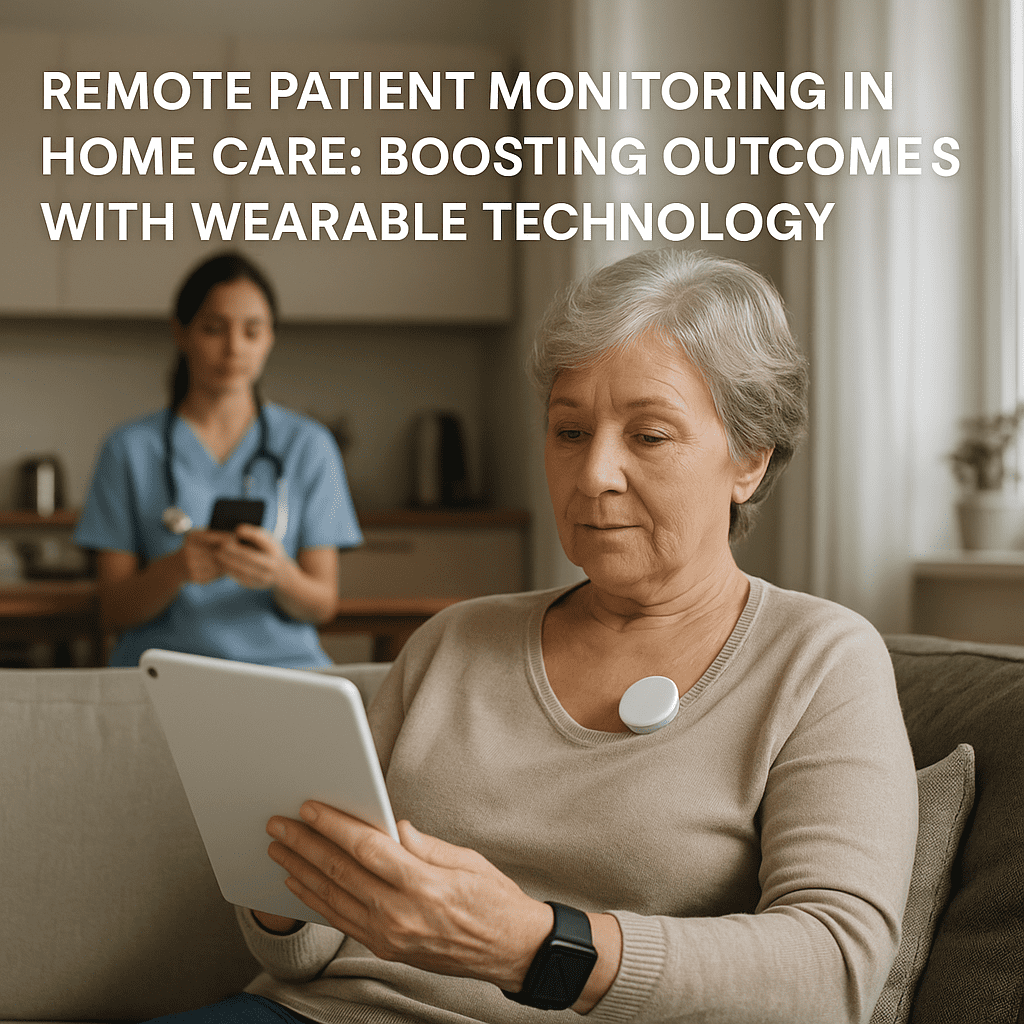
Remote Patient Monitoring in Home Care: Boosting Outcomes with Wearable Technology
Published by SMPLSINNOVATION, February 2024
1. Introduction
Let’s face it — healthcare hasn’t always been fast to change. But lately, things are speeding up. Remote patient monitoring, also called RPM, and wearable technology are becoming a big part of modern care. They are turning home health care from “see the doctor when you’re sick” into “stay healthy all the time.”
Between 2023 and early 2024, we saw a big push forward. More older adults, more people with long-term illnesses, and a love for digital tools helped RPM grow quickly. Reports from Healthcare IT News and MedTech Dive showed that hospitals and home care programs are using these tools faster than ever.
The main point is simple: when we use wearable technology in home care, people get healthier, costs go down, and both patients and care teams are happier.
At SMPLSINNOVATION, we love helping connect technology and people. We make digital change feel easy and natural — just like wearing your favorite watch.
2. The Evolution of Home-Based Monitoring
There was a time when a “check-up” meant sitting in a waiting room flipping through old magazines. Now, your heart rate, sleep, and oxygen levels can be tracked while you drink coffee at home in your pajamas.
From Clipboards to Cloud Data
Home health care has moved from paper checklists to smart systems that track health continuously. Instead of getting your blood pressure checked every few months, doctors can now see it every few minutes.
Regulatory and Policy Pushes
In 2023 and 2024, there were big steps forward to support digital health. The Centers for Medicare & Medicaid Services expanded payment for RPM and Remote Therapeutic Monitoring, making sure these services are both useful and affordable.
Why This Transformation Stuck
The change isn’t just convenient — it’s needed. Health care faced big challenges:
1. Not enough nurses and care staff.
2. More patients going home earlier but still needing help.
3. People wanting more control over their care.
4. More older patients needing home support.
5. Greater comfort with technology after the pandemic.
Now we have a smarter kind of house call — one powered by sensors, software, and science.
3. The Role of Wearable Technology in RPM
Wearables used to just count steps. Now they can track heart rhythms, blood sugar, and even stress levels. They’ve turned into small, powerful health tools.
Types of Wearable Devices in Home Care
Here are ten important types shaping home care today:
1. Smartwatches and heart monitors that track pulse and ECG.
2. Wearable blood pressure devices that work all day.
3. Smart patches that measure things like glucose and body temperature.
4. Sleep and breathing trackers for people with conditions like sleep apnea.
5. Recovery bands that track movement and prevent falls.
6. Smart rings and finger sensors that collect health data quietly.
7. AI activity trackers that spot early signs of problems.
8. Headbands that track stress and brain activity.
9. Smart clothing that monitors posture and heart rhythms.
10. Tiny implanted sensors that help track heart, diabetes, or nerve issues.
These devices don’t just gather numbers — they help predict problems before they start.
Key Technical Capabilities
Wearables are powerful because of the technology inside. They can:
1. Send information in real time through Bluetooth, Wi-Fi, or 5G.
2. Connect smoothly with electronic health records.
3. Use cloud systems to analyze data safely.
4. Use artificial intelligence to find early warning signs.
5. Keep data private and secure.
6. Run for days without needing to be charged.
7. Adjust themselves without needing expert help.
8. Show easy-to-read data for both patients and doctors.
9. Connect with voice assistants to give reminders.
10. Process data quickly for emergency alerts.
Wearables have turned from fun gadgets into powerful health tools that help save lives.
4. Clinical and Operational Benefits of RPM with Wearables
This is where the results really stand out. The technology isn’t just cool; it’s making a real difference.
Clinical Outcome Improvements
Research from trusted health journals in 2024 shows that wearables help patients in many ways:
1. Better heart care by finding irregular rhythms early.
2. Fewer hospital visits for heart and lung conditions.
3. Improved blood sugar control for people with diabetes.
4. Early infection detection after surgery.
5. More patients taking medicine correctly.
6. Better sleep and lower sleep-related risks.
7. Lower stress and anxiety through relaxation support.
8. Early alerts for breathing problems.
9. More success with healthy weight and activity goals.
10. Early signs of memory or thinking changes picked up in data.
With AI helping doctors see patterns quickly, care becomes smarter and more personal.
Operational and Economic Gains
Hospitals and clinics benefit too. Here are ten reasons why:
1. Less work for staff through automatic tracking.
2. More accurate, continuous data.
3. Better scheduling for patients who need the most care.
4. Faster follow-ups before problems get worse.
5. Lower costs from fewer emergency visits.
6. Stronger programs for quality-based care models.
7. Happier patients who feel cared for in real time.
8. Better teamwork through shared digital tools.
9. More home care capacity without burnout.
10. A strong reputation for innovation and technology leadership.
For care teams stretched thin, RPM is a lifesaver that also helps patients live better.
5. Challenges and Future Directions
Of course, there are still some challenges ahead. Common issues include:
1. Too much data for doctors to sort through.
2. Difficulty connecting different devices and systems.
3. Privacy and security concerns.
4. Devices that need maintenance or are hard to use.
5. Training staff for new workflows.
6. Making sure everyone can afford and access these tools.
The good news is that progress is happening fast. Better data systems, smarter AI tools, and programs that make devices more affordable are helping close these gaps.
In the near future, wearables may track mental health, nutrition, and hydration too — turning homes into complete smart health systems.
6. Conclusion
Home health care has entered the digital age, and wearable technology is leading the way.
From tracking heartbeats to helping patients recover after surgery, RPM powered by wearables is changing how care is delivered. The result is simple: better health, lower costs, and happier people — both patients and providers.