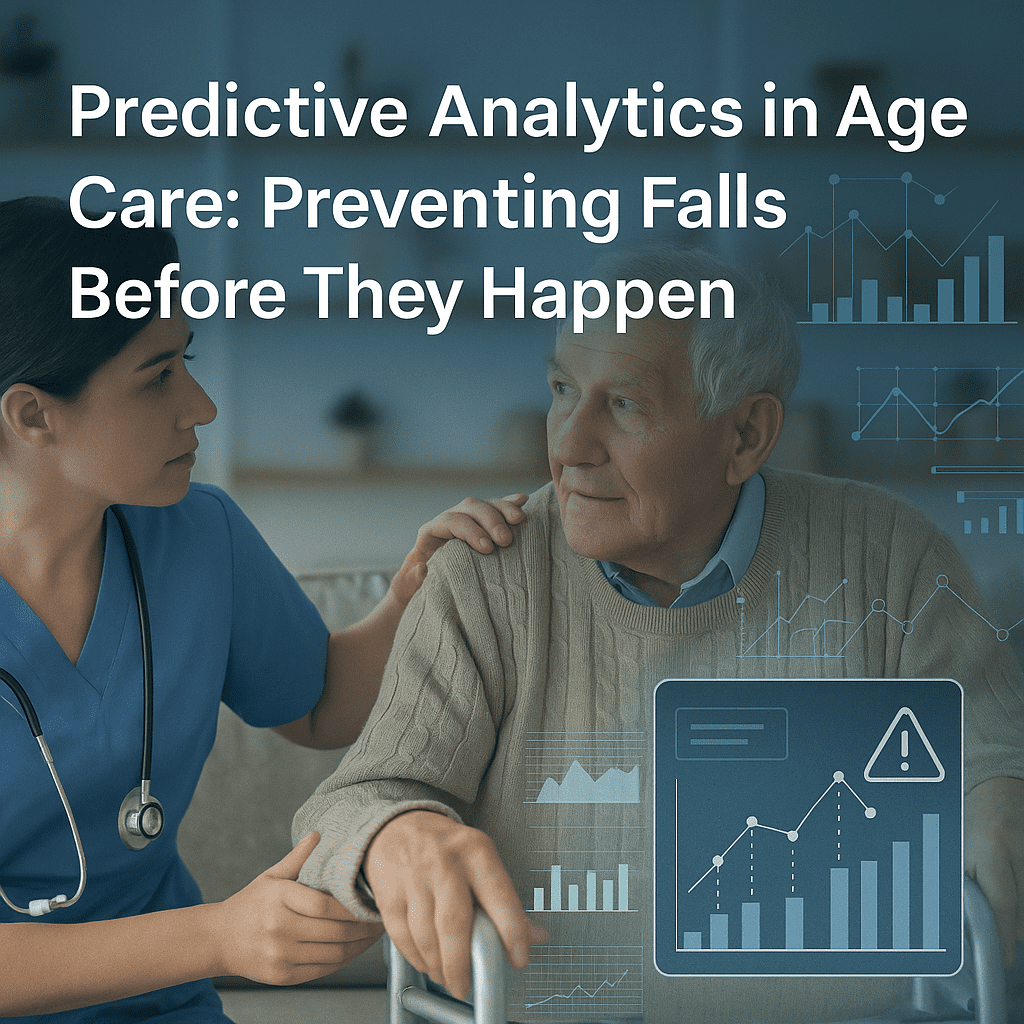
Predictive Analytics in Aged Care: Preventing Falls Before They Happen
By SMPLSINNOVATION — Health Technology Consulting, Published June 2024
I. Introduction
Imagine this: Grandma is doing her morning stretches, the cat is waiting to jump out, and in the background a smart computer system quietly checks whether she might trip on that rug she loves.
That’s not something from a movie. It’s the new reality of predictive analytics in aged care. As data and artificial intelligence (AI) change the world of healthcare, aged care providers are finding ways to predict risks before they turn into emergencies.
We’re talking about falls—one of the most common and costly accidents for older adults. The World Health Organization (WHO) says that falls are the second leading cause of unintentional injury deaths around the world. They don’t just hurt people physically; they take away confidence, independence, and quality of life.
Predictive analytics, the science of seeing risks before they happen, helps care centers step in earlier, reduce hospital visits, and most importantly keep Grandma safe and steady on her feet.
This blog looks at how predictive tools and smart systems are changing fall prevention in aged care. We’ll look at the current state of aged care, the power of predictive analytics, and the newest technologies leading the way in 2024.
II. The State of Aged Care and Fall Risks (2024 Update)
Aging well is everyone’s wish, but we need to know the facts before we explore how AI can help.
1. Global Aging Statistics
– By 2024, more than 10% of the world’s people are aged 65 or older, and that number may double by 2050.
– In countries like Japan, Italy, and Germany, one in every four people is already over 65.
– Australia, the United States, and Canada are seeing fast growth in their senior populations too, putting new pressure on health systems.
2. Current Fall Rates
– The WHO says about 30% of adults over 65 fall at least once every year.
– In aged care homes, that number can rise to 50%.
– As more people age, the total number of falls and related injuries keeps growing.
3. Economic and Human Impact
– In the United States alone, falls cost about 50 billion dollars in medical expenses each year.
– Many older adults take months to recover, and some lose movement permanently.
– Falls also affect mental health. Many people become afraid of falling again, so they move less, which actually increases their risk of another fall.
4. Caregiver Burden
Caring for many older people at once can be stressful.
– Staff often face tiredness and burnout.
– Most care is still reactive, meaning it happens after a fall.
– Predictive tools are helping change this to preventive care, which stops problems before they begin.
III. What Predictive Analytics Means in Aged Care
In simple terms, predictive analytics uses information and data to guess what might happen in the future. It’s like giving caregivers a crystal ball—only this one uses algorithms instead of magic.
Predictive analytics in aged care uses machine learning, graphs, and math to find early signs that someone might fall. It turns everyday information into practical advice.
Data that these systems use include:
– Wearable sensors that track movement, balance, and walking patterns.
– Electronic health records with past medical history and medicine lists.
– Environmental sensors that measure light, temperature, and flooring safety.
– Behavior data like activity levels, sleep, and social habits.
– Cognitive (thinking) tests that are done regularly in care routines.
These systems can run regression analysis to find patterns, detect strange movements, forecast risk over time, and learn from big data collections. In short, your grandmother’s care system is very smart.
IV. Top 10 Predictive Indicators Linked to Fall Risk
Research has found several key signs that can show who might fall:
1. Wobbly or uneven walking.
2. Changes in medication or taking many different drugs.
3. Dizziness when standing up quickly.
4. Signs of confusion or memory loss.
5. Poor sleep or irregular sleep patterns.
6. Not enough vitamins or water.
7. A past fall.
8. Weak muscles, especially in the legs.
9. Unsafe surroundings like clutter or dim lighting.
10. Not using walking aids properly.
Predictive models look at all these things together to make a personal fall risk profile for each person.
V. Current Technologies and AI Tools Driving Fall Prevention
Aged care today isn’t just about handrails and mats—it’s full of smart systems that run all day and night.
The top 10 technologies include:
1. Wearables and smart sensors tracking movement in real time.
2. Edge AI devices that send instant alerts when risks appear.
3. Predictive dashboards that show which residents need quick attention.
4. Computer vision systems that can notice unsafe movements.
5. Digital twins that test “what if” situations virtually.
6. Cloud-based platforms that collect and compare data between facilities.
7. Machine learning tools that link into existing care software.
8. Natural language processing that reads caregiver notes for hidden clues.
9. Smart flooring that senses pressure and balance changes.
10. Voice-assisted systems that can detect distress sounds or help with voice commands.
Together these systems create a connected network that helps caregivers move from “respond and treat” to “notice and prevent.”
VI. Challenges and Ethical Considerations
Before adding AI everywhere, we need to think about the challenges:
1. Privacy concerns—data must be protected and shared only with consent.
2. Data quality—bad data can lead to wrong predictions.
3. Staff training—workers must know how to read and use alerts.
4. Bias—AI trained on limited data may not work for all groups.
5. Cost—installing these systems can be expensive for small care homes.
SMPLSINNOVATION helps organizations deal with these issues through AI readiness checks, vendor support, and training programs that make adoption smoother and easier.
VII. The Future of Predictive Fall Prevention
In the future, aged care will blend technology and kindness. Machines will analyze data, and humans will bring care and warmth. We can expect:
1. Personal fall prevention plans that update in real time.
2. Better sharing of data between care centers for improved accuracy.
3. AI helpers that give voice-based advice to caregivers.
4. Systems that connect easily and share information smoothly.
5. A focus on overall wellbeing—not just avoiding injury, but helping seniors enjoy life.
VIII. Conclusion: A Smarter, Safer Tomorrow
Predictive analytics is not here to replace people but to support them. By combining human care with smart technology, aged care can prevent falls before they happen.
At SMPLSINNOVATION, we believe the future of aged care is bright, safe, and full of possibility for every senior and caregiver.