How AI-Powered Fall Detection Is Transforming Safety in Aged Care Facilities
By SMPLSINNOVATION — because safety and smart tech should always go hand in hand (and hopefully never face-first onto the floor).
1. Introduction: When Safety Meets Smart Tech
As the world’s population gets older, more people need good quality care. The World Health Organization (WHO) says that by 2030, one in six people will be over the age of 60. That’s a lot of seniors, and it’s a big job keeping everyone safe.
Falls are one of the most serious problems for older adults in care homes. In the past, staff used manual checks, pull cords, or wearable buttons to detect falls. These methods often don’t work quickly or well enough.
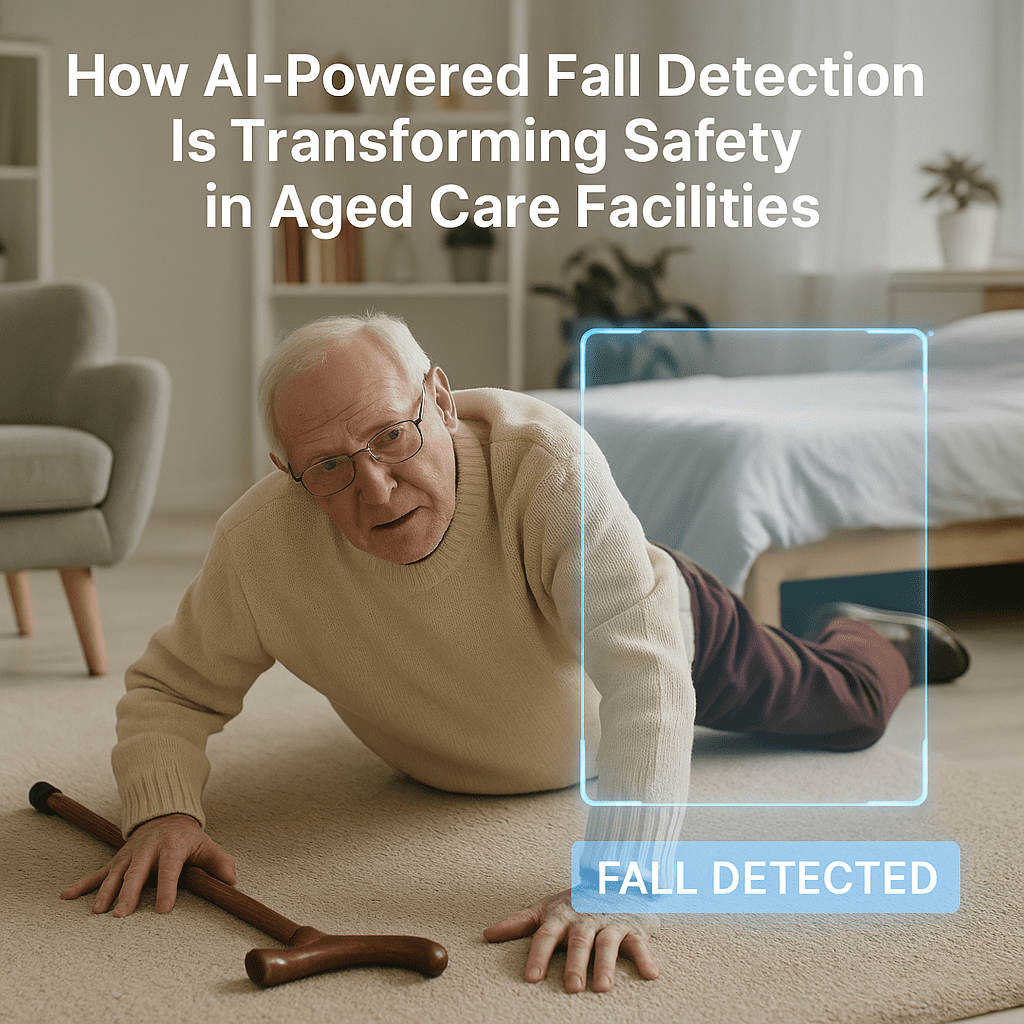
Now, we have AI-powered fall detection systems. These use sensors, cameras, and smart software to spot and even prevent falls.
In short, artificial intelligence isn’t just faster, it’s smarter, more accurate, and can predict risks before they happen. This is changing aged care from simply reacting to problems to preventing them in the first place.
2. The Growing Challenge of Falls in Aged Care
Falls are a global health issue. According to WHO’s 2024 report:
– Around 684,000 people die every year from falls.
– Most of these deaths happen to adults over 60.
– In care homes, 30 to 50 percent of residents fall at least once each year.
These accidents cost a lot too. In the U.S., fall-related medical bills for seniors are over 50 billion dollars a year, according to the CDC.
For care facilities, this means:
1. Higher costs for hospital visits.
2. More work for caregivers.
3. Bigger risks and legal challenges.
Worse still, many falls aren’t seen right away, especially at night. This can make health outcomes much worse. Old systems also trigger too many false alarms, causing alert fatigue among staff.
It’s clear that something smarter is needed.
3. The Technology Behind AI-Powered Fall Detection
AI fall detection is much more advanced than old panic buttons. Here are ten key technologies that make it work:
1. Computer vision cameras that track movement in 3D without showing faces.
2. Wearable sensors that notice unusual movements.
3. Smart floors that can tell the difference between a dropped slipper and a real fall.
4. Edge computing that processes data instantly for quicker alerts.
5. Machine learning that improves over time as it learns from past events.
6. Cloud systems that safely link data to residents’ health records.
7. IoT alerts that notify nurses directly on their phones.
8. Voice assistants that let residents call for help just by speaking.
9. Movement analysis that spots walking or balance changes before a fall.
10. Privacy-friendly AI that follows privacy laws like GDPR and HIPAA.
Together, these tools make fall detection proactive instead of just reactive.
4. How AI Fall Detection Systems Work
Here’s how the process generally works:
1. Sensors, cameras, or wearables collect movement data.
2. The system cleans and studies the information to spot fall patterns.
3. AI decides if the motion is normal or possibly a fall.
4. If it’s a fall, caregivers get an instant alert with location details.
5. The system connects with emergency services if needed.
Over time, the AI learns from mistakes and reduces false alarms, such as when someone drops an object. It also fits smoothly into daily care routines, saving time and improving safety.
5. Real-World Examples in 2024
In 2024, many care facilities around the world started using AI for fall detection:
1. CarePredict in the U.S. uses wearables to predict fall risks days before they happen.
2. SafelyYou in North America uses camera systems that cut response times by 40 percent and reduce unobserved falls by 80 percent.
3. Vayyar Care in Australia uses radio waves instead of cameras for more privacy.
4. Nobi Smart Lamps in Europe include fall detection in ceiling lights that turn on automatically after a fall.
5. KamiCare in the U.K. saw hospital visits drop by 25 percent during a trial.
6. ElderTech Japan combined robots with sensors for extra safety and companionship.
7. IBM Research in Switzerland worked on systems that detect small changes in walking patterns to predict falls.
8. The Dutch Elder Safety Project used multi-room sensors and reduced false alarms.
9. Huawei Health AI in Singapore added similar support to smart homes.
10. The German HealthTech Alliance built privacy-safe camera systems for dementia units.
These examples show that AI-powered safety is already helping people today.
6. Benefits of AI-Powered Fall Detection
AI fall detection brings lots of advantages for care homes and families:
1. Quicker emergency response.
2. Fewer false alarms.
3. 24/7 monitoring that doesn’t invade privacy.
4. Predictive alerts that warn of risks before they happen.
5. Better recovery and health outcomes.
6. More useful data to improve care plans.
7. Lower costs due to fewer hospital stays.
8. Less stress and better efficiency for staff.
9. More independence for residents.
10. Better documentation and compliance with safety rules.
AI makes fall detection not just about safety but also about better care overall.
7. Challenges and Ethical Considerations
Even great technology has challenges. AI fall detection systems face these issues:
1. Balancing privacy and safety can be hard.
2. The cost to install systems can be high.
3. Integration with other software can be complex.
4. Staff need training to use the systems correctly.
5. More devices mean more risks for cyberattacks.
6. AI models must be fair and accurate.
7. Some facilities lack the internet speed these systems need.
8. Some residents may find AI too personal or intrusive.
9. Systems may not always work smoothly with older technology.
10. Regular maintenance and updates are required.
AI is powerful, but it must be used carefully, with clear rules and respect for residents’ privacy and dignity.