The Future of Remote Work — How Technology Is Changing the Workforce
By SMPLSINNOVATION — your friendly health technology innovation nerds.
1. Introduction
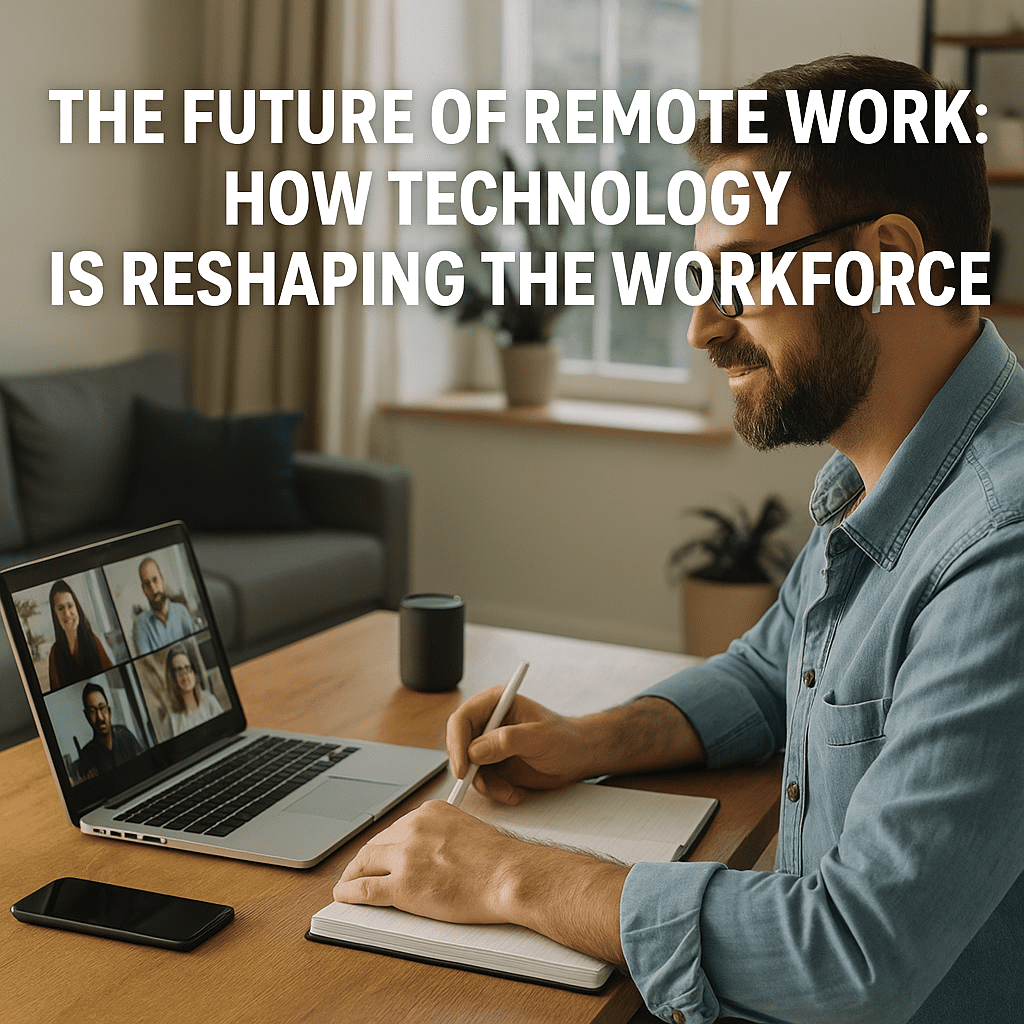
Remember when working from home just meant checking your emails from the couch and wondering if your cat was your coworker? Since 2020, “work from home” has turned from a messy and uncertain idea into a key part of how many businesses now run. By 2024, remote work doesn’t just mean a home office anymore. It means being productive from anywhere, thanks to cloud systems, smart AI tools, and even virtual meeting rooms that make people feel almost like they are together in person.
Technology is changing the way people work so fast that the old “9-to-5 in an office” model seems ancient. Experts from Harvard Business Review, McKinsey & Company, MIT Technology Review, the World Economic Forum, and Gartner agree that the big question today is: how is new technology changing how, where, and why we work?
In this post, SMPLSINNOVATION looks at how new tools — from AI helpers to blockchain systems — are turning remote work into something exciting and sustainable. Grab your comfy chair, and let’s get started.
2. The State of Remote Work in 2024
According to McKinsey’s 2024 Pulse Report, more than 32% of workers around the world now work from home at least part of the week. Before the pandemic, it was only about 7%. Hybrid work, where people split their time between home and office, has become a normal and effective way to work.
Here’s what’s happening:
1. Hybrid is now the standard. About 58% of companies have flexible work policies, up from 43% in 2023.
2. Productivity is holding strong. McKinsey found that 77% of company leaders say their teams are as productive or more productive working remotely.
3. Companies are spending more on technology. Gartner reports that global spending on remote tools grew by 14% this year, especially on cloud systems, cybersecurity, and AI-powered analytics.
In healthcare, remote work has led to big changes. Health tech companies now lead the way in virtual care, remote health monitoring, and digital teamwork, showing how remote systems can be both caring and efficient.
Remote work is no longer the future — it’s the new normal.
3. Ten Technologies Changing Remote Work
Technology is making remote work easier, faster, and more creative. Here are ten big forces driving the change:
1. AI Collaboration Tools
AI now helps teams organize work, summarize meetings, and manage schedules. It’s like having a super helper that never gets tired.
2. Virtual and Augmented Reality
People can meet as digital avatars in virtual rooms. Companies even use VR for training, team building, and healthcare simulations.
3. Cloud Infrastructures
Cloud systems let teams work together easily from anywhere. They keep data safe and make sure work can continue without problems.
4. 5G Connection
Faster networks mean smoother video calls, real-time healthcare support, and better collaboration on digital platforms.
5. Automation and Smart Bots
Software can now do routine tasks like scheduling, billing, and reports, giving people more time for creative thinking.
6. Cybersecurity
Stronger systems protect teams from online threats through better authentication, encryption, and zero-trust setups.
7. Spatial Computing
This tech blends the digital and real worlds, allowing people to work with 3D designs for projects like medical devices.
8. Digital Employee Experience Platforms
These tools track how happy and engaged workers are, helping companies support their teams’ well-being.
9. Blockchain Verification
Blockchain makes it easier and safer to prove identities and verify documents across countries, building trust in global teams.
10. Generative AI
Generative AI helps create reports, presentations, and summaries, saving time and improving productivity.
4. The Human Side of the Future Workforce
As technology takes care of more tasks, the human side of work becomes even more important. Here are some of the most exciting changes:
1. Continuous Learning
As AI grows, people must keep learning new digital skills. Companies are creating training systems so workers can stay up to date.
2. Kind and Understanding Leadership
Being a good leader today means showing empathy and emotional intelligence, not just focusing on numbers.
3. Health and Balance
More organizations now see mental health as a key part of success. They encourage breaks, flexible schedules, and clear boundaries.
4. Culture on Purpose
With teams spread across places, leaders have to build connection and teamwork on purpose through shared values and fun interactions.
5. Working With AI, Not Against It
Instead of fearing AI, teams are learning how to use it as a partner — humans set the goals, and AI helps get the work done.
Technology may power the system, but people still lead the way.
5. How Businesses and Economies Are Changing
New technology doesn’t only change how we work — it changes how companies and economies run. Reports from McKinsey and the World Economic Forum show five big trends:
1. Growth of Freelance and Contract Work
More people work independently, blurring the line between employees and consultants.
2. Global Talent Everywhere
Companies now hire the best people no matter where they live, leading to more diversity and fresh ideas.
3. New Office Spaces
Large office buildings are being replaced with smaller spaces for teamwork and innovation.
4. Changing Laws and Taxes
Governments are updating rules to handle cross-border work, offering digital nomad visas but adding new compliance rules.
5. Remote Health Innovation
In healthcare technology, remote systems make patient care, data analysis, and collaboration better and faster.
The workplaces and economies of tomorrow will be global, flexible, and connected.
6. The Challenges of Remote Work
Big changes always come with challenges. Here are ten that companies must address:
1. Cyber Threats — Remote systems can be targets for hackers. Strong protection is vital.
2. Data Privacy Rules — Different laws make sharing health data across borders complex.
3. Unequal Access — Not everyone has fast internet, creating gaps in productivity.
4. Burnout — Without limits, people can feel like they have to work all the time.
5. Losing Team Connection — Working apart can weaken friendships and teamwork.
6. Too Many Tools — Too much software can slow work down.
7. Not Enough Security Training — People need education to avoid simple but costly mistakes.
8. Heavy Cloud Dependence — If cloud systems fail, work can stop suddenly.
9. Ethical AI Problems — AI systems must be fair, safe, and clear about how they work.
10. Keeping Great Workers — Companies must offer purpose and belonging to keep top talent.
7. Looking Ahead: A More Human Future
Even though computers and AI are doing more than ever, the real goal of technology is to make work feel more human. The future of remote work will be about balance — using smart tools to make people’s jobs easier, healthier, and more fulfilling. The best part? We’re just getting started.