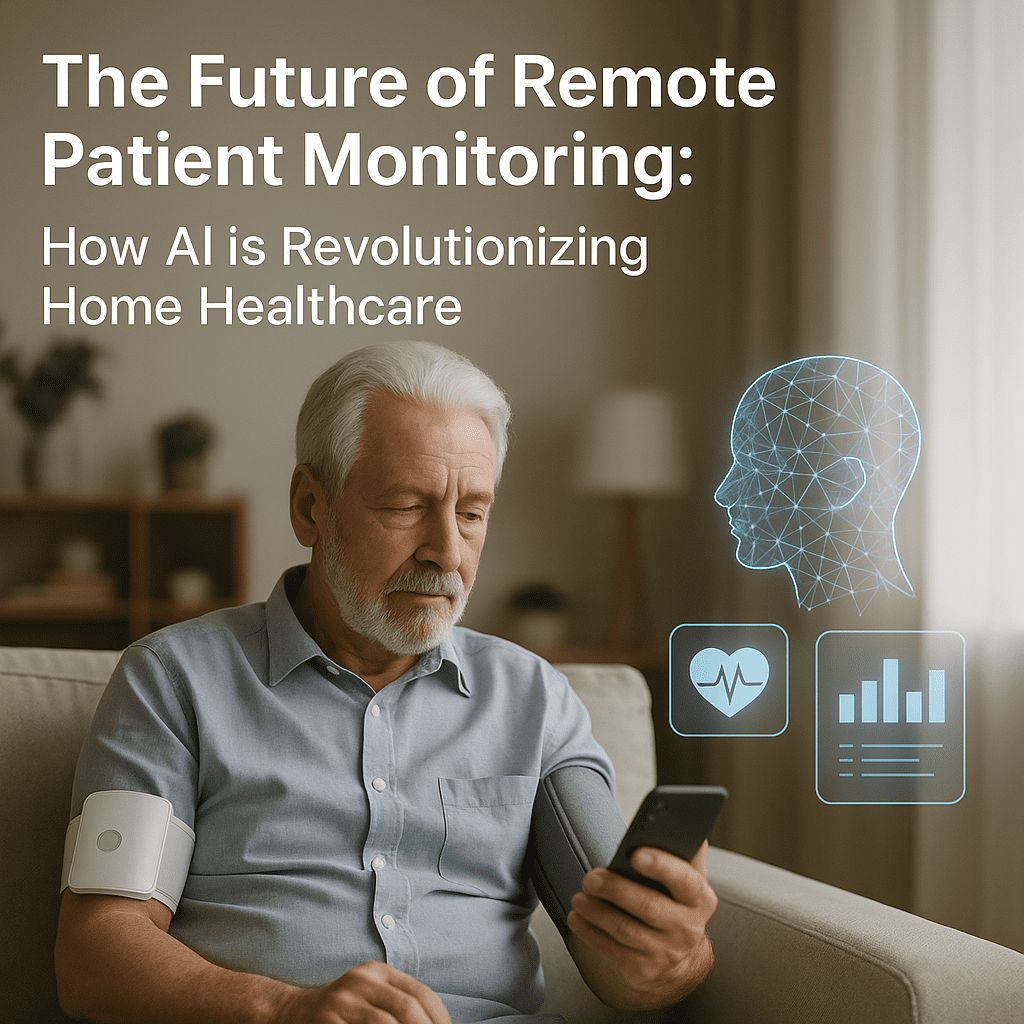
The Future of Remote Patient Monitoring: How AI is Changing Home Healthcare
By SMPLSINNOVATION – your friendly neighborhood health tech strategists
I. Introduction: The Move Toward Smarter Home Healthcare
It’s 2024, and our homes have become pretty smart. There are sensors that can track your heartbeat, watches that check your stress levels, and maybe even a toaster that counts your carbs.
Since the pandemic brought healthcare into our homes, remote patient monitoring (RPM) has gone from being something new to something most people rely on. Reports from several health news sources say that more than 65% of U.S. health systems now use RPM to manage chronic diseases. The Centers for Medicare & Medicaid Services have even added more options for doctors to get paid for using RPM, and the FDA is updating rules for AI-powered medical devices.
All of this means healthcare is changing. It’s becoming less about waiting rooms and more about constant, personal, and preventive care powered by artificial intelligence.
Simply put, AI is making home healthcare smarter, more personal, and more proactive.
II. The State of Remote Patient Monitoring in 2024
The Market at a Glance
The global RPM market is growing fast, expected to reach about 14 billion dollars in 2024. It is also expected to grow by about 24% per year for the next few years. More than 2.7 billion dollars have been invested in AI-based monitoring devices just this year. People aren’t only investing in the technology—they’re investing in the idea of being more in control of their own health.
The Technology Behind It
Three main technologies make real-time, AI-powered RPM possible:
1. 5G networks that allow fast, stable data connections.
2. The Internet of Things (IoT), which connects devices like watches, scales, and pill bottles.
3. Edge computing, which helps devices process data locally for speed and privacy.
Together, they allow instant insights instead of slow reports.
The Challenges
RPM still has a few hurdles to overcome.
1. Too much data can overwhelm doctors and nurses.
2. Different devices sometimes can’t “talk” to each other properly.
3. Some healthcare workers still need training to use AI tools.
The good news is that these problems can be solved, and AI can help fix them.
III. How AI is Changing RPM Today
AI turns streams of data into useful insights. Here are 10 ways it’s helping improve remote healthcare.
1. Predictive systems can spot health problems days before symptoms show.
2. Algorithms create treatment plans based on each person’s data and habits.
3. AI keeps learning and improving as it analyzes more patients’ information.
4. Chat-based assistants remind patients to take medication and answer basic questions.
5. Records automatically update, connecting home devices directly with hospital systems.
6. AI can detect early signs of stress, anxiety, or depression by tracking changes in sleep or speech.
7. Smart sensors can tell the difference between someone stretching and someone actually falling.
8. Small, AI-powered imaging devices bring testing and diagnosis into the home.
9. Wearables can predict blood sugar or blood pressure changes before they happen.
10. AI can act like a coach for people with diseases such as diabetes or heart failure, offering reminders and help when needed.
AI is no longer just watching—it’s helping.
IV. How AI-Powered RPM Helps Patients
Remote care used to feel distant or impersonal, but now it gives patients a sense of control.
1. People stay more motivated by tracking their health progress on simple dashboards.
2. AI spots warning signs early, helping prevent hospital visits.
3. Studies show 38% fewer hospital readmissions for people using RPM for chronic care.
4. People in rural or underserved areas can get care they couldn’t easily reach before.
5. Instant feedback helps patients take charge of their own health.
AI-powered RPM meets people right where they are—at home.
V. Ethics, Privacy, and Rules
With great data comes great responsibility.
1. New updates to privacy rules explain how AI systems must handle, protect, and anonymize patient data.
2. “Explainable AI” is becoming important so people can understand how a system made a decision.
3. Developers are working to remove bias so the technology works fairly for everyone.
4. The FDA now allows certain types of AI medical software to receive ongoing updates instead of needing approval each time.
5. Tools are being made to help patients control how their health data is used and shared.
6. With more devices connected, cybersecurity is more important than ever, and AI systems are being used to detect hacking attempts quickly.
VI. The Future: From Reaction to Prevention
In the coming years, AI and RPM will keep improving in three main ways:
1. Predictive care will use data to forecast health trends for whole communities, such as spotting flu outbreaks before they start.
2. Personalized care will combine genetics, daily habits, and lifestyle data to make plans suited to each person.
3. AI and humans will work side by side—AI will handle routine monitoring so doctors can focus on complex cases.
At SMPLSINNOVATION, we believe home and healthcare are becoming one. With the right tools, doctors can see more clearly, patients gain more control, and the system becomes more efficient and caring.
VII. Conclusion: A Friendly, Smart Future
The future of remote patient monitoring is already happening. From AI watches that detect heart issues to voice assistants that remind Grandma to take her pills, technology is bringing care closer to home.
At SMPLSINNOVATION, we like to say: the best hospital bed is the one you don’t need, because your AI already noticed something early and got help.
Here’s to a smarter, kinder, and more connected world of home healthcare.
SMPLSINNOVATION helps health innovators design technology that makes everyday care simpler, safer, and more human.