How Predictive Analytics Is Changing Hospital Bed Management and Reducing Patient Wait Times in Australia
1. Introduction: From “No Beds” to “No Problem!”
Imagine this. You go to an emergency department in Sydney with a swollen ankle that hurts a lot. The nurse checks you in, then says, “We’re waiting for a bed.” It happens all the time. Hospitals across Australia face this problem every day. There aren’t enough beds ready, and staff have to juggle patients like a tricky puzzle.
The Australian Institute of Health and Welfare (AIHW) says hospitals are busier than ever. There are more people coming in for emergency care, and planned surgeries are often delayed. The result? Long wait times and tired staff.
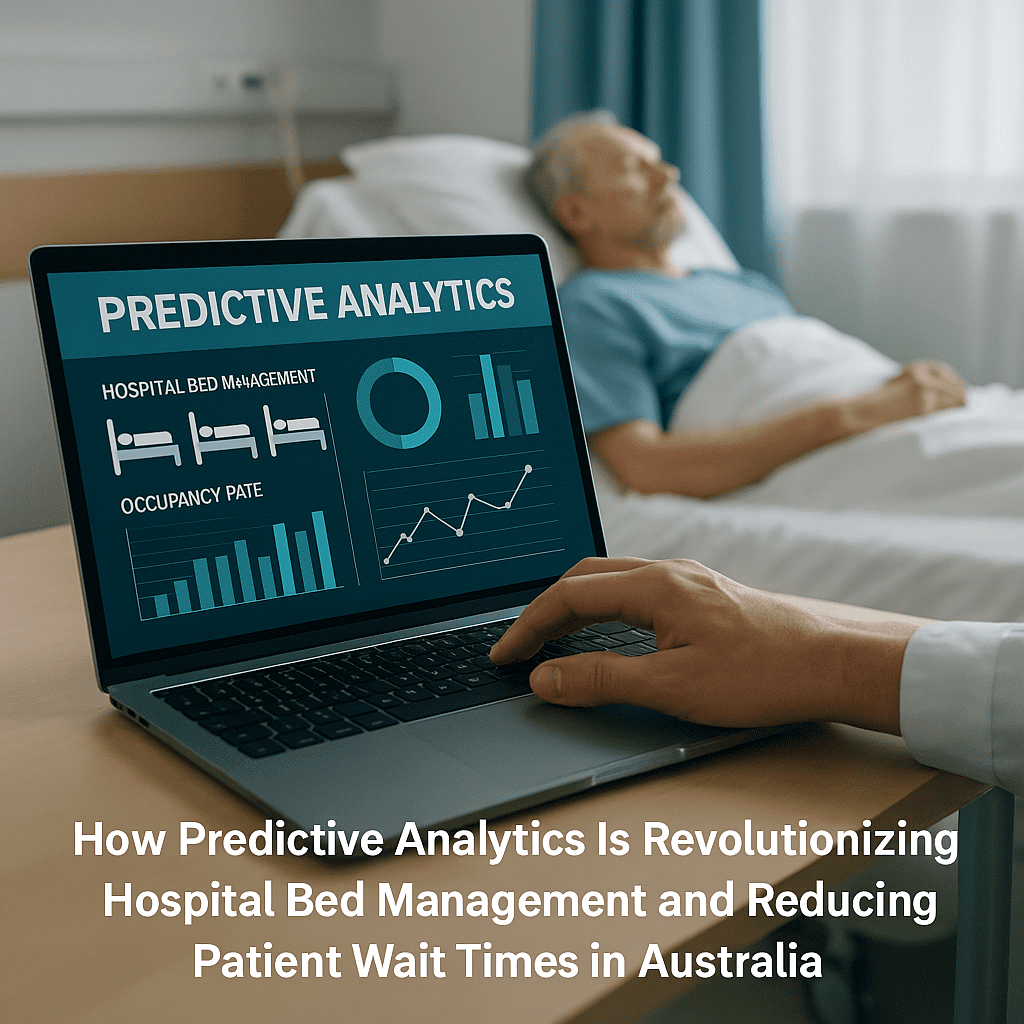
That’s where predictive analytics comes in. It uses smart data tools and computer learning to help hospitals see what’s coming next—like how many beds will be needed or when patients might go home. This makes things run more smoothly and keeps everyone less stressed.
At SMPLSINNOVATION, we’re excited about this change because it shows that good data can make hospitals work better, patients happier, and beds ready when they’re needed.
2. The Current State of Hospital Bed Management in Australia
Before predictive analytics, hospital bed management was mostly manual. Staff tracked beds using spreadsheets or even whiteboards. They spent hours on phone calls trying to find an open bed. It worked, but it was slow and stressful.
Bed Occupancy: A Tight Squeeze
The AIHW reports that most public hospitals run at around 83 to 90 percent full. That sounds good, but it actually means hospitals are almost at capacity all the time. When flu season or an outbreak hits, things can easily pile up.
Common Problems in Traditional Bed Management
1. Discharges take too long when after-care can’t be arranged.
2. Staff can’t always see which beds are ready or being cleaned.
3. Too much paperwork and phone calls slow things down.
4. Surgery delays cause a ripple effect through other departments.
5. Emergency rooms get crowded waiting for beds to open up.
6. Patient transfers can be messy and confusing.
7. Different departments don’t always share data easily.
8. Staff get worn out from constant coordination.
9. Staffing levels don’t always match patient demand.
10. Patients feel anxious and frustrated from the delays.
These problems create blockages in the system. Predictive analytics is helping hospitals fix them.
3. What Predictive Analytics Brings to Healthcare Operations
Predictive analytics is like a weather forecast for hospitals. Instead of predicting rain, it predicts when more patients will come in, how long they’ll stay, and what resources will be needed.
This doesn’t replace people—it helps them make faster and smarter choices.
Here are ten ways predictive analytics helps hospitals work better:
1. Predicts bed demand days or weeks ahead.
2. Estimates how long patients might stay.
3. Spots common causes of discharge delays.
4. Balances staff and beds with patient flow.
5. Warns staff before the emergency room gets too full.
6. Improves surgery schedules to avoid cancellations.
7. Helps plan staff shifts for busy times.
8. Runs different “what if” scenarios for special events.
9. Links up with smart devices to track bed use in real time.
10. Reduces the need to move patients from ward to ward.
With this technology, hospitals can plan their next step instead of just reacting to what’s happening.
4. Real-World Australian Success Stories (2023–2024)
Australia isn’t just testing this technology—it’s already using it.
1. NSW Health and CSIRO’s Data61 worked together to predict when emergency departments would get crowded. The system helped staff prepare early and cut down last-minute stress.
2. Queensland Health launched a system called BedFlow. It uses machine learning to plan surgical bed needs across hospitals. This led to fewer surgery cancellations and better staff planning.
3. In Western Australia, hospitals started using a Smart Hospital Predictive Dashboard. It shows real-time information about bed use and patient flow. Hospitals reported faster bed turnaround and happier teams.
4. Telstra Health and IBM teamed up with hospitals to connect AI tools across public and private facilities. Their goal is to build a smarter, connected healthcare network.
These examples show that predictive analytics is here to stay—and it’s already making a big difference.
5. How Predictive Analytics Reduces Patient Wait Times
At hospitals using predictive tools, emergency room wait times dropped by 8 to 12 percent in early tests. But the benefits go beyond that.
Ten ways predictive analytics improves hospital performance:
1. Faster admissions because beds are ready sooner.
2. Shorter waits in the emergency department.
3. Fewer last-minute surgery cancellations.
4. Quicker discharges for patients who are ready to go home.
5. Smarter staff scheduling based on patient needs.
6. Clearer, shared data across departments.
7. Less manual paperwork for administrators.
8. Happier patients who don’t wait as long.
9. Faster cleaning and bed turnovers.
10. Fewer emergencies caused by poor planning.
These improvements mean patients get care sooner, staff feel less pressure, and hospital leaders can finally take a breath.
6. The Future of Predictive Healthcare in Australia
Looking ahead, predictive analytics will become even smarter. Hospitals might use digital twins to model patient flow or smart wards that adjust resources in real time.
With support from policy makers and continued investment in AI, Australia’s healthcare future looks bright.
Areas expected to grow in the next few years include:
1. Predictive maintenance for important medical equipment.
2. AI tools that plan telehealth visits based on local demand.
3. Cross-hospital planning that looks at the full network.
4. Predictions for community health needs and bed capacity.
5. Personalized discharge advice based on a patient’s situation.
The future of Australian healthcare is all about working smarter—and predictive analytics is leading the way.