How AI is Changing Home Care: New Tech That Helps Caregivers
By SMPLSINNOVATION, February 2025
I. Introduction: A New Day for Home Care
Artificial Intelligence, or AI, has quickly become part of daily life at home. Not long ago, the idea of talking assistants, smart health trackers, or friendly robots reminding Grandma to drink water seemed like science fiction. Now, it’s real for millions of people around the world.
According to reports from Forbes Health and MIT Technology Review in early 2025, home care that uses AI grew by about 45% compared to last year. Why is that happening? There are two big reasons:
1. There aren’t enough caregivers, and the World Health Organization says there could be a shortage of 13 million by 2030.
2. More people are getting older, and by 2035, one in five people will be over 60.
More people are living with long-term health conditions, and after the pandemic, many prefer care at home instead of in hospitals.
AI in home care helps everyone involved:
– Caregivers and families save time and feel less stress.
– Doctors get a clearer picture of patients at home.
– Insurance companies can cut costs by avoiding hospital stays.
– Tech companies and governments work together to make sure care is safe and effective.
The most important thing to remember is this: AI doesn’t replace caregivers. It helps them do their jobs better.
II. What’s Driving AI in Home Care
AI tools didn’t appear out of thin air. The rise in 2024 and 2025 came from five main forces working together.
1. Changing Populations
People are living longer, and that’s great news. But it also means more care is needed for illnesses like diabetes, dementia, and heart disease. AI helps by watching over patients and spotting problems early.
2. Rising Costs
With prices climbing and fewer workers available, care is becoming more expensive. AI can help by handling simple tasks like scheduling, note-taking, and daily check-ins.
3. New and Smarter Technology
In 2024, big improvements in small computers, smart sensors, and AI tools made it easier for devices to “think” and analyze health data at home.
4. Policy Changes
Both the United States and the European Union updated rules to support AI in health care. This made it safer and easier for companies to create useful AI tools for patients.
5. Higher Expectations
People want care that feels just like the rest of their tech life: personal, private, smooth, and helpful. If streaming apps can guess what show you’ll like next, it makes sense that AI can guess what help you might need tomorrow.
III. The Top 10 AI Tools Changing Home Care in 2025
AI in home care isn’t just about robots. Here are 10 amazing new tools making a difference:
1. Fall Detection and Prevention Systems that use sensors to spot movement changes before someone falls.
2. Predictive Health Tools that study sleep, steps, and heart rate to warn about health problems before they happen.
3. Smart Medication Helpers that remind people to take medicine at the right time and learn their habits.
4. AI Chat Companions that talk with seniors to reduce loneliness and keep minds active.
5. Wearable Devices that track more than heart rate—they check blood oxygen, stress, and movement safely.
6. Voice Assistants that connect to health records, letting caregivers and patients use voice commands to stay updated.
7. Dashboards that combine video calls, health data, and notes so doctors and caregivers can work together easily.
8. Robotic Helpers that can sense movement and adjust their support when helping people stand or walk.
9. Mental Health Monitors that listen for voice changes or mood patterns to find early signs of sadness or worry.
10. Training Platforms using AI simulation to help caregivers practice new skills safely.
Bonus: AI meal planners that create doctor-approved menus based on your health needs and favorite foods.
IV. How AI Helps Caregivers and Patients
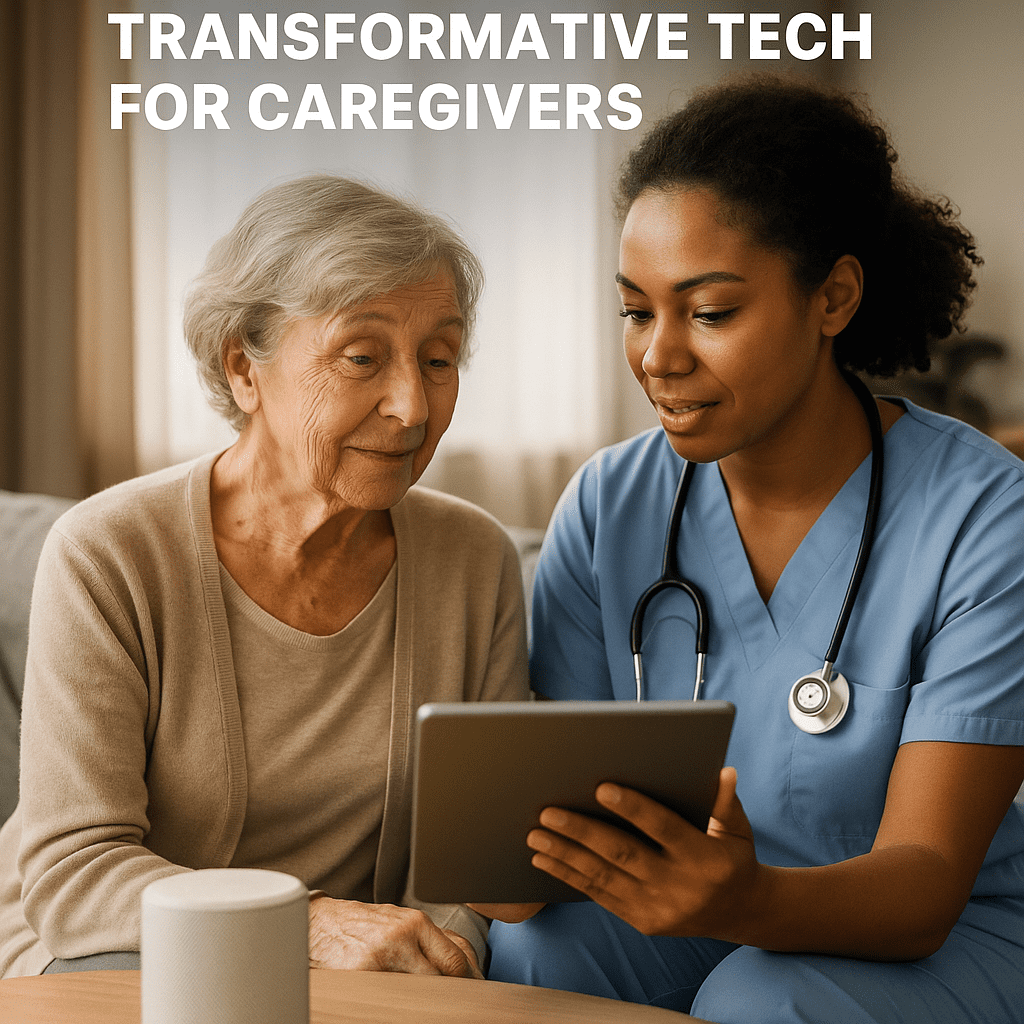
Being a caregiver is hard work that needs patience, skill, and lots of heart. AI makes that work easier and helps people focus more on care instead of chores.
1. Efficiency
AI saves time by handling schedules, notes, and alerts. Studies show it can reduce paperwork by up to 40%. That means caregivers can spend more time with people instead of computers.
2. Personalization
AI learns daily habits and moods so care can match each person’s needs.
3. Early Warnings
AI can alert caregivers to health risks before they turn into emergencies.
4. Confidence
AI gives caregivers guidance and training tips so they can handle more situations calmly and safely.
5. Ongoing Support
With AI always watching vitals and activity, families know someone is always keeping an eye on their loved ones.
V. Real Examples from Around the World
The power of AI in home care is real and growing every day.
1. Philips added new alert systems that warn doctors before a patient’s oxygen gets too low.
2. Stanford’s HomeAI helps people with dementia stay sharp with brain exercises.
3. Amazon added AI to its Alexa Health program to help with medicine reminders and online doctor visits.
4. The UK’s National Health Service is testing AI for home rehab programs and seeing better recovery rates.
5. Mayo Clinic and AliveCor use AI to track heart patients and detect problems faster.
6. Samsung Health Home checks air quality for people with asthma or lung disease.
7. In Japan, new therapeutic robots comfort patients by recognizing emotions more accurately.
8. Teladoc’s AI transcription feature helps doctors document online visits instantly.
9. CarePredict’s wearable sensors in Florida can spot health changes by studying activity patterns.
10. In France, the AlliCare trial uses AI and human support to help people over 80 live independently at home.
VI. The Data Challenge: Privacy, Safety, and Care
AI can collect a lot of personal information, so privacy is a big concern. Government agencies in both the United States and Europe have shared clear rules for safety.
They focus on three main goals:
1. Be clear about what data is collected and how it’s used.
2. Make sure AI is fair and doesn’t show bias toward any group.
3. Keep data safe with strong protection like encryption.
The goal is simple: build trust without losing the human touch. AI should help caregivers show more empathy, not less.
At SMPLSINNOVATION, we believe that the best technology supports both safety and compassion.