AI-Powered Remote Monitoring for Chronic Disease Management in Home Care: Benefits and Challenges
By SMPLSINNOVATION – making health tech sound a little less robotic and a lot more human.
1. Introduction
Lately, everyone seems to be talking about artificial intelligence, or AI, and for good reason. One of the most exciting places it’s making a difference is in home care for people with long-term illnesses like diabetes, heart problems, COPD, and high blood pressure. These conditions are a huge part of global healthcare costs in 2024, making up more than 70% of spending, according to the World Health Organization and the CDC.
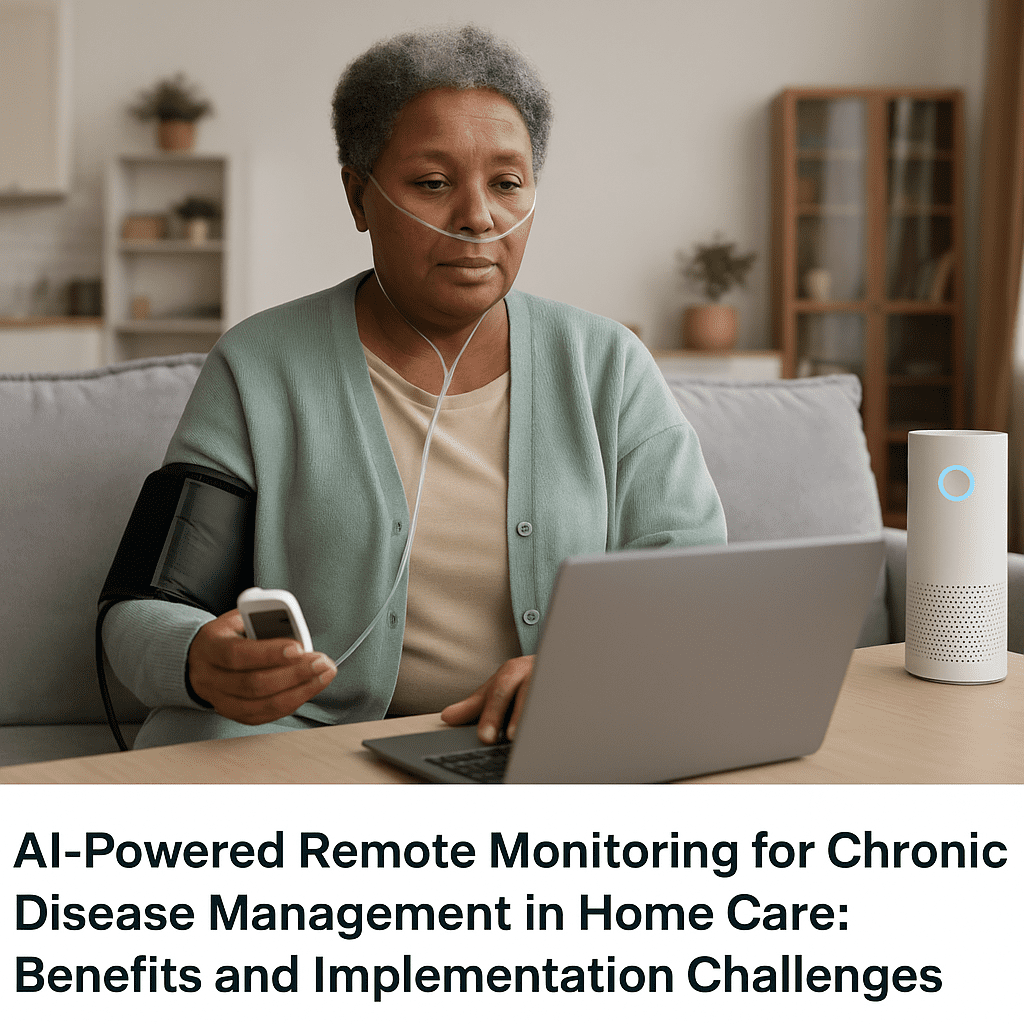
Here’s the cool part: AI isn’t replacing doctors. It’s helping people avoid extra doctor visits. From smart sensors hidden in watches to tools that can spot health problems before they happen, AI is changing what remote care means.
The market for AI-powered monitoring devices reached about 12.5 billion dollars in 2024, showing that the world believes in its power to help patients right from their living rooms.
In this post, we’ll look at how AI helps people manage chronic diseases at home and the main challenges that come with it.
2. The Current Landscape of AI in Home-Based Disease Management
Home healthcare in 2024 looks way more digital than ever before. Gone are the days of recording blood pressure by hand. AI systems now keep track of people’s health data all day and help doctors and patients make smart choices using that information.
Some big trends in this space include:
1. Real-time monitoring, where AI keeps track of body signals and warns of problems before they get serious.
2. Predictive analytics that can forecast when symptoms might appear, kind of like a weather forecast for your health.
3. Helpful AI chatbots and virtual coaches that remind people to take their medicine and keep them motivated.
4. Smart wearables like watches and connected medical devices that send data straight to the cloud.
5. AI tools built right into telehealth systems, so doctors can make fast, data-based decisions.
6. Clearer rules from regulators in 2024 to make sure AI-based medical tools are safe and fair.
This mix of technology and everyday life is changing how people take care of long-term illnesses and how patients feel about their own care.
3. Key Benefits of AI-Powered Remote Monitoring
When used the right way, AI-powered remote monitoring brings many amazing benefits:
1. It spots health problems early, allowing doctors to act before things get worse.
2. It gives personalized advice based on each person’s health patterns.
3. It helps cut down on hospital readmissions, saving time and money for patients.
4. It reminds people to take their medicine and stay on track.
5. It can predict upcoming symptoms, especially for illnesses like diabetes or heart failure.
6. It sends real-time alerts to doctors when something changes.
7. It lowers healthcare costs by preventing emergencies and saving resources.
8. It helps patients stay engaged and understand their data better.
9. It connects smoothly with electronic health records, saving doctors time.
10. It helps people in rural or underserved areas get the care they need without traveling.
These benefits add up to a future where healthcare happens quietly, constantly, and comfortably at home.
4. Challenges and Barriers
Still, there are some real challenges that AI in healthcare needs to overcome:
1. AI may not work equally well for all people if it’s trained on limited data.
2. Different systems sometimes cannot share data easily.
3. Keeping health data private and secure is a big responsibility.
4. Doctors and caregivers need more training to understand AI tools.
5. Rules about approving AI systems often move slower than the technology itself.
6. Poor-quality data leads to poor results.
7. Weak internet or power connections can block progress in some homes.
8. Some people, especially older adults, find new technology hard to use.
9. Insurance and payment systems haven’t caught up yet.
10. There aren’t enough clear ways to measure how accurate AI systems really are.
11. Too many alerts can overwhelm doctors and make them ignore warnings.
The good news is that innovators, healthcare workers, and organizations like SMPLSINNOVATION are working hard to solve these problems.
5. Best Practices for Implementation
To make AI monitoring work smoothly, here are some best practices that can help:
1. Create strong rules to protect privacy and fairness from the start.
2. Build teams with doctors, data experts, caregivers, and patients working together.
3. Teach patients how to use the tools through easy lessons and in-app guides.
4. Keep updating AI systems to make them more accurate.
5. Use shared data standards so systems can work together.
6. Measure success by real results, like fewer hospital visits.
7. Include patient feedback when designing tools.
8. Protect all health data carefully and clearly.
9. Keep everyone, from leaders to families, well-informed throughout the process.
10. Test small projects first before expanding widely.
These steps can turn challenges into growth opportunities.
6. The Future Outlook
The future of home healthcare isn’t about replacing people with machines. It’s about making technology a helping hand that allows people to live better lives.
By 2026, more than 65% of programs for chronic disease management in developed countries are expected to use AI-based monitoring. To make this work, developers, doctors, and consultants need to partner closely. Technology only changes lives when implemented thoughtfully.
At SMPLSINNOVATION, we help make that happen — turning smart health tech into something that truly works for people.
7. Conclusion
Chronic diseases are one of the biggest challenges in healthcare, but also one of the best chances for AI to make a lasting difference. With careful planning, training, and teamwork, AI-powered remote monitoring can help people stay healthier and live better right from their homes.