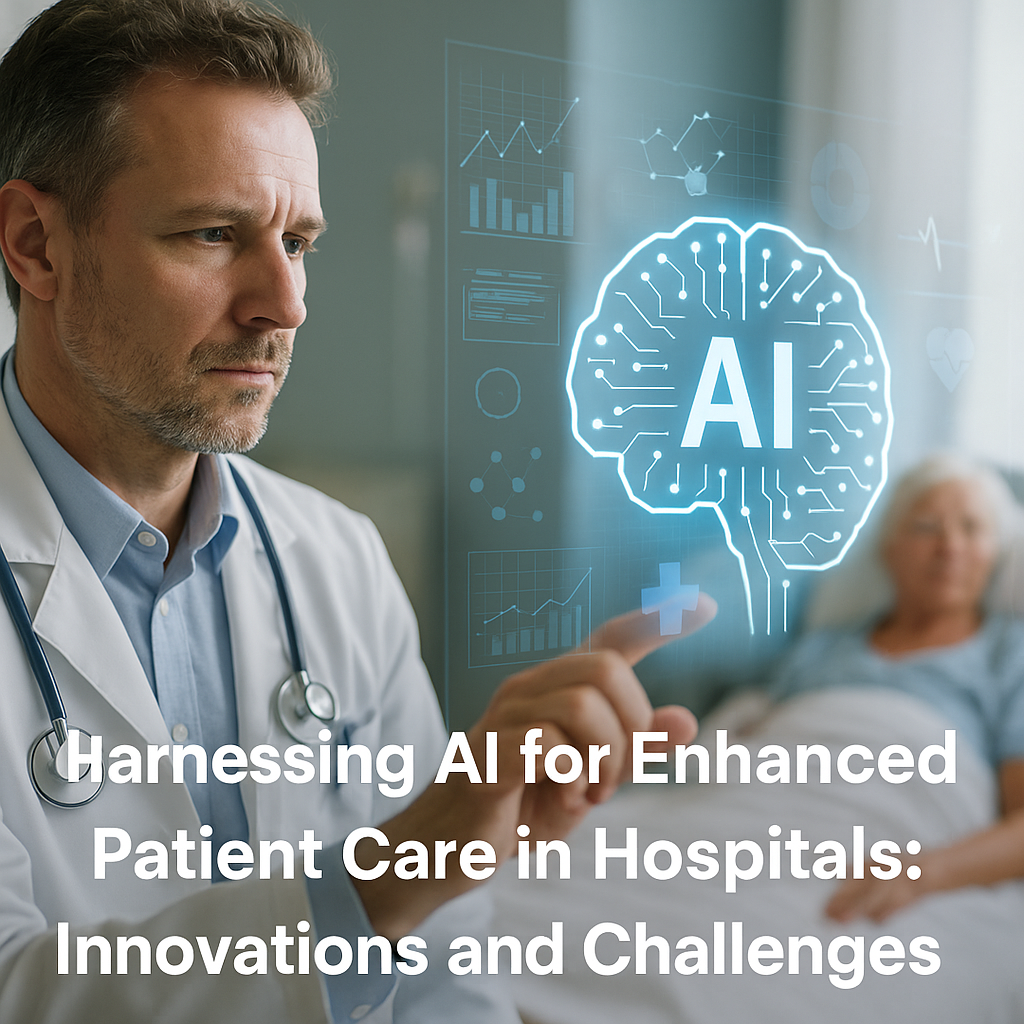
Harnessing AI for Better Patient Care in Hospitals: New Ideas and Challenges
Date: February 3, 2025
By: SMPLSINNOVATION
I. Introduction
Artificial intelligence, or AI, isn’t something coming in the future anymore—it’s already here. In hospitals, it’s working hard to help doctors and nurses take better care of patients. Between 2024 and early 2025, hospitals started using AI for almost everything, from scheduling scans to reading them, from predicting when patients might get worse to helping them recover after surgery.
In 2024, the U.S. FDA approved many AI-based medical tools that help in areas like radiology, cardiology, and even mental health. Studies in top medical journals showed that AI helps hospitals read scans faster—sometimes cutting the time by more than 30%.
At SMPLSINNOVATION, we love seeing these smart changes. But new tools also bring new challenges. So, let’s look at how AI is helping hospitals, what’s going well, and what keeps hospital leaders awake at night.
II. The Current State of AI in Healthcare (2025 Snapshot)
AI in hospitals is no longer just a test—it’s part of everyday work. A report from January 2025 said that about two-thirds of large U.S. hospitals now use at least one AI tool to support doctors, and almost half use predictive tools to spot patient risks early.
AI is used most in radiology and lab work, followed by emergency rooms and hospital administration. Global spending on healthcare AI has reached 15 billion dollars, with most hospital tech leaders saying AI is their top priority for 2025.
Some of the biggest trends are:
– Diagnostics and Imaging: AI helps read X-rays and scans quickly and accurately.
– Predictive Analytics: AI can warn staff before a patient’s condition worsens.
– Operational Automation: AI makes scheduling, billing, and forms faster for staff.
The message is clear—AI isn’t coming; it’s already part of hospital life.
III. Top 11 AI Innovations Improving Patient Care
Here are 11 ways AI is changing hospitals right now:
1. AI Diagnostic Imaging – Smart models read X-rays and MRIs for fractures or tumors, helping doctors find problems faster.
2. Predictive Analytics for Patient Health – Real-time tools warn doctors before patients get worse.
3. AI Sepsis Detection – These systems can lower sepsis deaths by up to 40% when used correctly.
4. Personalized Treatment – AI uses genetic and medical data to create treatment plans just for each patient.
5. Clinical Decision Support Systems – These tools give doctors helpful research and data to guide care.
6. AI in Surgery – Robotic systems and AI software make surgeries safer and more precise.
7. Administrative Automation – AI takes care of everyday tasks like billing and scheduling.
8. Virtual Health Assistants – Chatbots help patients with reminders, symptom checks, and health advice around the clock.
9. Medical Imaging Upgrades – AI can turn low-quality scans into clear images, saving time and reducing radiation.
10. Clinical Trial Support – AI helps find the right patients for medical studies and predicts results.
11. AI Documentation Tools – These tools write and summarize doctor notes, giving doctors more time for patients.
Hospitals that use several AI tools together are seeing faster results, happier patients, and smoother workflows.
IV. Benefits of Using AI in Hospitals
AI helps hospitals and patients in many ways.
1. Better Efficiency and Less Burnout
AI takes over routine jobs, letting doctors and nurses spend more time with patients. Studies show hospitals that use AI reduce paperwork by about a quarter and lower staff burnout.
2. Improved Patient Outcomes
AI helps find health problems early, which means patients get treated sooner. This can save lives and lower costs.
3. Smarter Resource Use
AI predicts needs like ICU beds or blood supply so hospitals can plan ahead and avoid waste.
4. Learning and Improving Over Time
AI learns from data. The more it works, the better it gets. Hospitals can use this feedback to make care stronger and safer.
5. Helping Patients Get Involved
Chatbots and smart devices let patients track their health and understand their care more clearly.
V. Challenges Hospitals Face with AI
AI brings many benefits but also creates challenges. Here are ten of the biggest ones:
1. Data Privacy and Security – Hospitals must keep patient data safe from hackers.
2. Bias and Fairness – AI sometimes copies biases from old data, leading to unfair results.
3. Outdated Systems – Many hospitals use older software that doesn’t work well with new AI tools.
4. Government Rules – Hospitals must follow changing laws and guidelines for using AI safely.
5. Trust and Training – Doctors need to know how AI makes decisions and trust its results.
6. Data Sharing Problems – Different systems can’t always share information easily.
7. High Costs and Uncertain Returns – Hospitals must make sure AI investments are worth it.
8. Ethical Questions – Who is responsible if AI gives wrong advice?
9. Poor Data Quality – Bad or missing data makes AI less reliable.
10. Maintenance and Updates – AI needs ongoing care, checks, and updates to stay accurate.
VI. The Future: Building Responsible AI in Healthcare
For AI to fully support hospitals, everyone must work together—doctors, engineers, ethicists, and leaders. In 2025, hospitals aren’t asking if they should use AI anymore—they’re asking how to use it safely and fairly.
Global organizations are creating rules for AI transparency and accountability. As these grow, hospitals will find it easier to use AI in a trustworthy way.
At SMPLSINNOVATION, we’re excited to help hospitals through this journey. We turn complex AI ideas into simple, effective tools that truly help both doctors and patients.
Healthcare deserves smart technology that’s easy to use—and that’s exactly what we aim to deliver.