The Future of Telemedicine in Rural Hospitals: Opportunities and Challenges
Date: February 3, 2025
By: SMPLSINNOVATION
I. Introduction
Not long ago, “telemedicine” sounded like something out of a science fiction movie where doctors appeared as holograms. Now, in 2025, it’s as common as an online meeting. Since the COVID-19 pandemic, telemedicine has become a key part of everyday healthcare, especially for rural hospitals.
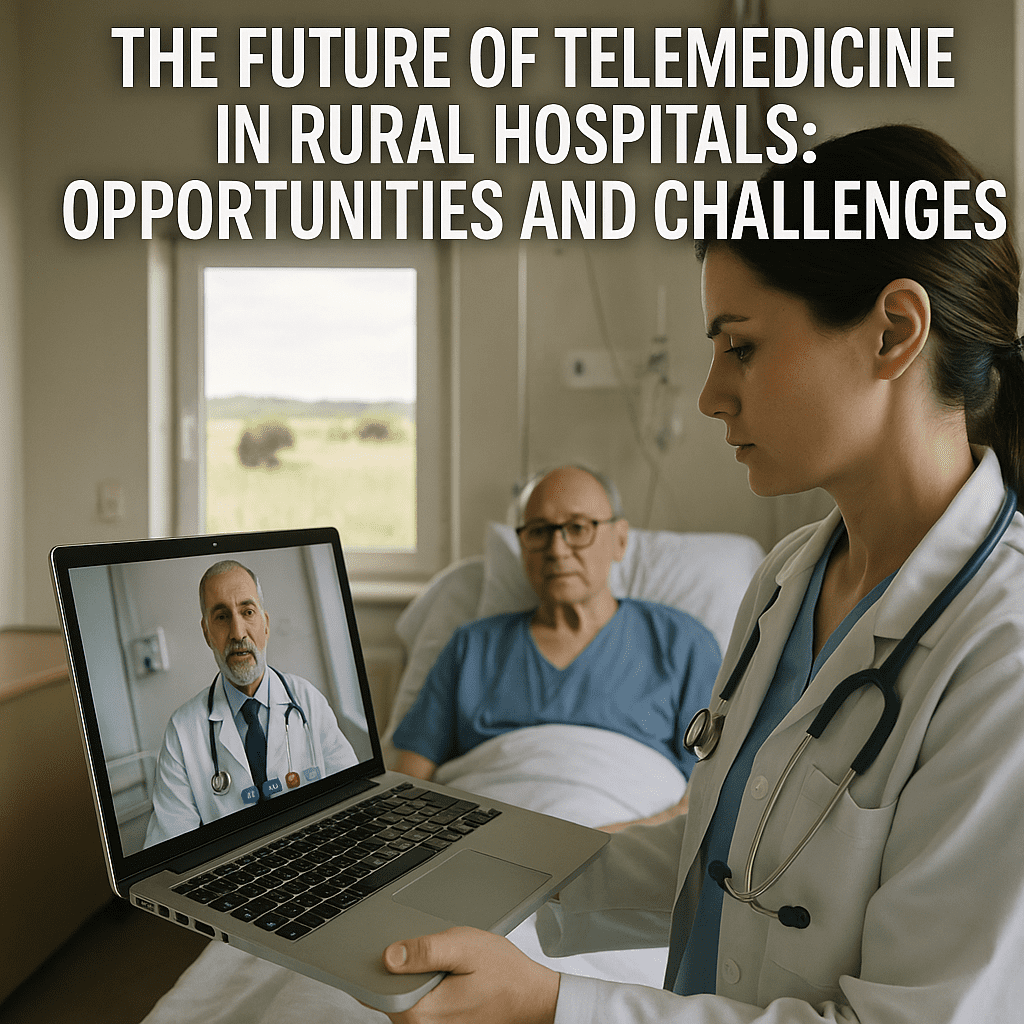
Rural hospitals often struggle with too few workers, far distances, and tight budgets. Through telemedicine, they’ve found a lifeline. It helps connect patients to distant specialists and lets doctors keep learning without leaving their workplace. What started as a “nice extra” has now become a “must-have.”
In this post, we’ll look at how telemedicine is changing rural healthcare in 2025 and the new tools and ideas shaping the future.
II. Current Landscape of Rural Telemedicine in 2025
Telemedicine is no longer an experiment—it’s a working system with real results.
– Adoption is growing fast. Reports from Becker’s Hospital Review and the American Hospital Association show that rural hospital telehealth use jumped from 43% in 2022 to 68% in early 2025.
– More hospitals have better internet access. Thanks to the FCC’s STAR Health Connectivity Program and new broadband grants, even small hospitals in remote areas now have faster and more reliable connections.
– Policies are improving. The Consolidated Appropriations Act of 2025 renewed important Medicare rules that help hospitals get paid for virtual care.
These steps have made healthcare easier to reach for many people. But with growth comes the need for careful planning, because technology alone isn’t enough.
III. Main Opportunities for Rural Hospitals
Telemedicine brings many good opportunities for rural healthcare systems. Here are ten of the biggest benefits:
1. Patients can reach specialist doctors, like heart or cancer experts, no matter the distance.
2. People with long-term illnesses such as diabetes or heart disease can share health data with their doctors instantly.
3. Patients save money and time by skipping long trips to hospitals.
4. Doctors and nurses can get support, training, and advice through online mentoring and virtual meetings.
5. Hospitals can use telehealth data to track community health needs and plan better care.
6. Telemedicine supports value-based care, which rewards hospitals for keeping patients healthy, not just treating illness.
7. Virtual emergency centers allow fast help and expert advice during critical moments.
8. Hospital-at-home programs let patients get hospital-level care at home, saving space and cost.
9. Hospitals in different states can share telehealth services, helping smaller ones handle more patients.
10. Virtual mental health care gives more people access to therapy, even in places where it’s hard to find local support.
These changes show how rural hospitals are leading their own kind of digital revolution.
IV. New Technologies Powering Telemedicine in 2025
Behind every online visit are powerful tools that keep things running smoothly. Here are ten technologies helping telemedicine grow stronger:
1. 5G and satellite networks that make video clear and fast.
2. Artificial intelligence tools that help doctors spot problems early and read scans quickly.
3. Smart devices like glucose monitors and heart patches that send data straight to doctors.
4. Secure cloud systems that make it easy and safe to share patient records.
5. Virtual reality used for physical therapy and recovery at home.
6. Blockchain systems that keep patient information private and secure.
7. Voice assistants that write notes and set appointments for doctors.
8. Low-code software that helps hospitals create custom apps easily.
9. Edge computing, which allows fast data analysis during emergencies.
10. Predictive programs that help plan staff schedules and hospital supplies.
These tools are making telemedicine quicker, smarter, and easier to use for both doctors and patients.
V. Challenges and Realities Ahead
Telemedicine brings hope, but also a few tough challenges for rural hospitals:
1. Payment rules are still unclear for some services.
2. Crossing state lines for care can be slowed down by licensing rules.
3. Some patients aren’t comfortable using telehealth apps or don’t know how.
4. Cybersecurity risks are higher with more digital data.
5. Technology setups can be expensive at the beginning.
6. Many computer systems still don’t connect well with each other.
7. Some places still have poor internet connections.
8. Switching between online and in-person care can cause stress for providers.
9. It’s harder to build trust through a screen, so doctors need training to connect with patients.
10. Future policy changes could affect how telehealth is funded and managed.
While these issues are real, 2025 is shaping up to be a turning point. More hospitals are finding ways to make telehealth part of their long-term operations, not just a temporary fix.
VI. The SMPLSINNOVATION Perspective: Making Telemedicine Simple and Smart
At SMPLSINNOVATION, we believe telemedicine isn’t just about new gadgets—it’s about helping people. Our team works with rural hospitals to make technology easier to use and more meaningful for both staff and patients.
We help by:
– Building clear plans for telehealth rollout.
– Upgrading IT systems without overspending.
– Keeping hospitals safe and compliant with regulations.
– Teaching staff how to use data and AI tools effectively.
– Creating long-term growth strategies for virtual care.
Our goal is simple: turn technology problems into “aha” moments that make life easier for everyone.
VII. Conclusion: A More Connected Future for Rural Healthcare
Telemedicine is not just a trend—it’s the bridge that connects rural communities to quality healthcare. In 2025, new technology, faster internet, and better payment policies are bringing expert care closer to home.
With the right partners and plans, rural hospitals can keep patients healthy without sacrificing personal care.
The future of telemedicine is bright, friendly, and full of possibility. And when you’re ready to make your telemedicine journey easier, SMPLSINNOVATION will be here to help—always with a smile.