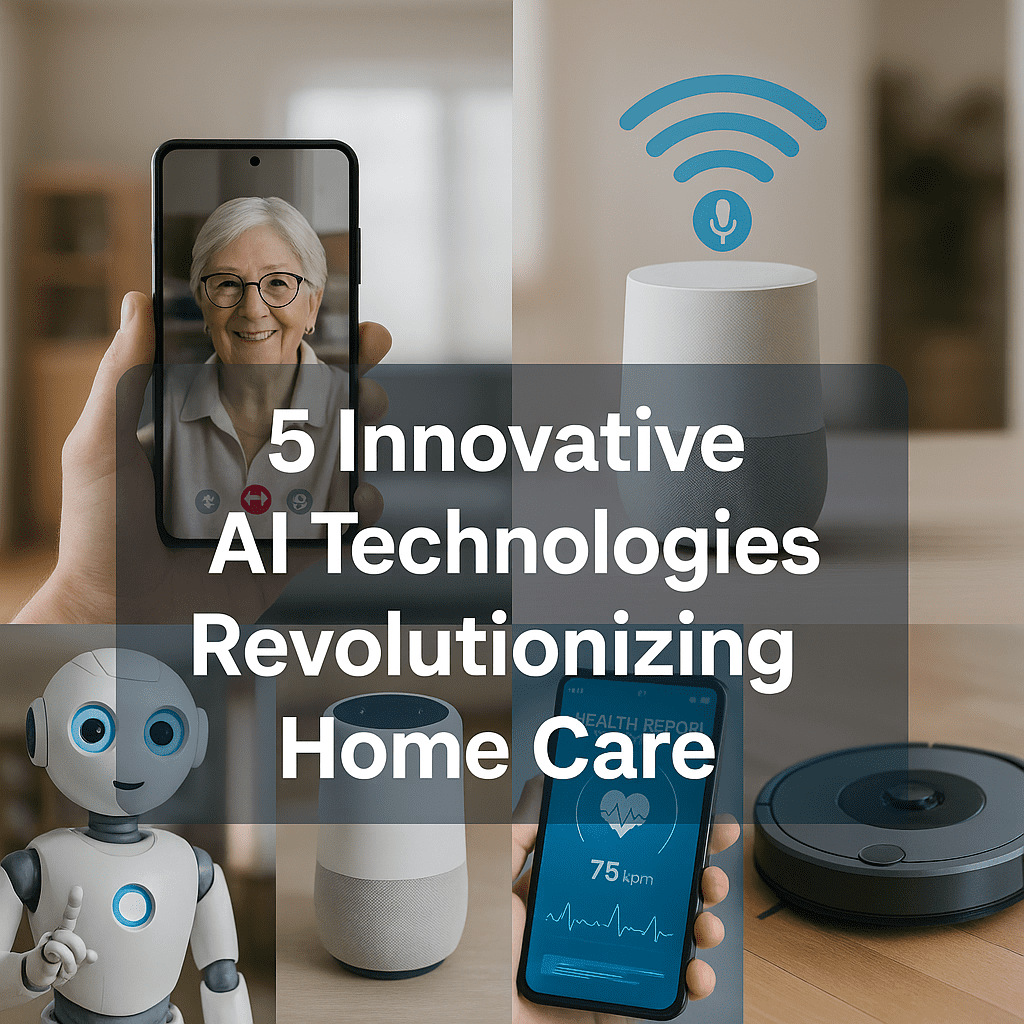
5 Innovative AI Technologies Changing Home Care in 2024
by SMPLSINNOVATION — Because Smarter Care Should Feel Simple!
I. Introduction
Imagine this: Grandma’s smart patch quietly sends her blood pressure to her doctor. Dad’s helpful robot keeps an eye on his coffee so it doesn’t spill again. And your friendly AI companion reminds you to stretch after watching too many episodes of your favorite show. Welcome to 2024, where artificial intelligence isn’t just something from science fiction. It’s helping us live safer, happier, and healthier lives at home.
At SMPLSINNOVATION, we’ve spent the past year exploring the smartest and most creative AI tools that make home care more personal, connected, and human. With people living longer, health issues becoming more common, and not enough healthcare workers to go around, there’s growing pressure for technology that helps caregivers and families. The good news is that AI is stepping up in amazing ways to improve safety, comfort, and peace of mind—right at home.
II. The Growing Importance of AI in Home Care
Today, more people want to stay in their own homes as they get older instead of moving to hospitals or care facilities. It makes sense—home feels comfortable, familiar, and much more affordable.
Across 2024, reports from MIT Technology Review, TechCrunch, and Forbes Health show huge growth in AI and digital health investments made for home care. Why is this happening?
Here are ten big reasons:
1. More older adults need care.
2. Chronic illnesses like heart disease and diabetes require daily attention.
3. There are not enough doctors and nurses.
4. People want to understand and manage their own health data.
5. Telehealth use has stayed high since COVID-19 and keeps improving.
6. AI often lowers hospital and care costs.
7. Smart homes work great with AI technology.
8. Families can check on loved ones anytime, from anywhere.
9. AI turns health data into early warnings and smart insights.
10. People enjoy helpful tech that makes life easier.
In short, 2024’s home care isn’t about replacing people with robots—it’s about working together to make care better.
III. Technology #1 — AI-Powered Remote Monitoring Systems
Remote monitoring is like a 24-hour health helper that makes sure everything—from heart rate to sleep—stays balanced.
AI-powered monitoring uses wearables, cloud systems, and smart predictions to track health without making anyone sit by a computer all day.
Recent innovations include:
1. Smart biosensor patches that track recovery after surgery.
2. Predictive software that spots health problems before they become serious.
3. Fall detection tools that can tell the difference between a spill and a dangerous fall.
4. Small ECG devices that send heart data directly to clinics.
5. AI sleep trackers that find signs of sleep apnea early.
6. Voice assistants that can hear changes in tone related to health.
7. Smart hydration reminders for people who forget to drink water.
8. Bathroom sensors that track mobility and hydration.
9. Systems that connect easily with digital health records.
10. Predictive models that lower the risk of re-hospitalization.
These tools give early warnings, help doctors make better choices, and give families confidence that their loved ones are safe. It’s like having a doctor who’s always awake and watching out for you.
IV. Technology #2 — Generative AI Companions and Support Bots
Loneliness can be as harmful as poor health, but AI companions are changing that.
These digital friends have empathy and personality. They chat, remind you of things, and even remember your favorite tea.
Recent developments include:
1. Personal AI companions that can understand emotions.
2. Cognitive games that keep the mind active and watch for memory problems.
3. Friendly reminder bots that help with medications or therapy.
4. Platforms combining chatbots with real nurses for true care.
5. Voice protection tools that keep your voice data private.
6. Mood tracking that helps watch for signs of depression.
7. Conversation journals that share updates with caregivers.
8. Virtual pets for those who like animals but can’t keep one.
9. Video-based avatars that make chats feel real.
10. Companions that connect across different devices seamlessly.
These bots help people feel supported, happier, and more motivated every day. They’re not just smart—they’re kind.
V. Technology #3 — Robotic Care Assistants
Robots in homes used to be a dream, but now they’re here to help with real tasks.
AI care robots can move around, understand voices, and support people who need help walking, lifting, or remembering things.
Recent advancements include:
1. Robots that understand natural speech and carry out spoken commands.
2. Machines that deliver medications on time.
3. Powered exoskeletons that help people stand or walk.
4. Cleaning robots that multitask as home helpers.
5. Robots that recognize faces and personalize care.
6. Automatic lift systems that help after minor falls.
7. Cameras that pick up emotions to improve interactions.
8. Navigation systems for cluttered rooms.
9. Improved voice understanding for different accents.
10. Robots that learn your routine and plan ahead.
These helpers make life easier and safer for people who need physical help and reduce stress for caregivers.
VI. Technology #4 — Predictive Health Platforms for Chronic Disease Management
Predictive health systems help spot problems before they happen. Instead of waiting for symptoms, they can warn patients or doctors in advance using data and AI analysis.
Recent developments include:
1. Smart apps for diabetes management.
2. Heart monitoring platforms that catch warning signs early.
3. Risk dashboards for doctors.
4. AI coaches that give better food advice.
5. Real-time tools that adjust treatments automatically.
6. Cloud systems connected to wearable devices.
7. Early cancer detection through imaging analytics.
8. AI tools for tracking and managing pain.
9. Mental health progress prediction tools.
10. Databases that help predict population health trends.
These systems help people stay ahead of their conditions, avoid emergencies, and live better every day.
VII. Looking Ahead — The Future of Home Care AI
If 2023 was about testing what’s possible, 2024 is about putting it into action. And the next few years will make life at home even smarter and more supportive.
Here are some things to look forward to:
1. AI that understands emotions even better.
2. Affordable home robots for everyone.
3. Wearables so light and soft you forget you’re wearing them.
4. Global access to care powered by AI cloud systems.
Home care is changing fast, but the goal stays the same—helping people live comfortably, safely, and happily at home with a little smart support from AI.