How AI is Transforming Remote Patient Monitoring in Aged Care
By SMPLSINNOVATION, Health Technology Consulting | 2024 Blog Feature
1. Introduction
If you’ve ever helped your grandparents use a smartphone, you know technology in aged care can be confusing, funny, and life-changing all at once. But behind the laughs, there is a serious reality—our world is getting older fast. By 2030, one in six people will be over 60 years old. This means health systems everywhere are looking for better ways to care for seniors.
Traditional aged care, which depends on in-person nurse visits or phone check-ins, often reacts to problems instead of preventing them. It also uses up a lot of time and money. Now artificial intelligence (AI) and remote patient monitoring (RPM) are changing that.
This powerful combination is helping caregivers work smarter, not harder. It makes care more proactive, more personal, and safer for seniors who want to stay independent. It’s even a little fun—imagine a smartwatch that watches over your heart and tells you when something seems wrong.
2. What Remote Patient Monitoring (RPM) Looks Like Today
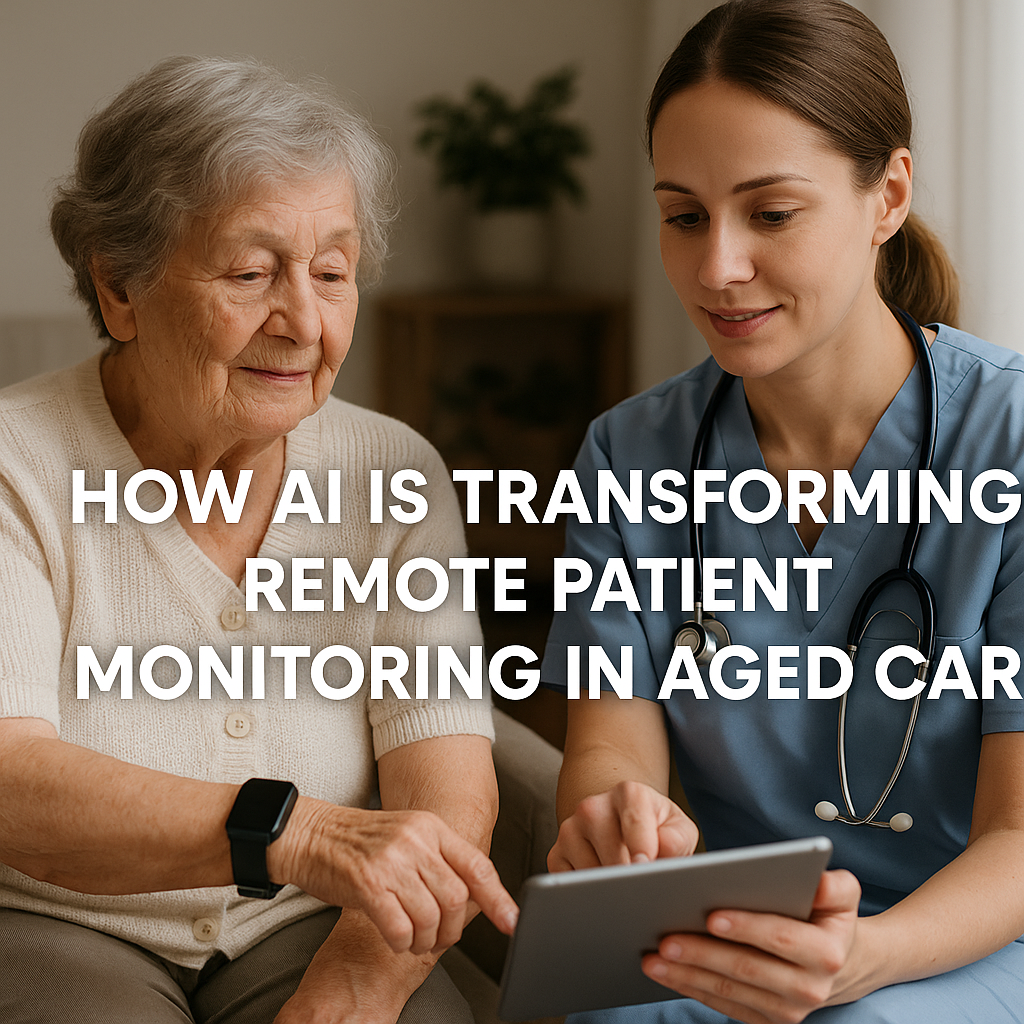
Remote patient monitoring uses smart devices to track health data. These devices, such as blood pressure cuffs, glucose monitors, or smartwatches, send information straight to doctors and caregivers. This helps track vital signs, medication reminders, and activity levels, giving peace of mind to seniors, families, and health professionals.
Trends in 2024
– Around 65% of healthcare providers now use AI-based remote monitoring tools.
– The senior-care AI market is expected to reach almost seven billion dollars by 2028.
– Many older adults now receive support from home through digital links with clinics and hospitals, balancing safety with independence.
RPM helps caregivers by saving time and reducing stress while giving doctors real-time health updates. It’s like streaming a health channel where good outcomes are the goal.
3. How AI Changes the Way We Monitor Seniors
AI isn’t just a popular buzzword—it’s what turns data into real insights. In aged care, AI acts like the brain behind health sensors. It helps in three main ways:
1. It analyzes data quickly and accurately.
2. It predicts problems before they get serious.
3. It personalizes care so each person gets exactly what they need.
AI combines different technologies such as machine learning, smart sensors, and digital health records. All these systems talk to each other so doctors can understand what’s happening and act faster.
Recent advancements include:
– Predicting falls based on how a person walks or moves.
– Detecting early signs of heart issues such as irregular rhythms.
– Using voice or chat-based tools to track mood and emotional health.
In short, AI doesn’t just collect information—it understands it.
4. Ten Ways AI is Changing Remote Patient Monitoring in Aged Care
1. Predicting health problems early so care teams can act fast.
2. Detecting real falls instead of confusing them with normal movements.
3. Helping manage medications with smart reminders.
4. Spotting unusual changes in vital signs for each person.
5. Giving doctors and nurses one clear dashboard for all their patients.
6. Making it easier for seniors to talk with AI assistants using their voice.
7. Tracking long-term health patterns, such as movement and breathing.
8. Catching early signs of memory or thinking problems from sleep or speech data.
9. Offering friendly AI chat companions to reduce loneliness.
10. Finding which patients are most at risk so care teams can focus on them first.
These smart tools make care more caring, more accurate, and more human.
5. Real-World Examples
1. Philips VitalSight expanded its program to more senior homes using connected blood pressure devices. This cut hospital readmissions by 35% and made patients 40% more satisfied.
2. Google Health and Mayo Clinic worked together on an AI system that finds heart rhythm problems up to three days before doctors notice them.
3. CarePredict launched a wearable that tracks small behavior changes like sleep or movement to notice early signs of depression or loneliness. It improved social activity by almost 30%.
4. Babylon Health tested AI chat companions that reminded seniors about medicine and talked with them to reduce anxiety. Reports showed anxiety levels dropped by half.
5. Oura and Stanford studied smart rings that could warn about frailty and sleep issues so doctors could step in before problems worsened.
6. Challenges and Considerations
AI is powerful, but it also brings a few challenges:
– Keeping private health data safe and secure.
– Helping seniors who may not be comfortable using smart devices.
– Dealing with poor internet connections in some areas.
– Covering the high setup costs for new systems.
– Remembering that human care and compassion can never be replaced by machines.
For AI to work best, technology must be easy to use, well protected, and designed with people in mind.
7. The Future: Where Technology and Compassion Work Together
The future of aged care will be both digital and deeply human. AI should be a helper, not a replacement for people.
By 2030 we can expect:
– Homes that automatically connect lighting, medication, and movement tracking to health systems.
– AI companions that notice stress or loneliness and alert caregivers.
– Seniors receiving most of their healthcare support from home through smart systems.
At SMPLSINNOVATION, we believe the next chapter of aged care is about blending technology with heart. Our mission is to help healthcare teams design and set up AI-powered monitoring tools that make life safer, easier, and kinder for older adults.