Revolutionizing Healthcare: How AI is Changing Remote Patient Monitoring
By SMPLSINNOVATION
Date Research Based On: Publications up to 2024-04-13
I. Introduction
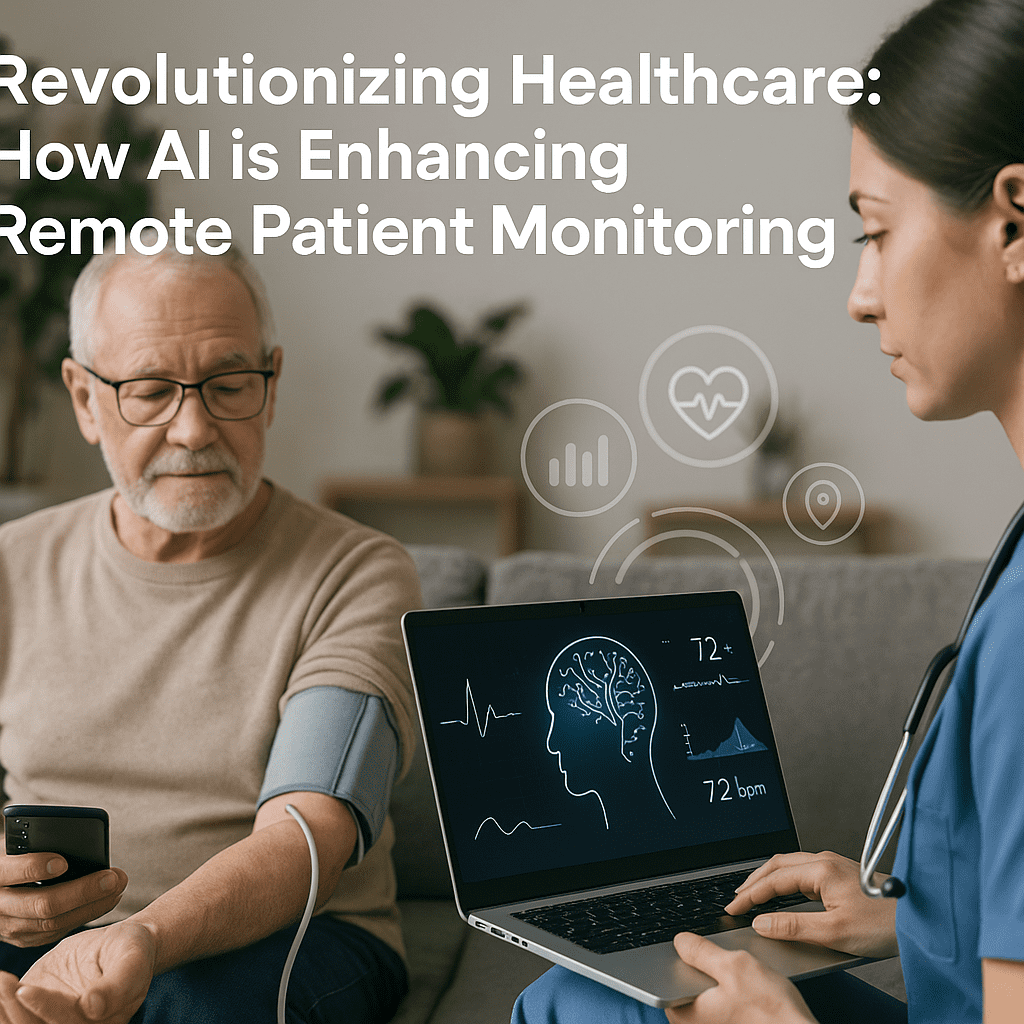
Healthcare has entered an “always-on” world, and remote patient monitoring (RPM) is at the center of it. After the COVID-19 pandemic, many people got used to checking their health at home and tracking things like heart rate and sleep.
But older RPM systems didn’t always work well. Doctors got too many alerts, data wasn’t always correct, and patients sometimes ignored reminders.
Now Artificial Intelligence, or AI, is stepping in to fix these problems. It helps make care smarter, faster, and more personal.
According to Statista (April 2024), the AI-powered remote patient monitoring market could reach over 12.5 billion dollars by 2028—almost double in just four years. That shows how quickly this field is growing.
II. The Evolution of Remote Patient Monitoring
Let’s take a quick look back at how RPM has grown.
2010–2019: Early Telehealth and Wearables – This time brought us early Fitbits, basic telemedicine apps, and new ways to gather health data.
2020–2022: The Pandemic Push – Remote monitoring became a must. Hospitals offered online checkups, and health apps became the new waiting rooms.
2023–Present: AI and Automation – AI now helps doctors spot problems early and respond before a crisis happens.
Regulatory Updates (April 2024):
The FDA in the U.S. created new rules for AI medical devices, allowing them to learn and improve safely.
The European Union stressed fairness and transparency in AI systems.
At HIMSS 2024, health tech leaders agreed that the future of care is connected, safe, and smart.
III. AI-Powered Innovations in 2024
Here are ten ways AI is changing remote monitoring today.
1. Predictive Analytics – AI can spot small changes in health data before serious symptoms appear.
2. Smart Machine-Learning Systems – These systems read many types of data to give better advice.
3. Federated Learning – Hospitals can train AI models together without sharing private patient data.
4. Generative AI for Alerts – AI tools summarize daily health data for doctors in clear reports.
5. Medical Chatbots – AI chatbots help patients decide if they should rest or contact a doctor.
6. Computer Vision – Cameras can now check breathing and heart rate just by looking at your face.
7. Natural Language Processing – AI can turn doctors’ notes into organized, easy-to-use data.
8. AI ECG Reading – Smart wearables can now give hospital-level heart readings.
9. Medication Tracking – AI makes sure patients take medicine correctly by analyzing small daily actions.
10. Multi-Sensor Systems – AI combines data from sleep, diet, and activity to create a full picture of health.
Together, these tools make a smart support system that helps both patients and healthcare teams.
IV. Real-World Use Cases
AI in healthcare isn’t a dream—it’s happening right now. Here are four examples.
Mayo Clinic – Their AI system helped heart failure patients, lowering ICU visits by 23%.
Kaiser Permanente – Predictive monitoring stopped over 1,000 hospital readmissions in early 2024.
Cleveland Clinic – Used edge AI for heart wearables that find irregular heartbeats, even offline.
NHS in the UK – Used AI to monitor diabetic eye disease and reduce screening delays.
These examples show that AI isn’t replacing doctors—it’s giving them more power to help patients.
V. How AI Improves RPM
A. Better Data
AI cleans messy data. It removes errors, fixes bad readings, and finds unusual patterns humans might miss. This helps make sure that results truly show how patients feel.
B. Personalization and Engagement
AI helps systems adjust to each person. It can suggest new workouts, change reminder times, and give friendly motivation like “Nice job—you’re moving more today!”
C. Clinical Support
AI works with electronic health records to spot trends, send alerts, and suggest next steps. This helps doctors make strong decisions faster.
D. Efficiency
AI saves doctors time by writing reports, summarizing notes, and cutting down paperwork. This means more time for care and less late-night charting.
VI. Ethics, Privacy, and Safety
AI brings great promise—but also big responsibility. Here are ten key points for safe and fair AI use.
1. Follow privacy laws like HIPAA and GDPR.
2. Check for bias in data.
3. Be clear about how AI makes decisions.
4. Keep AI models tested and updated.
5. Protect health data from hackers.
6. Make sure systems can share information easily.
7. Get patient consent before collecting data.
8. Keep humans involved in major decisions.
9. Use data from trusted, ethical sources.
10. Use energy-efficient technology to reduce waste.
Think of AI like a smart intern—it works fast, but still needs supervision.
VII. The Future of AI in RPM
What’s next?
AI may soon help track public health by spotting early signs of outbreaks.
It could offer personal coaching for better habits using emotion recognition.
Wearables may grow into “inside-ables,” tiny sensors that work from within the body.
In five years, AI will likely be part of every monitoring system, quietly helping people stay healthy every day.
VIII. Conclusion
AI and remote patient monitoring are already changing healthcare. What began as simple tracking now gives patients and doctors real-time, useful insights.
For doctors, this means accurate care with less stress. For patients, it means better support without constant hospital visits.
At SMPLSINNOVATION, we believe AI is the bridge that connects smart data with human care. When monitoring becomes simpler and smarter, everyone wins.