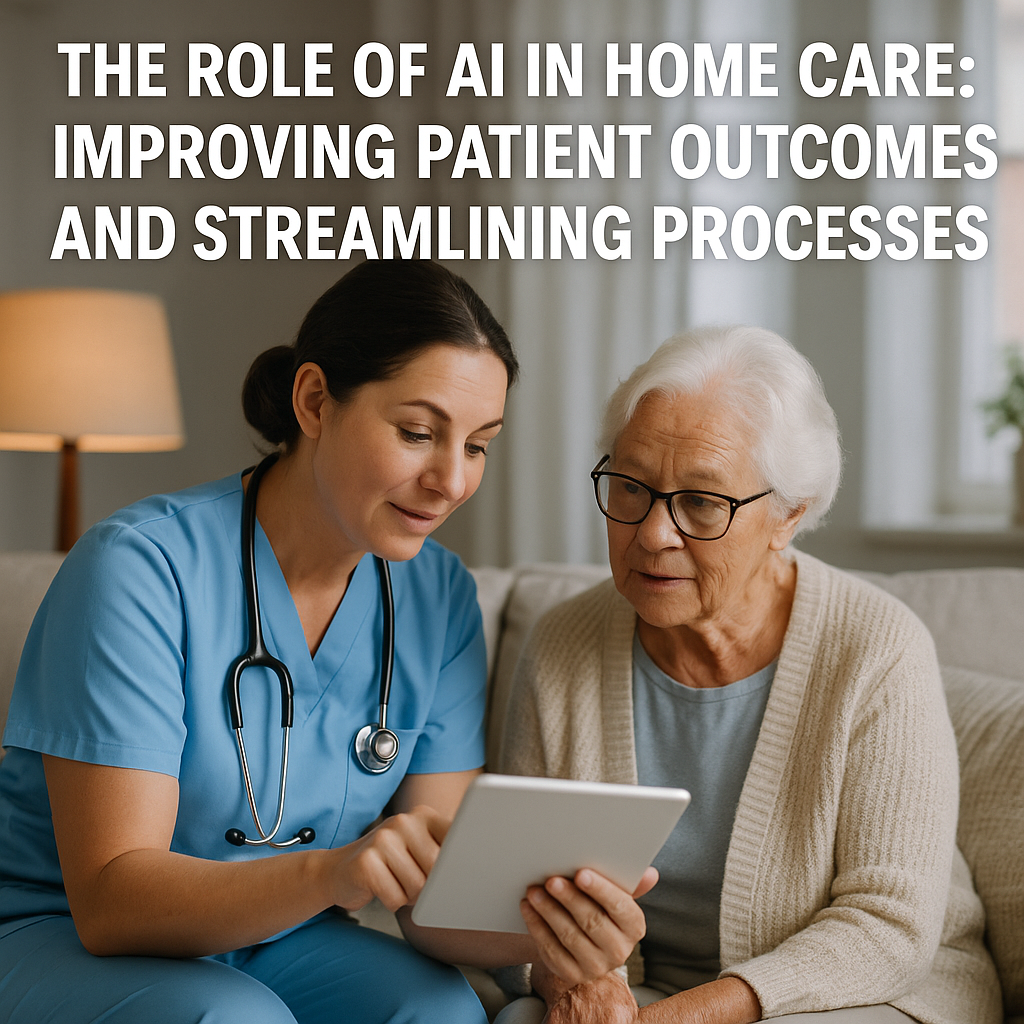
The Role of AI in Home Care — Improving Patient Outcomes and Streamlining Processes
By SMPLSINNOVATION — where health meets high-tech with a smile!
I. Introduction
Home care today is very different from what it used to be. The days of doctors knocking on your door with a black bag and a stethoscope are long gone. Now, we have smart sensors, voice assistants, and other AI tools that help bring care right into our homes.
As more people around the world get older and illnesses like diabetes and heart disease become more common, the demand for home care is rising fast. The World Health Organization says that by 2030, one in six people will be over 60 years old. That means we need better, easier ways to take care of people at home. The good news is that artificial intelligence, or AI, is here to help.
In this post, we’ll look at how AI can make home care better, safer, and more efficient—without losing the human touch.
II. The Current Landscape of Home Care in 2024
Home healthcare in 2024 is smarter and more connected than ever before. New technology is changing how services are provided—and no one is using a fax machine anymore!
Three Big Trends Shaping Home Health
1. Remote Patient Monitoring (RPM)
Wearable devices track heart rate, blood pressure, and other health data and send it to doctors in real time. It’s like having a safety net that warns you before something goes wrong.
2. AI-Driven Predictive Analytics
AI can study health data and predict problems before they become serious. It’s like having a fortune teller in a lab coat.
3. Growing Trust in Digital Health Tools
More people are using smartwatches and home diagnostic devices, and they feel comfortable doing so because it helps them avoid extra hospital visits.
According to recent reports, spending on home health technology rose sharply in 2024, and more healthcare organizations are using AI than ever before. The “intelligent home clinic” is becoming real.
III. Key Applications of AI in Modern Home Care
AI has many uses in home care, from checking on health conditions to making sure caregivers have the right information. Here are ten ways AI is helping.
1. Predictive Health Analytics
AI finds early warning signs in patient data, helping prevent hospital visits and keeping patients safe at home.
2. Virtual Care Assistants and Chatbots
AI virtual helpers are available 24/7 to answer questions, schedule visits, and remind patients about medications—no coffee breaks needed.
3. Medication Management Systems
Smart reminders and tracking systems help patients take medicine on time.
4. Fall Detection and Movement Analysis
AI-powered sensors can tell the difference between a fall and a dropped pillow, so help arrives fast when needed.
5. Personalized Care Plans
AI studies each person’s history and lifestyle to create care plans that fit their needs.
6. Workflow Automation
AI takes care of scheduling, forms, and paperwork so caregivers can focus on people, not paperwork.
7. Cognitive Decline Support
AI tools can help people with dementia stay active through voice and memory exercises.
8. AI-Powered Nutrition and Lifestyle Coaching
AI looks at data from fitness trackers and health logs to suggest better eating and exercise habits.
9. Integration with Smart Home Devices
Home devices work together to track sleep, movement, and health stats, sending updates to healthcare teams.
10. Predictive Staffing and Resource Planning
AI helps managers assign caregivers to patients based on time, location, and needs, saving time and energy.
IV. Impact of AI on Patient Outcomes
The results speak for themselves. AI is helping patients stay healthier and giving care teams more time to focus on what matters most—people.
1. Better Accuracy
AI systems help reduce hospital readmissions and catch health problems earlier.
2. Personalized Experiences
Each patient’s care plan fits their needs, which makes them more satisfied with their care.
3. Preventive Care
AI alerts healthcare teams to risks early, so problems can be managed sooner.
4. Greater Accessibility
With AI, remote consultations can bring care to areas that don’t have many doctors.
5. Continuous Monitoring
AI keeps track of health data between home visits, keeping care consistent.
6. Family Empowerment
Families can use apps to see their loved one’s health updates and feel more confident about their care.
7. Better Chronic Condition Support
AI helps manage chronic diseases by spotting changes that humans might miss.
8. Reduced Human Error
AI can double-check medicine dosages, keeping patients safer.
9. Data-Driven Improvements
Care teams can use health data to make smarter decisions over time.
10. Faster Emergency Response
AI alerts medical teams right away during emergencies, saving time and lives.
V. Operational Efficiency and Cost Reduction
AI isn’t just good for patient care—it also helps organizations work more smoothly and save money.
1. Streamlined Administrative Workflows
Automating billing and paperwork gives caregivers more time to care for people.
2. Smart Resource Allocation
AI schedules staff based on patient needs, preventing burnout.
3. Real-Time Data Sharing
AI allows instant sharing of information between hospitals, clinics, and home health teams.
4. Reduced Costs
AI helps avoid unnecessary hospital visits and cuts waste, saving up to 25% in costs for some organizations.
5. Easier Compliance
Automation ensures proper reporting and record keeping, reducing errors.
6. Inventory Management
AI tracks medical supplies and warns when it’s time to restock.
7. Performance Tracking
Supervisors can use AI dashboards to measure and improve caregiver performance.
8. Fraud Detection
AI spots strange billing or treatment patterns and prevents misuse.
9. Task Prioritization
AI helps make sure urgent cases get handled first.
10. Multilingual Support
AI translation tools break language barriers and help providers communicate with everyone.
VI. Ethical and Regulatory Considerations
AI is powerful, but it comes with responsibilities.
1. Privacy and Security
Patient data must be protected with strong security and clear privacy rules.
2. Bias and Fairness
AI systems must be fair and treat everyone equally.
3. Regulatory Compliance
Laws like HIPAA and GDPR outline how health data and AI must be handled safely.
4. Transparency
Healthcare workers need to understand how AI makes decisions.
5. Human Oversight
AI helps, but people still make the final decisions and provide care with compassion.
VII. Conclusion: The Future Is SMPL and Smart
AI in home care is no longer just an idea—it’s happening right now. From predicting health risks to offering friendly virtual support, AI is making home care smarter and kinder.
At SMPLSINNOVATION, we combine technology and compassion to help healthcare teams deliver better care. Home care is changing—from reactive to proactive, from manual to automated, and from complex to simple.
Ready to make your home care smarter? Together, we can make health care more efficient, more personal, and yes—full of smiles.
© 2024 SMPLSINNOVATION | Health Technology Consulting — Simplifying innovation, one smart solution at a time.