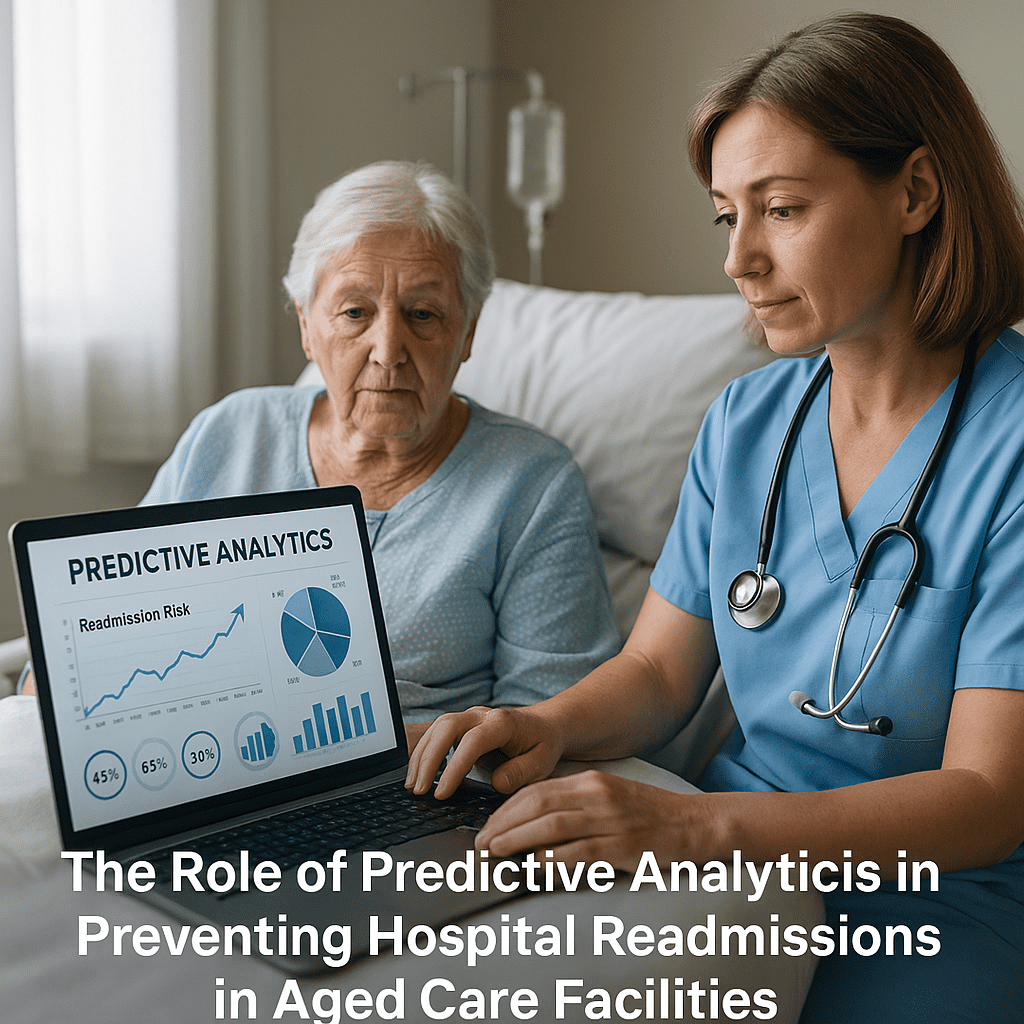
The Role of Predictive Analytics in Preventing Hospital Readmissions in Aged Care Facilities
Published by SMPLSINNOVATION — Health Technology Consulting for a Smarter, Happier Healthcare Future
I. Introduction
If hospitals offered frequent-flyer points, some elderly patients would sadly be top members. Older adults returning to the hospital often create stress for them and big costs for healthcare systems. Every time an elderly resident is readmitted, it brings health risks and financial strain for hospitals and families.
Recent data from 2024 shows that hospital readmissions cost billions of dollars each year around the world. Aged care facilities are especially affected because older people often have complicated health needs. When illnesses, medication mistakes, and poor discharge planning mix together, patients end up returning to the hospital again and again.
That’s where predictive analytics steps in. This technology uses data and machine learning to find out which residents are most likely to return to the hospital before it happens.
So, the big question is: how can predictive analytics help aged care facilities keep residents healthy at home and out of the hospital?
II. The Current State of Hospital Readmissions in Aged Care
Recent reports show concerning numbers.
In Australia, about 18–22% of older adults are readmitted within 30 days of leaving the hospital.
In the United States, the number is around 19%, especially for people with conditions like heart failure, lung disease, and diabetes.
The World Health Organization says that many of these readmissions could be prevented with early care and better follow-up.
The main reasons are:
1. Ongoing health problems that get worse without notice
2. Medication mistakes or missed doses
3. Poor coordination between hospitals and aged care facilities
Traditional follow-ups, such as phone calls after discharge, often come too late. Predictive analytics changes this by spotting problems before they happen.
III. What Predictive Analytics Is and How It Works in Healthcare
Predictive analytics is like a smart crystal ball made of data and computer models. It uses math, artificial intelligence, and patient records to predict what might happen next — like whether someone might need to go back to the hospital.
In aged care, it looks at many types of data, such as:
1. Electronic health records — past illnesses, test results, and hospital stays.
2. Vital signs — heart rate, temperature, and oxygen levels from wearable devices.
3. Medication history — how well residents follow their medication plans.
4. Social and lifestyle factors — activity levels, loneliness, and daily habits.
5. Nurse notes — important personal observations about each resident.
The process includes collecting and cleaning data, training computer models, testing their accuracy, and giving each resident a risk score. Nurses can then use easy dashboards to see who might need extra care soon.
IV. Ten Ways Predictive Analytics Helps Prevent Readmissions
When aged care facilities use predictive analytics, they gain a powerful tool for protecting residents’ health. Here are ten ways it helps:
1. Detects early signs of infection or illness before they get serious.
2. Spots risky medication combinations or missed doses.
3. Tracks worsening chronic diseases like heart or lung problems.
4. Predicts who might fall or have mobility issues.
5. Monitors nutrition and hydration to prevent related health problems.
6. Identifies changes in mood that may signal mental health decline.
7. Improves discharge planning so no steps are overlooked.
8. Helps staff plan their work based on predicted care needs.
9. Customizes care plans for each resident using data insights.
10. Supports telehealth services by alerting doctors to potential issues early.
Many of these systems can connect easily with tools aged care facilities already use.
V. Case Studies and Evidence from 2024
Case Study 1: In Australia, a pilot project using machine learning in 15 aged care facilities reduced hospital readmissions by 22% in just 30 days. Nurses also reported higher morale.
Case Study 2: A study using predictive dashboards for 3,000 residents showed nurses could respond to health changes 33 minutes faster than before.
Case Study 3: Another project improved medication tracking by 18% among residents taking multiple medications, catching problems before they became serious.
These examples show how predictive analytics leads to real, caring improvements in aged care.
VI. Benefits of Predictive Analytics in Aged Care
Predictive analytics isn’t just about numbers and screens — it changes the whole care environment.
Main benefits include:
1. Better health and longer lives for residents.
2. Smarter use of staff and resources.
3. Lower healthcare costs and fewer penalties for readmissions.
4. More time for staff to focus on personal care.
5. Data-based decisions instead of guesswork.
6. Better follow-up after hospital discharge.
7. Improved communication with families.
8. Support for performance-based care systems.
9. Clear quality measures for leadership teams.
10. A shift from reacting to preventing problems.
When predictive analytics works well, both residents and caregivers benefit.
VII. Looking Ahead: The Future of Predictive Analytics in Eldercare
As aged care facilities become more digital, predictive analytics is one of the most promising tools for better care. It connects data with action and helps caregivers make smarter choices.
At SMPLSINNOVATION, we see predictive analytics as healthcare’s GPS. It guides decisions, offers real-time updates, and even reroutes when needed.
The road ahead will focus on better data sharing, strong privacy protections, and training so staff trust and understand the tools they use. Predictive analytics isn’t just a trend — it’s becoming the foundation of modern aged care.
VIII. Conclusion
Reducing hospital readmissions doesn’t mean working harder, it means working smarter. Predictive analytics gives aged care facilities the power to see risks early and prevent crises. It helps create a proactive, caring environment where elders can stay healthy and safe — right where they belong.