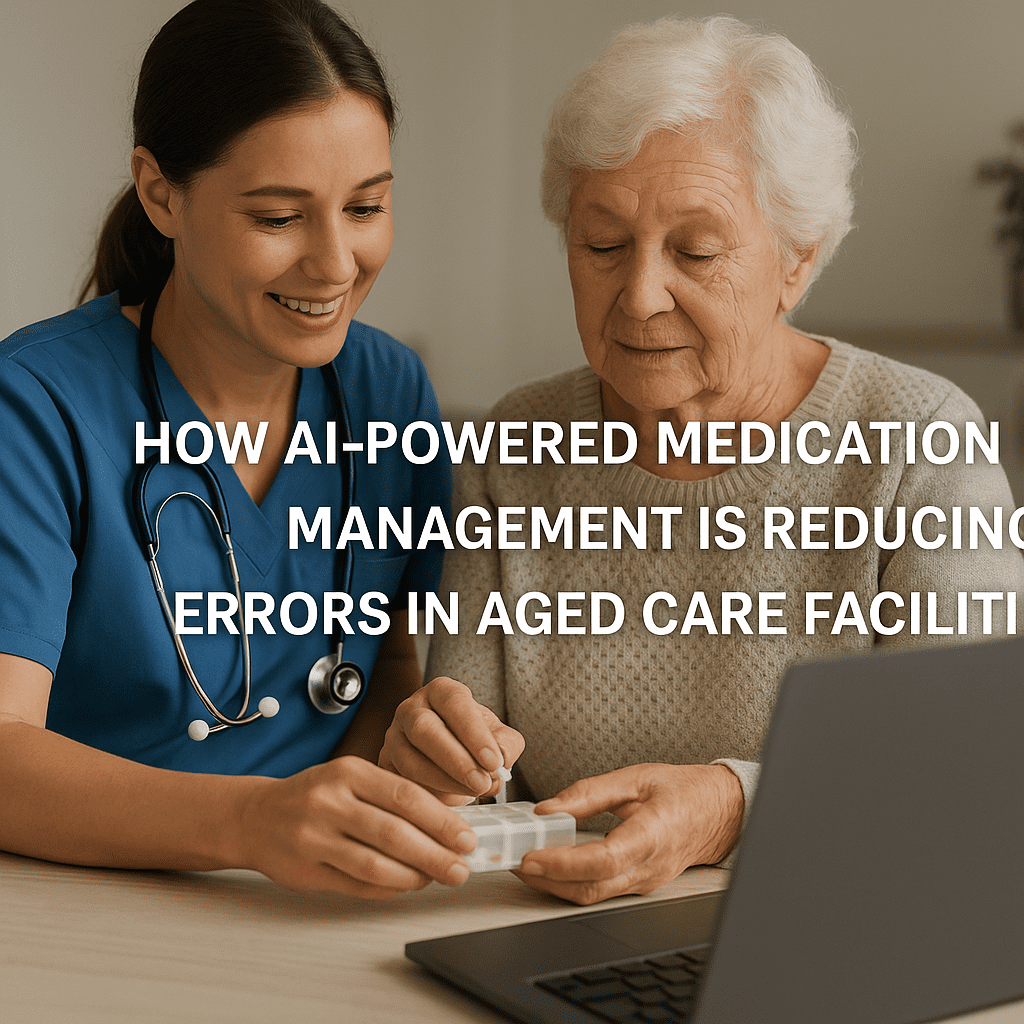
How AI-Powered Medication Management is Reducing Errors in Aged Care Facilities
by SMPLSINNOVATION Health Technology Consulting
1. Introduction
Taking care of medicines in aged care homes can feel like juggling too many things at once. The job is important because older people often take many kinds of medicine and need them at the right time and in the right amount. Even one small mistake, like a wrong dose, can be dangerous.
That’s where Artificial Intelligence, or AI, steps in. It’s like a smart helper that never gets tired and doesn’t need coffee. In 2024, AI is helping aged care homes make medicine management safer, faster, and more accurate.
At SMPLSINNOVATION, we’re exploring how AI is changing the way aged care facilities handle medications – and why it’s time to take notice before the robots (friendly ones!) start helping with the medicine cart.
2. Understanding Medication Errors in Aged Care
Before we celebrate AI, let’s understand how big the problem is. The World Health Organization reports that about 1 in 5 aged care residents around the world is affected by medication errors. In Australia, reports show that around 15% of errors come from wrong doses or timing. Similar issues happen in the UK, where millions of medication mistakes are reported each year.
The main reasons for errors include:
1. Tired or distracted staff
2. Mistakes in recording information between shifts
3. Miscommunication between handwritten and digital notes
4. Different systems showing the same medicine in different ways
5. Not enough time for careful checking
These mistakes can lead to hospital visits, health problems, and stress for everyone involved. Governments and care agencies are now asking facilities to use better, safer systems, and that’s where AI can help.
3. How AI Helps Manage Medications
AI-powered medication management means using computer systems that can learn and check information automatically. They connect with electronic medical records and pharmacy systems to find problems before they happen.
Old systems depend on people to check everything by hand, while AI systems can watch, compare, and alert staff instantly if something doesn’t look right.
Some ways AI is helping include:
1. Checking that medicine doses match what doctors ordered
2. Spotting possible mistakes before they happen
3. Reading and understanding prescriptions clearly
4. Identifying pills by scanning their shape and color
5. Using voice commands so nurses can check details hands-free
6. Warning staff about dangerous drug combinations
7. Using smart robots to deliver exact doses
8. Showing easy-to-read charts about medicine use
9. Predicting side effects based on patient history
10. Linking with smart watches to adjust medicine based on health data
AI keeps learning every day. The more data it sees, the better it gets at keeping people safe.
4. Real Examples from Around the World
This technology is already making a difference.
In Australia, aged care homes using AI to check medicines saw a 38% drop in transcription mistakes and saved nurses more than an hour per shift.
In the UK, AI tools helped doctors find possible drug interactions with 94% accuracy.
In Canada, care homes using AI charts noticed over 50% better early error detection and fewer hospital visits.
These examples show that AI doesn’t replace people – it helps them give better care.
5. Why AI Matters in Aged Care
AI brings many benefits to aged care homes, including:
1. Fewer mistakes from unclear handwriting
2. Problems found before they reach residents
3. Personalized medicine plans for each person
4. Easier tracking of who took what medicine and when
5. Less paperwork and stress for nurses
6. Better record keeping for safety checks
7. Lower health care costs
8. Safer data storage
9. More trust from residents and families
10. Easy updates as facilities grow
Imagine a nurse getting a gentle nudge from the AI saying, “Hey, maybe check Mr. Thompson’s medicine. His smartwatch shows his heart rate is a bit low.” That’s smart care made simple.
6. Challenges and Things to Keep in Mind
AI isn’t perfect yet. Some systems don’t easily connect with older technology, and data privacy is always important. Staff also need proper training to understand and trust what AI shows.
With good planning and teamwork, though, these challenges can be managed. A little patience and humor during training can make the switch much smoother.
7. What the Future Looks Like
By 2025, AI will likely be part of every medicine record system. Pharmacies, hospitals, and care homes will share information easily. New rules will also make sure AI systems meet safety standards. We might even see human and AI teams checking medicines together one day.
AI’s role is to support caregivers, not replace them. It gives them the tools to make even better decisions.
8. Conclusion
Managing medicine safely has always been a big challenge in aged care, but AI is changing that story. By spotting problems early, checking doses automatically, and learning from data, AI helps protect residents and gives staff more time to focus on care.
At SMPLSINNOVATION, we’re proud to help healthcare teams bring these new tools into their work. Whether it’s upgrading systems or exploring smart robots, we make health technology easy to understand and use.
In aged care, every correct dose matters — and with AI helping, so does every smile.
SMPLSINNOVATION — Simplifying Innovation, Amplifying Care.