Predictive Analytics in Aged Care Facilities: Reducing Hospital Readmissions Through Early Intervention
Introduction
Nobody ever wakes up excited about going back to the hospital. Sadly, many older adults in aged care facilities end up being readmitted often. These hospital visits are stressful for residents, hard on families, and expensive for the healthcare system. Caregivers also feel the pressure, trying to keep everything running smoothly.
This is where predictive analytics comes in. Think of it like a smart tool that can look at data and help predict future health problems. The best part? It doesn’t just predict—it helps stop problems before they happen. By finding health risks early, aged care facilities can lower readmissions, improve residents’ lives, and even make work a little easier for staff.
Challenges in Aged Care Facilities
Before we talk about solutions, we need to understand the challenges:
– Many residents have several health problems at the same time, like diabetes, heart disease, and arthritis.
– Staffing shortages mean caregivers are doing their best, but there aren’t always enough hands to give close attention to everyone.
– Health data is often stuck in different places or outdated before it’s used.
– Regulators and insurers are asking facilities to prove they are preventing readmissions, which adds more pressure.
All these challenges make it harder to give the right care at the right time.
What Is Predictive Analytics?
Predictive analytics is when data, statistics, and computer learning are used to guess future problems before they happen. For aged care, this means noticing that a resident might be headed for trouble—like an infection or a fall—and acting before they end up in the hospital.
Unlike old risk checklists that stay the same, predictive analytics is:
– Dynamic: It keeps updating in real-time as new data arrives.
– Personal: It looks at each resident’s individual history.
– Smart: It can find patterns humans might not notice.
It’s like upgrading from a paper map to GPS—guiding the way in real-time.
Recent Advances in Predictive Analytics (2023–2024)
Big progress has been made in just the past two years:
– Health records can now be analyzed instantly as data is entered.
– Wearables like smartwatches and patches track vital signs in real-time.
– AI can read and understand doctors’ notes—even messy handwriting.
– Cloud systems allow easier data sharing between clinics, hospitals, and specialists.
– New research in 2024 showed these tools reduced readmissions by nearly one quarter in some trials.
This proves predictive analytics is no longer just theory—it works.
Top 10 Ways Predictive Analytics Helps Prevent Readmissions
1. Detecting infections early.
2. Checking if residents take their medicine properly.
3. Predicting and preventing falls.
4. Spotting early signs of memory decline.
5. Identifying malnutrition or dehydration risks.
6. Helping monitor rehab progress.
7. Predicting heart and circulation problems.
8. Managing dementia-related behaviors like wandering.
9. Preventing bedsores with timely care.
10. Noticing social isolation, which can lead to hospital visits.
Each of these uses helps keep residents healthier and at home, not in the hospital.
Early Intervention With Predictive Analytics
Prediction matters most when it leads to early action. Here’s how it works in aged care:
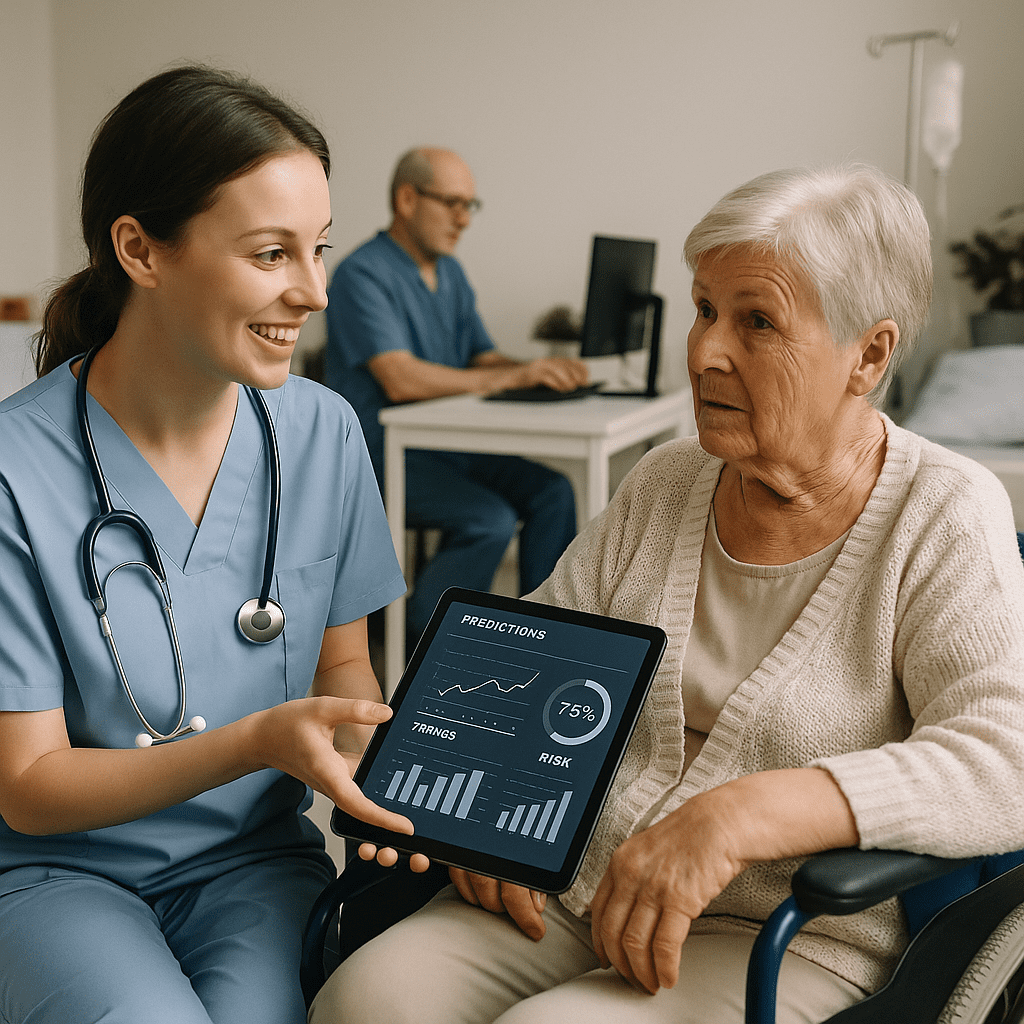
– Continuous remote monitoring alerts staff if something changes in vital signs.
– AI planning creates personal care plans instead of “one-size-fits-all.”
– Teams from different fields get alerts at the same time and work together quickly.
– Caregivers get simple notifications for urgent risks.
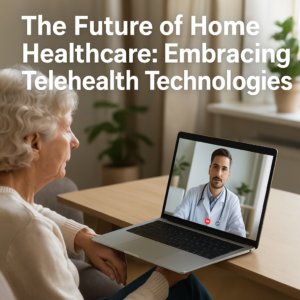
– Telemedicine calls can happen immediately, preventing unnecessary trips to the hospital.
It’s almost like every resident has their own guardian angel—always watching out for them.
Evidence That It Works
Research proves predictive analytics is effective:
– A 2023 review showed a 20–30% drop in avoidable readmissions.
– In the UK, it cut emergency hospital visits for heart failure patients by 27%.
– In Australia, algorithms found infections up to 48 hours earlier than normal checks.
– U.S. case studies showed staff were less stressed because they worked more proactively instead of reacting to emergencies.
The result is fewer hospital trips, healthier residents, and happier caregivers.
Barriers to Adoption
Using predictive analytics isn’t always easy. Facilities face barriers such as:
– Data privacy and law compliance.
– Old systems that don’t work well with new technology.
– The need for staff training.
– High upfront costs.
– Fear of AI replacing staff (it won’t—it just supports them).
– Poor or inconsistent data entries.
– Too many alerts causing alarm fatigue.
– Too many vendors and solutions to choose from.
– Lack of strong internet in some rural facilities.
– Ethical questions about how AI makes predictions.
Facilities need clear guidance to overcome these barriers, which is where reliable partners and consultants come in.
Conclusion: The Future of Aged Care Is Predictive
Predictive analytics isn’t just a buzzword. It’s a game-changing tool that helps aged care facilities meet the growing needs of residents while reducing stress on staff and cutting costs from avoidable hospital visits.
Yes, challenges exist. But the benefits—better care, fewer hospital trips, and more peace of mind—are worth it. Predictive analytics shows that technology and compassion can work hand in hand to make life better for older adults and the people who care for them.
At SMPLSINNOVATION, we see predictive analytics as the perfect mix of human care and modern technology. And that’s something worth smiling about.