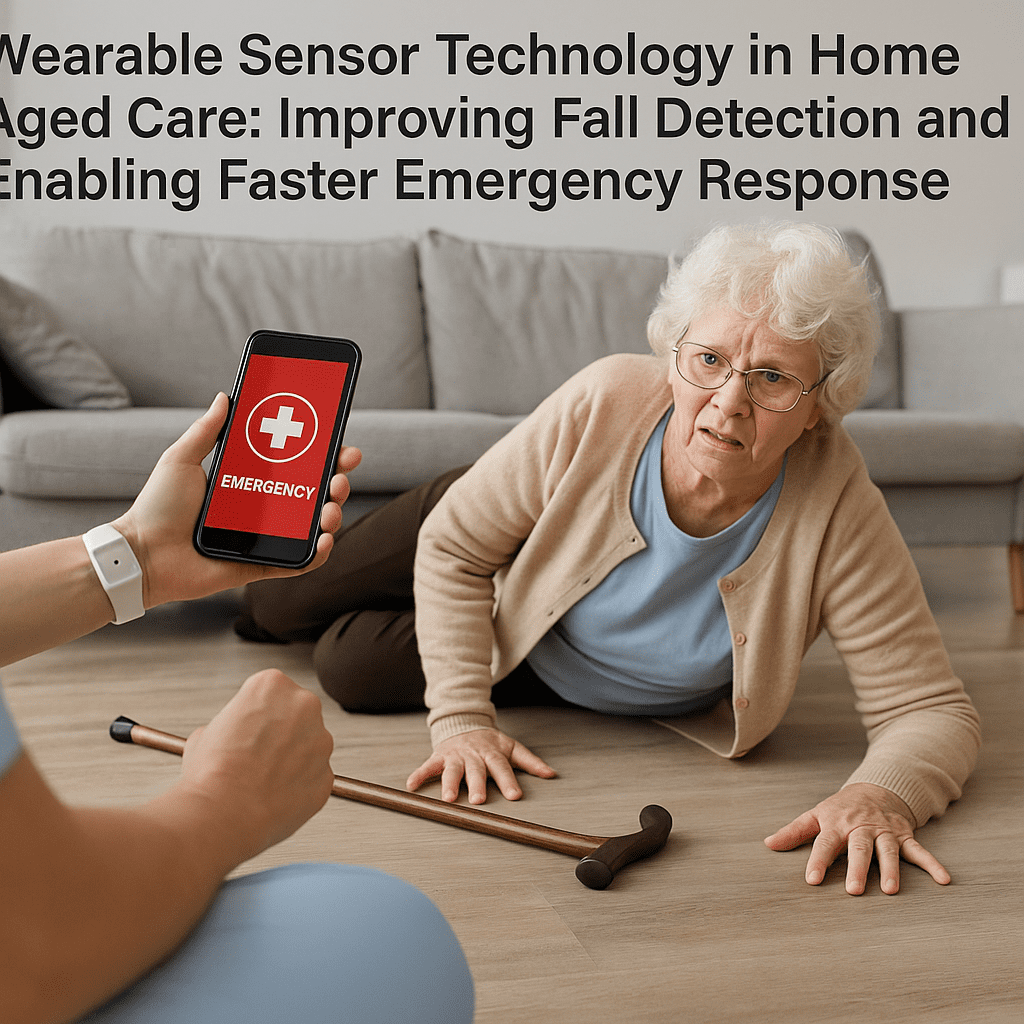
Wearable Sensor Technology in Home Aged Care: Improving Fall Detection and Faster Emergency Response
Let’s face it — people around the world are getting older faster than a phone battery runs out on a busy day. The World Health Organization’s 2023 report says that falls are one of the main causes of injuries and deaths among older adults. As more seniors live longer and choose to stay in their own homes, they face more risks—especially when help isn’t nearby.
At SMPLSINNOVATION, we believe technology can make a big difference. One of the best new tools is wearable sensors. These smart devices can sit on your wrist, stick to your skin, or clip onto clothes to keep track of your movement, health, and even predict or detect falls.
In 2024, studies in Nature Digital Medicine showed how these tiny sensors can make elderly care safer and more respectful. The goal is clear: help older adults live freely and confidently, knowing that help is always nearby—without needing an awkward panic button.
Understanding the World of Home Aged Care Technology
The Move Toward Home Care
Since the pandemic, healthcare has changed quickly. More care is now happening at home using technology. Instead of visiting the clinic all the time, doctors and caregivers can monitor patients using data sent from wearables, a system called remote patient monitoring or RPM.
Three big changes are leading this shift:
1. Remote Patient Monitoring, which means data is collected automatically, reducing the need for office visits.
2. Telehealth, where doctors can review wearable data during online appointments.
3. Data-Driven Prevention, using real-time alerts to catch health problems early.
And yes, “smart pajamas” are real! Scientists are testing clothes with built-in sensors that can track movement while someone sleeps. The future is here—where comfort meets technology.
The Companies to Watch
Many companies are making progress in this field:
Apple, with its Apple Watch that can detect falls and monitor heart health.
Garmin, known for sports watches, now expanding into senior care.
Withings, combining sleek design with medical accuracy.
Empatica, building tools to detect emotion, seizures, and now falls.
SafelyYou, using AI to manage fall risks.
CarePredict, tracking movement patterns to predict mobility problems.
QMedic, making wearables easy for older adults to use every day.
KamiCare, blending video and sensors for fall monitoring.
Sensi.AI, analyzing sounds and sensor data to keep seniors safe.
Philips Healthcare, adding wearables to their aging-at-home systems.
These companies are not just selling gadgets—they’re helping people feel safe and confident.
Regulations and Quality Control
Health agencies are updating their rules to keep up with innovation. The FDA in 2024 gave clear guidance for AI and sensor-based health tools. The European Union and Australia also updated their rules, helping startups build safe devices faster. This means better products and fewer low-quality gadgets collecting dust.
How Wearable Sensors Work to Detect Falls
Fall detection wearables are small marvels of science and engineering.
The Sensors
These devices use several types of sensors, each with a job:
Accelerometers measure movement speed.
Gyroscopes sense direction and rotation.
Magnetometers act like digital compasses.
Barometric sensors detect altitude changes, telling if someone fell or just sat down.
ECG and PPG sensors track heart rate and oxygen levels.
EMG sensors measure muscle activity.
IMUs combine many sensors for better accuracy.
Environmental sensors check surroundings like temperature and light.
Smart computer programs then analyze all this information.
The Role of Artificial Intelligence
AI is what makes these devices truly smart. Programs can tell the difference between normal activities and a real fall. They use machine learning methods called decision trees, neural networks, and data fusion to read signals and respond in milliseconds. Some even work directly on the device—called edge AI—so alerts go out instantly without needing the internet.
Recent Breakthroughs (2023–2024)
Scientists and engineers have made amazing progress recently:
MIT created radar-based fall detection that doesn’t need cameras.
Stanford built wearable chips that save power so devices last longer.
Studies showed over 96% accuracy in fall detection across large groups of seniors.
IBM used advanced AI models to predict walking patterns.
Rice University made washable clothing sensors.
Samsung developed a motion-powered skin patch that charges itself.
Cambridge improved predictive algorithms using long-term data.
Google created tools for cross-device emergency alerts.
Harvard built soft robotic supports that help during a fall.
CarePredict introduced systems that warn caregivers up to 72 hours before a likely fall.
These innovations mean faster response times and fewer false alarms.
Faster Emergency Responses
In older systems, there could be long delays between a fall and help arriving. With smart wearables, that time can shrink to seconds. Here’s how:
Automatic alerts go out as soon as a fall is detected.
Smart homes can turn on lights or unlock doors for rescuers.
GPS sends exact locations to family or emergency teams.
Voice assistants can call or message loved ones.
If the wearer doesn’t respond, emergency services are contacted automatically.
Health data can be shared with doctors safely.
Clinicians can use post-fall data to adjust care plans.
Trends can even predict and prevent future accidents.
Faster help means better recovery—and more peace of mind for everyone.
Challenges and Opportunities
Of course, no technology is perfect. Some of the challenges include:
Battery life, since wearables must work for days without charging.
User compliance, meaning people need to wear them regularly.
False alarms, which can be annoying if not managed well.
But for SMPLSINNOVATION and its clients, these challenges are also opportunities—to design better batteries, create more comfortable devices, and use smarter software that learns and improves over time.
With care and creativity, wearable sensors can help thousands of seniors live safer, happier lives at home. And that’s something worth getting excited about.