Wearable Health Monitoring in Home Care: Improving Chronic Disease Management Through Real-Time Data
By SMPLSINNOVATION
Date: May 11, 2024
I. Introduction
Living with a chronic illness can feel like a job you never signed up for. Between keeping track of medicine, checking in with doctors, and remembering daily routines, it can be a lot to handle. That’s where wearable health technology comes in—a helpful sidekick for better home care.
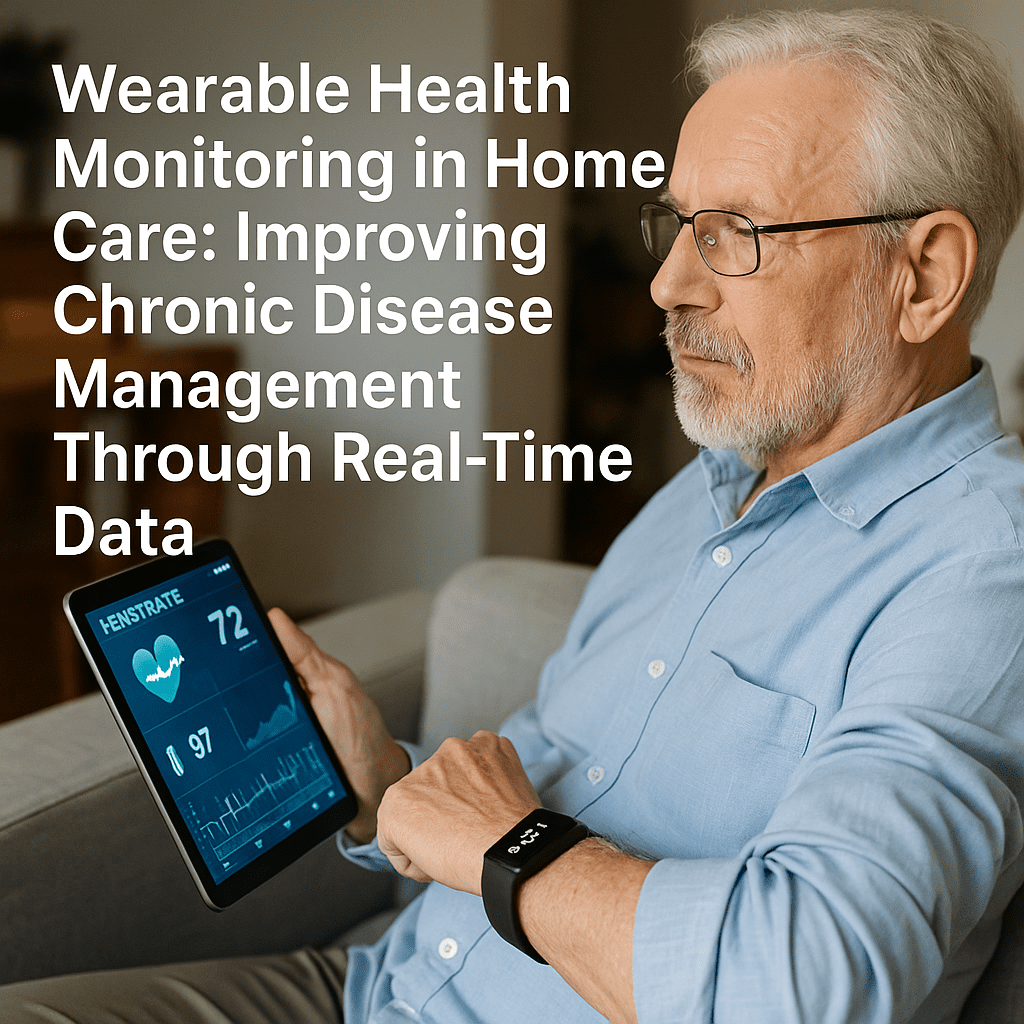
In 2024, wearables have grown from fun fitness gadgets into real tools that help people stay healthy. Smartwatches, continuous glucose monitors, and AI-powered patches now give real-time health information to both patients and doctors.
This blog explores how real-time data from wearables is changing chronic disease management—reducing hospital visits, improving health, and even making care more engaging.
II. The Current Landscape of Wearable Health Monitoring in Home Care
These days, it seems like everyone has a health tracker—from your aunt’s smartwatch to your dog’s activity collar. The use of wearables has grown quickly:
– Nature Digital Medicine (2024): 68% of people with chronic diseases use at least one wearable device.
– Journal of Medical Internet Research (2024): Continuous monitoring reduces hospital readmissions by up to 35%.
– Deloitte 2024 HealthTech Outlook: The global wearable health market is expected to pass $90 billion by the end of the year.
Technologies Driving the Growth
1. Microsensors and biosensors that track heart rate, hydration, and more.
2. Artificial intelligence (AI) that predicts problems and gives personal feedback.
3. Faster connections like 5G and Wi-Fi 6 that send data to doctors smoothly.
Regulatory and Ethical Updates
– The FDA and EMA have made it easier for new monitoring devices to get approved.
– Privacy rules like HIPAA and GDPR have added sections for real-time health data.
– Ethical groups remind developers to make sure these devices are fair and accessible to everyone.
The future of healthcare is not only wearable—it’s connected, secure, and smarter than ever.
III. Main Wearable Devices Used in Home Care
There are many different kinds of wearables helping people manage their health at home:
1. Smartwatches and fitness trackers that check heart rate and activity.
2. Continuous glucose monitors that help people manage diabetes.
3. Wearable ECG monitors that track heart rhythms.
4. Blood pressure wearables that replace bulky cuffs.
5. Smart patches that measure body signals and medicine use.
6. Sleep trackers that report on rest and breathing patterns.
7. Smart clothing that monitors posture and muscle activity.
8. AI-powered mobility and pain trackers that notice small changes in movement.
9. Fall detection devices that call for help when needed.
10. Wearable temperature and hydration monitors that track body balance.
These tools don’t just track—they help people take control of their wellness.
IV. How Real-Time Data Improves Chronic Disease Management
Real-time data turns healthcare into a constant conversation rather than an occasional checkup.
Main Benefits
1. Continuous monitoring and instant alerts if something is wrong.
2. AI insights that predict health issues before they get serious.
3. Treatment plans that adjust quickly based on ongoing data.
4. Fewer hospital visits and better outcomes.
5. Data that connects directly to patient medical records.
6. Increased motivation when patients see their progress daily.
It’s like having a gentle coach on your wrist—always guiding you toward better habits.
V. Case Studies and Clinical Evidence
Recent reports show how much difference wearables make:
– Mayo Clinic (2024): Continuous heart monitoring reduced emergency readmissions by 28%.
– Stanford Health (2024): Diabetes patients using continuous glucose monitors improved their average blood sugar levels.
– Cleveland Clinic (2023): Patients using AI-powered blood pressure wearables followed treatments more consistently.
– UK NHS Digital COPD Initiative (2024): Wearables cut in-person visits by 30%.
These examples show that real-time data helps prevent problems before they start.
VI. Data Interoperability, Security, and Ethics
Data safety is a must for all wearable technology. The following updates in 2024 make that possible:
1. Updated HIPAA rules for biometric data streaming.
2. GDPR upgrades focusing on consent for real-time health information.
3. New global standards (ISO/IEC 27001) improving device security.
To protect users, health wearables must use encrypted data, fair algorithms, and strong consent systems. Patients should always have control over their personal information. Accessibility and fairness must also stay at the heart of innovation.
SMPLSINNOVATION suggests following a “privacy by design” approach—if it’s not safe, it shouldn’t be worn.
VII. Economic and Clinical Benefits
Wearable technology doesn’t just help people stay healthier—it saves money too.
1. Early detection reduces emergency visits.
2. Fewer readmissions can save hospitals thousands per patient.
3. Better health improves quality of life.
4. Insurance programs now support remote monitoring.
5. Workplace wellness programs using wearables show fewer sick days.
6. Doctors and nurses spend less time managing paperwork and more time caring for patients.
7. Predictive monitoring catches health problems early—like a maintenance check for your body.
Prevention is not only better than cure—it’s cost-effective and convenient.
VIII. Looking Ahead: The Future of Home Health
What’s next? Imagine ultra-thin sensors that feel like stickers, tiny glucose monitors you can wear under the skin, and AI companions reminding you to drink water or stretch. By 2026, experts believe every major chronic care program will use wearable-based monitoring.
At SMPLSINNOVATION, we see the home becoming the new clinic—supported by smart, ethical technology and real-time data that truly cares.
IX. Conclusion
Wearable health monitoring has moved from trend to necessity. These devices do more than count steps—they save lives and give people more control over their health.
As 2024 continues to show, the mix of innovation and compassion is the future. Chronic disease care is becoming wearable, personal, and smarter than ever.
So go ahead—wear that smartwatch, stick on that patch, and let your health data work for you.