Using Remote Patient Monitoring to Reduce Hospital Readmissions in Australian Home Care
By SMPLSINNOVATION – Health Tech Consulting that makes technology feel human
Introduction
Walk into any hospital ward in Australia and two things are clear: it’s busy, and it’s only getting busier. Our health system is under pressure from an ageing population and rising rates of chronic illness. According to the Australian Institute of Health and Welfare (AIHW, Feb 2025), hospital readmissions are using up precious resources, wearing out nurses, and adding stress for patients and their families.
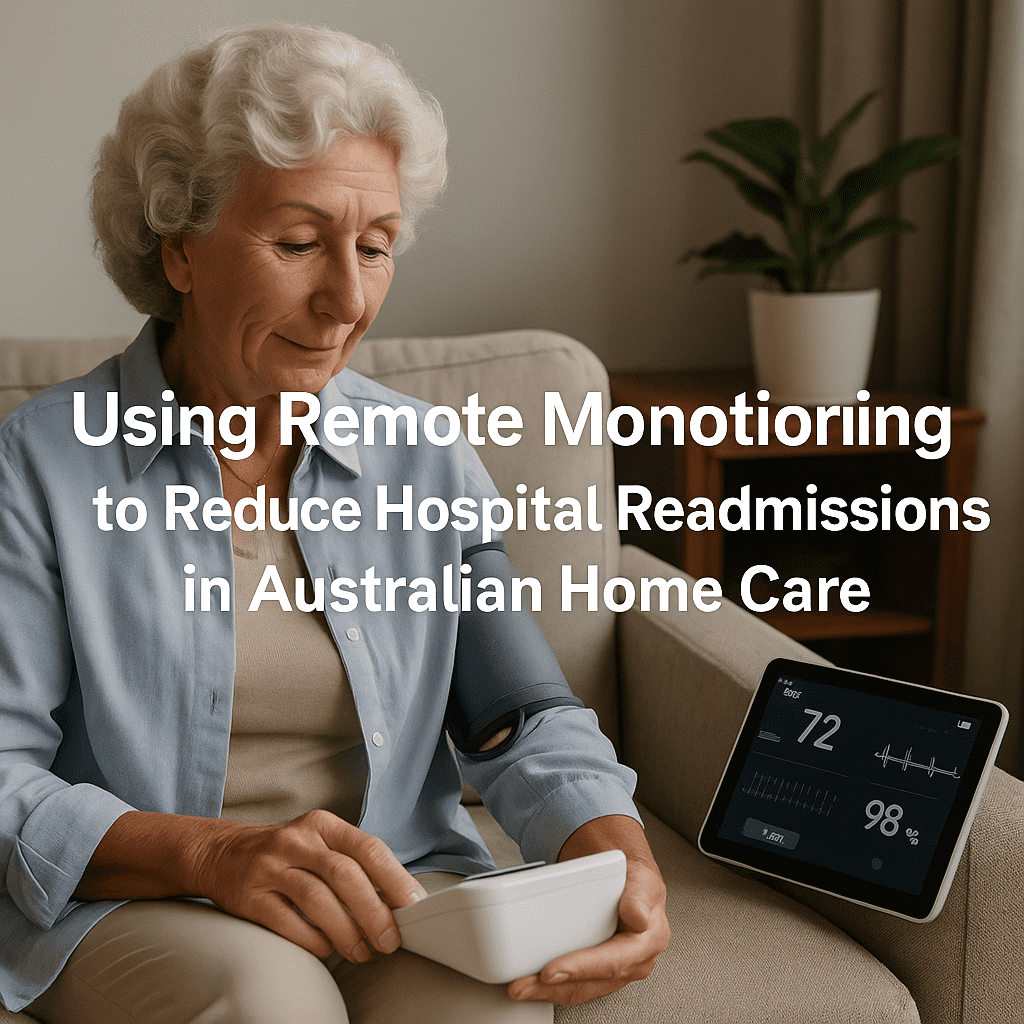
But there’s hope. One of the most exciting tools in modern healthcare is Remote Patient Monitoring (RPM). It allows doctors and nurses to keep track of a patient’s health from home, without the need for another hospital stay. For patients, that means staying out of hospital gowns and away from cafeteria food. For the health system, it means fewer costly readmissions.
Section 1: The Current Challenge
The AIHW reported in February 2025 that nearly 1 in 7 Australians are readmitted to hospital within 28 days of leaving. The conditions most likely to cause this include:
– Heart failure, where patients remain fragile just after discharge
– COPD (chronic obstructive pulmonary disease), which can flare up suddenly
– Diabetes complications, from blood sugar crashes to foot ulcers
– Post-surgery infections and wound problems
Readmissions don’t just put pressure on hospitals. They also cost Australia an estimated $3.4 billion every year. That’s money that could be used for prevention and better community care.
Section 2: What is Remote Patient Monitoring (RPM)?
RPM is not just a video call with your doctor. Telehealth connects people through phone or video. RPM connects doctors and nurses to a live stream of health data.
Think of it like this: telehealth is chatting with your doctor, while RPM is your blood pressure monitor sending an update to your doctor every morning.
Examples include:
– Smart blood glucose monitors for people with diabetes
– Wearable devices that track heart rate and rhythm
– Digital pill bottles that remind patients to take medicine
– Oxygen monitors for people with lung disease
– High-tech wound sensors that warn of infection early
These devices are now linking directly with My Health Record and hospital systems, meaning doctors don’t have to rely on notes or memory.
Section 3: What the Evidence Shows
Research is backing up RPM’s impact.
– A BMJ Digital Health study (Feb 2025) showed RPM reduced heart failure readmissions by up to 30%
– The Medical Journal of Australia (Feb 2025) reported that NSW patients with COPD using RPM had 40% fewer emergency visits
– Studies across many conditions show patients take their medicine more regularly, manage symptoms better, and stay away from the emergency department
In short, RPM helps avoid readmissions and lets doctors act before problems spiral.
Section 4: The Benefits of RPM
So why is RPM so powerful in home care? Here are 10 big benefits:
1. Early warning of problems like fever, low oxygen, or blood pressure changes
2. Fewer preventable hospital trips
3. Support for staying on track with medication
4. Ongoing monitoring so small issues don’t grow
5. Improved recovery from surgery with wound sensors
6. Patients feel safer knowing someone is watching out for them
7. Doctors can make better decisions with live data
8. Less demand on ambulances for chronic patients
9. Nurses can focus on patients who need them most
10. Families feel reassured by having access too
It’s like having a safety net at home—without the awkward hospital clothing.
Section 5: The Challenges
Of course, RPM isn’t perfect. Here are 10 barriers still faced in Australia:
1. Some older patients struggle with new technology
2. Internet speeds in rural areas can be unreliable
3. Protecting health data from hackers is critical
4. Connecting systems to My Health Record isn’t always smooth
5. Medicare funding for RPM services is still evolving
6. Too many alerts can overwhelm doctors and nurses
7. Broken devices need quick replacement plans
8. Some patients don’t trust the technology
9. Indigenous communities need culturally safe solutions
10. Staff can be resistant to change in their workflows
That said, none of these issues are impossible to solve. With good planning, training, and funding, RPM can become a reliable part of everyday care.
Section 6: Policy and Funding in Australia
The policy environment is moving forward.
– The Australian Digital Health Agency announced new RPM pilot projects starting in 2025, focused on heart failure, COPD, and diabetes in Queensland and Victoria
– Primary Health Networks (PHNs) are joining the effort with programs in rural communities
– Talks are underway to bring Medicare funding to RPM, making it easier for doctors and hospitals to use long term
The goal is to make RPM a normal part of healthcare, not just a test program.
Conclusion: Looking Ahead
Australian hospitals are crowded, readmissions are too high, and budgets are stretched. But RPM offers a smart and human way forward. It helps keep patients safe at home, avoids unnecessary hospital trips, and makes better use of limited health resources.
At SMPLSINNOVATION, we help healthcare providers design RPM solutions that actually work for patients, families, and clinicians. Because at the end of the day, RPM isn’t about gadgets—it’s about smarter care, calmer patients, and fewer midnight hospital runs.
It’s time to swap hospital stays for at-home care that actually works. With RPM, the future of health in Australia can be lighter, smarter, and far more patient-friendly.