Using Remote Monitoring to Improve Post-Surgical Recovery in Home Care: Benefits, Challenges and What’s Next
Date Research Basis: Publications from March 3–4, 2024
Sources: JAMA Network Open, Nature Digital Medicine, HealthIT.gov Newsroom, MedTech Dive, CMS updates, and FDA guidance notes
By: SMPLSINNOVATION – Health Technology Consulting That Keeps Healthcare Simple, Smart, and Smiley.
1. Introduction
Imagine this: you’ve just had knee surgery. Your doctor says goodbye with a friendly smile, and now you’re home with pillows, snacks, and lots of questions about whether your healing wound should really look that way.
Recovering at home after surgery can feel confusing and a little scary. That’s where remote patient monitoring, or RPM, comes in to help.
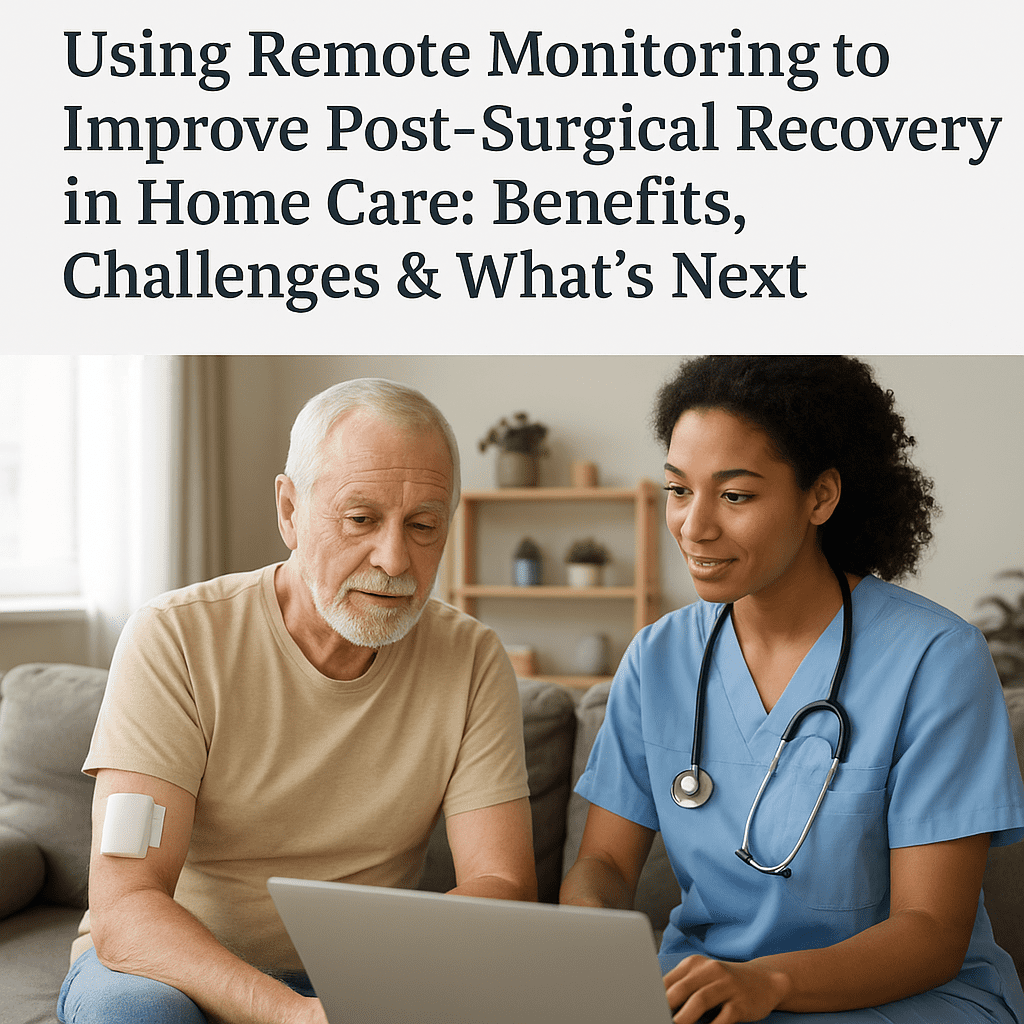
Remote Patient Monitoring uses connected devices—like smart watches, patches, or phone sensors—to send health information to your medical team. This lets doctors and nurses track your recovery, notice early warning signs, and give help before small problems become big ones.
In 2024, RPM became easier to use. The Centers for Medicare & Medicaid Services (CMS) added more billing codes to support it, and the FDA released new safety guidelines for connected medical devices. The goal is to help patients heal faster, safer, and with less worry.
2. The Evolution of Remote Monitoring in Post-Surgical Recovery
From 2019 to 2024, remote monitoring changed from a cool idea into something hospitals now depend on.
2019: Some clinics tested remote monitoring for heart and joint surgeries.
2020–2021: COVID-19 made remote care essential. Hospitals used RPM to keep patients safe and ease the strain on busy wards.
2022–2023: Artificial intelligence helped predict problems before they happened. Doctors began using digital stethoscopes and video wound checks.
2024: New technology and better data sharing made devices work well together, so all systems could communicate clearly.
RPM has grown from a simple fitness gadget to a key part of modern recovery care.
3. Top 10 Benefits of Using Remote Monitoring After Surgery
1. Tracks wounds and vital signs in real time so doctors can act quickly.
2. Finds early signs of infection or swelling before they get worse.
3. Lowers hospital return visits by up to 30%.
4. Helps patients remember medicines and activity schedules.
5. Improves communication between patients and care teams.
6. Keeps family members updated with progress alerts.
7. Creates personalized recovery plans based on real data.
8. Makes sure medications are taken on time and correctly.
9. Saves money by preventing complications.
10. Helps researchers understand wider recovery trends.
And maybe best of all—it brings peace of mind. Patients worry less when they know someone is watching their progress.
4. Challenges and Limitations in Using RPM for Post-Surgical Care
Even though RPM is exciting, it has some challenges to fix:
1. Privacy rules require strong data protection.
2. Some devices don’t share data easily with hospital systems.
3. Older adults may struggle to use new technology.
4. Rural areas sometimes have poor internet connections.
5. Devices can give false readings or disconnect.
6. Too many alerts can overwhelm doctors and nurses.
7. Insurance payments and claims can be confusing.
8. Artificial intelligence tools must be tested to avoid bias.
9. Studies use different measurements, making it hard to compare results.
10. Staff need training to use new data systems effectively.
These problems can be solved when healthcare workers, tech experts, and consultants work together.
5. Recent Innovations Changing Post-Surgical Home Monitoring
By March 2024, innovations in home recovery have grown fast. Here are some of the most exciting:
1. Smart clothing and bandages track healing and movement.
2. Bio-patch sensors check temperature and oxygen levels.
3. AI tools use phone photos to study wound healing.
4. Bluetooth breathing devices help patients track lung recovery.
5. Dashboards predict recovery speed using different types of data.
6. Doctors now join video check-ins supported by AI tools.
7. Chatbots remind patients to take medicines.
8. Systems can now share data smoothly between platforms.
9. Light scanners detect early signs of infection.
10. Apps focus more on patient comfort and emotional support.
These tools help doctors not just watch recovery—but improve it in real time.
6. What’s Next: The Future of Post-Surgical Recovery and Home Health
Looking ahead to 2025 and beyond, the focus will shift from reacting to problems to preventing them before they start.
Here’s what’s coming:
– Teams made up of doctors, nurses, and tech experts working together in real time.
– AI systems that combine many types of patient data for quick, accurate responses.
– New payment models supporting long-term use of RPM.
– Faster internet connections making monitoring more reliable.
– Systems to make sure AI stays fair and transparent.
– Mood and stress tracking to support mental health during recovery.
– Eco-friendly devices that reduce waste.
– Global care systems allowing doctors to monitor patients across borders.
– Universities teaching healthcare, technology, and ethics together.
– Community hubs offering remote care devices to people who don’t have them at home.
7. Conclusion
Recovering from surgery no longer has to feel uncertain. With smarter and safer technology, patients can heal at home with confidence, comfort, and support.
At SMPLSINNOVATION, we’re proud to help healthcare teams and recovery programs bring these tools to life—keeping healthcare simple, smart, and smiley.