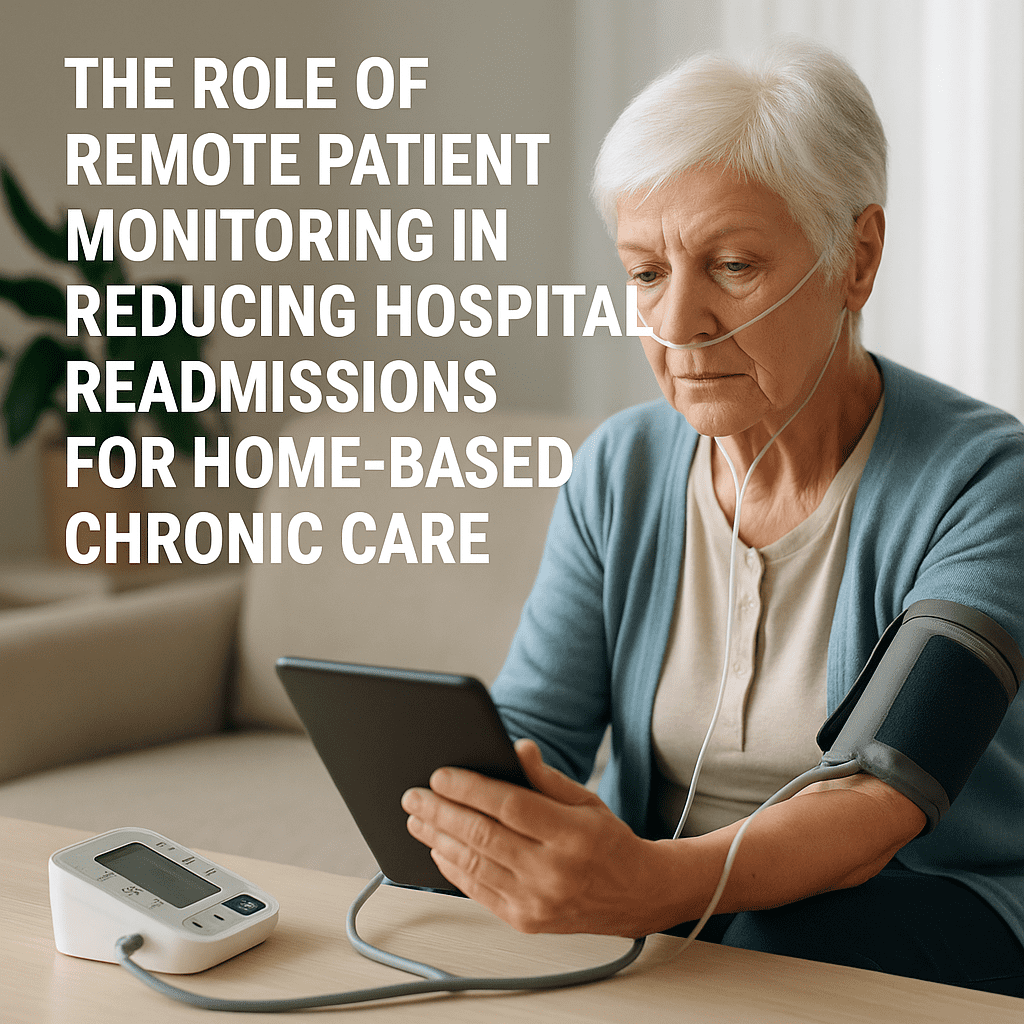
The Role of Remote Patient Monitoring in Reducing Hospital Readmissions for Home-Based Chronic Care
By SMPLSINNOVATION — we take complex healthcare tech and make it, well, simpler.
I. Introduction
If you or someone you love has a chronic condition, you know how it goes—daily medication, endless appointments, and the constant worry of another hospital trip. Managing a long-term illness is not just a medical task; it’s a full-time job.
Hospitals around the world are seeing more and more repeat visits from patients with conditions like heart failure, COPD, diabetes, and high blood pressure. The Centers for Medicare & Medicaid Services (CMS) says hospital readmissions cost the U.S. more than 26 billion dollars each year, and about 17 billion of that could be prevented.
That’s where Remote Patient Monitoring, or RPM, comes in. It uses smart devices and online tools to help people manage their health at home while letting doctors keep track of them from afar. Think of it as a safety net that catches small problems before they turn into big ones.
This blog explains how RPM is making healthcare easier, safer, and more affordable by helping patients stay healthy at home instead of going back to the hospital.
II. The Current Situation with Hospital Readmissions
Before we get into how RPM helps, let’s look at what’s happening right now.
1. Chronic illnesses are becoming more common. The World Health Organization says these diseases cause about 74 percent of all deaths worldwide, and heart disease, COPD, and diabetes are the top causes. Also, the number of older adults is expected to double by 2050, which means more people will need care at home.
2. According to CMS data from 2024, one out of every five Medicare patients goes back to the hospital within 30 days of leaving. Heart failure has the highest readmission rate, around 24 percent. But hospitals using telehealth and RPM have seen readmissions drop by about 12 to 15 percent in just two years.
3. Hospital readmissions are expensive and stressful. A single readmission can cost between 9,000 and 15,000 dollars, and it takes an emotional toll on patients, families, and doctors.
4. CMS has updated its Hospital Readmissions Reduction Program, giving hospitals credit for using proactive tools like RPM. That means hospitals using RPM can save money and improve their ratings.
In short: good RPM means fewer readmissions, happier patients, and better results for everyone.
III. Remote Patient Monitoring Technologies
Remote monitoring used to be rare, but it became a major part of healthcare during the pandemic. Now it’s growing fast, supported by artificial intelligence (AI) and better technology.
Here are the main types of RPM tools being used today:
– Wearable sensors track heart rate, temperature, and breathing.
– Smartwatches and glucose monitors help people manage diabetes and fitness.
– Connected blood pressure and heart rate monitors send data directly to doctors.
– Smart scales check weight changes, especially for heart failure patients.
– Pulse oximeters track oxygen levels for people with lung problems.
– Smart inhalers send reminders and track use for asthma and COPD.
– AI tools check heart rhythm and spot warning signs early.
– RPM kits combine several devices with telehealth systems.
– Smart pill dispensers remind patients to take their medicine.
– Mobile apps turn phones into personal health dashboards.
– AI platforms predict which patients might need extra help before problems occur.
These tools are more than just gadgets—they’re part of a digital system that helps prevent illness instead of just treating it.
IV. How RPM Reduces Hospital Readmissions
So, how does RPM keep people out of the hospital? Here’s how it works:
1. It spots early warning signs before they become serious.
2. Smart pillboxes and reminders help patients stay on their medication plans.
3. Quick communication tools connect patients and doctors instantly.
4. Real-time alerts allow fast responses to health changes.
5. Data helps create care plans tailored to each person.
6. Patients gain confidence by seeing their progress every day.
7. It helps avoid unnecessary emergency room visits.
8. Predictive tools identify patients most at risk.
9. Monitoring continues after leaving the hospital, keeping care consistent.
10. Shared digital data helps doctors, nurses, and caregivers work together easily.
Recent studies show strong results. In 2024, heart patients using RPM had a 19 percent drop in readmissions. Patients with COPD using digital symptom tracking saw a 22 percent drop. AI tools combined with wearable data could even spot issues up to five days before symptoms appeared.
V. Why Home-Based RPM Is the Future of Chronic Care
RPM lets people get care where they feel most comfortable—at home.
Why patients love it:
1. It’s convenient—fewer trips and no long waits.
2. It gives them control—they can see their progress in real time.
3. It gives peace of mind—knowing someone is watching out for them.
Why doctors love it:
1. They get clear, real-time data instead of one-time snapshots.
2. It improves patient outcomes.
3. It saves time so doctors can focus on prevention instead of crisis care.
Insurance companies and health policy makers also support RPM because it saves money and improves results.
VI. The Challenges and Opportunities Ahead
Of course, there are challenges, but none are impossible to solve.
Some challenges include:
1. Keeping data private and secure—better encryption is fixing this.
2. Avoiding tech fatigue—devices are becoming easier to use.
3. Making sure systems connect smoothly—new standards are improving this.
4. Complicated payment rules—CMS is adding new billing codes to help.
5. Helping older adults learn the tech—better design and training are making it simpler.
6. Limited internet access in rural areas—new programs are expanding broadband.
7. Too many alerts for doctors—AI now filters to show only the most urgent ones.
8. Too many vendors—more companies are working together to simplify options.
9. More proof needed—new research keeps building the evidence.
10. Scaling up—partnerships are helping pilot programs become permanent.
Each challenge opens the door for smarter solutions and stronger teamwork.
VII. Conclusion
Remote Patient Monitoring is changing how we care for people with chronic conditions. It helps patients stay healthy at home, eases pressure on hospitals, and saves money for everyone. As the technology keeps improving, RPM will become a normal and essential part of healthcare. It’s not just the future—it’s already happening, right at home.